
For many organizations, assets such as computers, machinery, office equipment, vehicles, and software licenses are essential for daily operations. However, as businesses grow, managing these assets manually becomes increasingly difficult. Important information about asset location, condition, maintenance schedules, and ownership can easily become scattered across spreadsheets or disconnected systems.
Without a proper tracking system, companies may face issues such as misplaced equipment, unexpected downtime, inefficient utilization, and increased operational costs.
An Asset Management System helps businesses overcome these challenges by providing a structured way to track, monitor, and manage assets throughout their lifecycle.
In this blog, we will explore what an asset management system is, why it is important, and how it helps businesses improve efficiency and reduce costs.
What Is an Asset Management System?
An Asset Management System is a digital platform that helps organizations track, monitor, and manage physical and digital assets throughout their entire lifecycle.
It enables businesses to maintain accurate records of all assets, including their location, condition, usage, and maintenance history.
Asset management systems typically track assets such as:
Office equipment and hardware
IT infrastructure and software licenses
Machinery and manufacturing tools
Vehicles and logistics equipment
Furniture and facility resources
By maintaining centralized asset information, businesses can ensure better control, accountability, and operational efficiency.
Why Asset Management Is Important for Businesses?
Businesses rely on assets to deliver products, services, and operations. Without proper management, these resources may be underutilized, poorly maintained, or even lost.
Implementing an asset management system allows organizations to monitor assets in real time and make informed operational decisions.
Key Benefits of Asset Management Systems
Improved Asset Visibility
An asset management system provides a centralized platform where businesses can track all assets from one location.
This ensures that managers always know:
Where assets are located
Who is responsible for them
How they are being used
Clear visibility helps prevent asset misplacement and improves operational control.
Better Asset Utilization
Many businesses purchase new equipment simply because they cannot locate existing resources.
With proper asset tracking, companies can:
Identify underutilized assets
Optimize equipment usage
Avoid unnecessary purchases
This leads to more efficient use of business resources.
Reduced Operational Costs
Poor asset management often leads to unnecessary repair costs, replacement expenses, and downtime.
An asset management system helps reduce costs by:
Tracking maintenance schedules
Preventing unexpected equipment failures
Extending asset lifespan
As a result, businesses can significantly reduce operational expenses.
Simplified Maintenance Management
Regular maintenance is critical to ensuring assets operate efficiently.
Asset management systems help businesses:
Schedule routine maintenance tasks
Track service history
Receive maintenance reminders
This proactive approach reduces equipment breakdowns and ensures consistent performance.
Improved Compliance and Reporting
Many industries require businesses to maintain records of assets for financial reporting, audits, or regulatory compliance.
An asset management system allows organizations to:
Maintain accurate asset documentation
Generate reports quickly
Track depreciation and lifecycle data
This simplifies audits and ensures regulatory compliance.
Increased Accountability
When assets are assigned to specific employees or departments, accountability improves across the organization.
Asset management systems help businesses:
Track asset ownership
Monitor usage history
Maintain transfer records
This reduces the chances of asset loss or misuse.
Key Features of a Modern Asset Management System
A well-designed asset management platform includes several features that simplify asset tracking and management.
Centralized Asset Database
Maintain a complete inventory of assets in one system, including details such as purchase date, asset value, location, and ownership.
Asset Tracking
Track assets in real time and monitor their movement between departments, locations, or employees.
Maintenance Scheduling
Plan preventive maintenance activities and track service history to ensure assets remain in optimal condition.
Asset Lifecycle Management
Monitor assets from procurement to retirement, helping businesses understand asset performance and replacement timelines.
Reporting and Analytics
Generate reports related to asset utilization, maintenance costs, depreciation, and operational efficiency.
Role-Based Access Control
Assign different access levels to employees, managers, and administrators to maintain security and data integrity.
How Syngrid Technologies Supports Businesses with Asset Management Solutions?
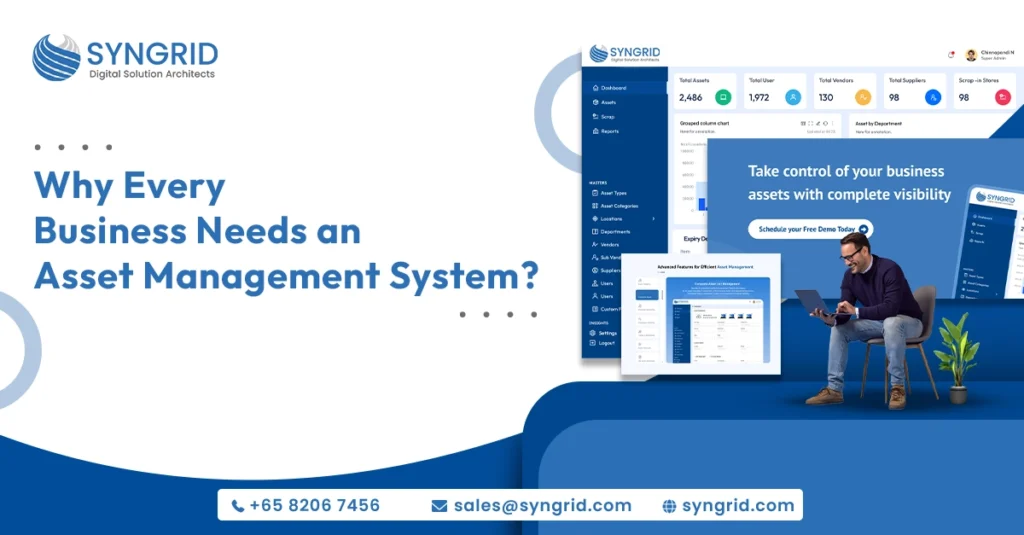
Syngrid Technologies provides advanced Asset Management Software solutions designed to help businesses track and manage their assets efficiently.
The platform enables organizations to maintain accurate asset records, monitor usage, and streamline maintenance activities through a centralized system.
The solution is designed to support businesses of all sizes, including startups, growing companies, and large enterprises.
5. Conversion Speed
Asset Tracking and Monitoring
Track assets across different locations and departments while maintaining complete visibility of asset status and usage.
Centralized Asset Records
Store all asset information in a single platform, including purchase details, ownership records, and maintenance history.
Maintenance and Service Tracking
Schedule maintenance tasks, track service history, and ensure assets remain in optimal working condition.
Asset Allocation Management
Assign assets to employees or departments and maintain accurate records of asset transfers and usage.
Custom Reporting
Generate detailed reports on asset performance, utilization, and operational efficiency to support better decision-making.
Conclusion
As businesses grow, managing assets manually becomes increasingly complex and inefficient. Without proper tracking and monitoring, companies risk losing valuable resources, increasing operational costs, and facing unexpected downtime.
An Asset Management System provides the tools businesses need to maintain complete visibility, improve asset utilization, and streamline maintenance processes.
By implementing a reliable solution such as those offered by Syngrid Technologies, organizations can manage their assets more effectively, reduce costs, and support long-term operational efficiency.