

What Is Email Marketing?
Email marketing is a form of direct digital marketing that involves sending targeted emails to a list of subscribers. These emails may include:
Promotional offers
Newsletters
Product updates
Event invitations
Educational content
Personalized recommendations
The goal is to nurture leads, engage customers, and encourage actions such as purchases, sign-ups, or website visits.
Unlike social media platforms where algorithms control visibility, email marketing gives businesses direct access to their audience’s inbox, making it a highly reliable marketing channel.
Why Email Marketing Matters for Businesses?
Email marketing continues to deliver strong results because it combines personalization, automation, and measurable performance.
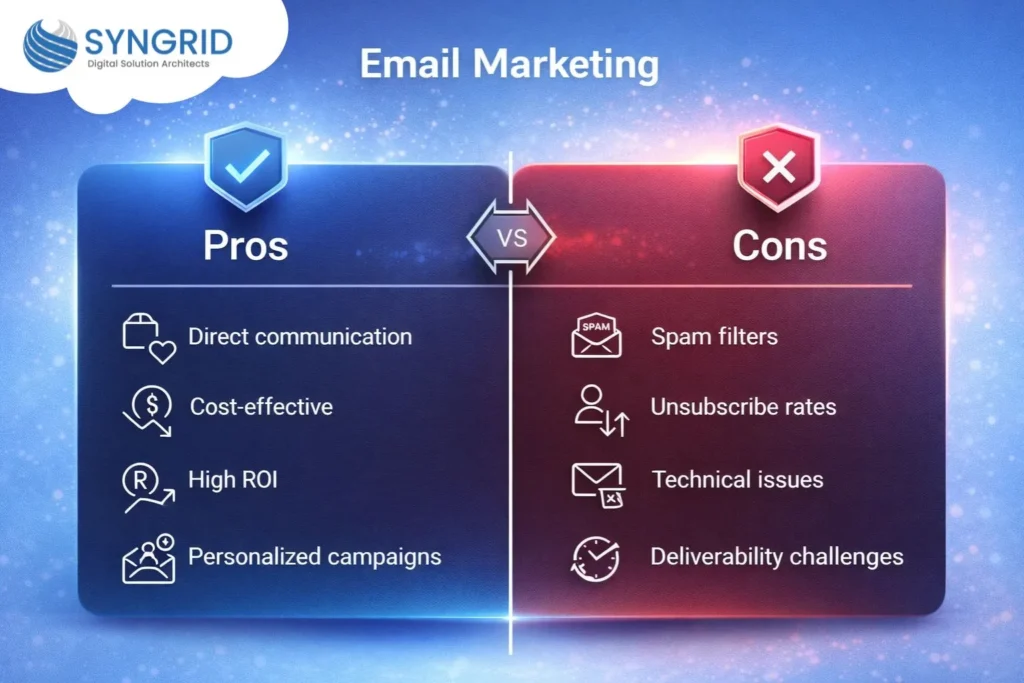
1. Direct Communication with Customers
Email allows businesses to speak directly to customers without relying on third-party platforms. Your message reaches people in a space they check daily.
2. Cost-Effective Marketing Channel
Compared to paid advertising, email marketing has a low cost while offering high returns. Businesses can reach thousands of subscribers with minimal expense.
3. High ROI (Return on Investment)
Email marketing is known for generating one of the highest ROIs among digital marketing methods because it targets people who already have interest in your brand.
4. Personalized Customer Experience
With segmentation and personalization, businesses can send tailored messages based on customer preferences, purchase history, or behavior.
5. Builds Long-Term Relationships
Consistent and valuable email communication helps create trust, loyalty, and repeat customers over time.
How to Build an Email List the Right Way?
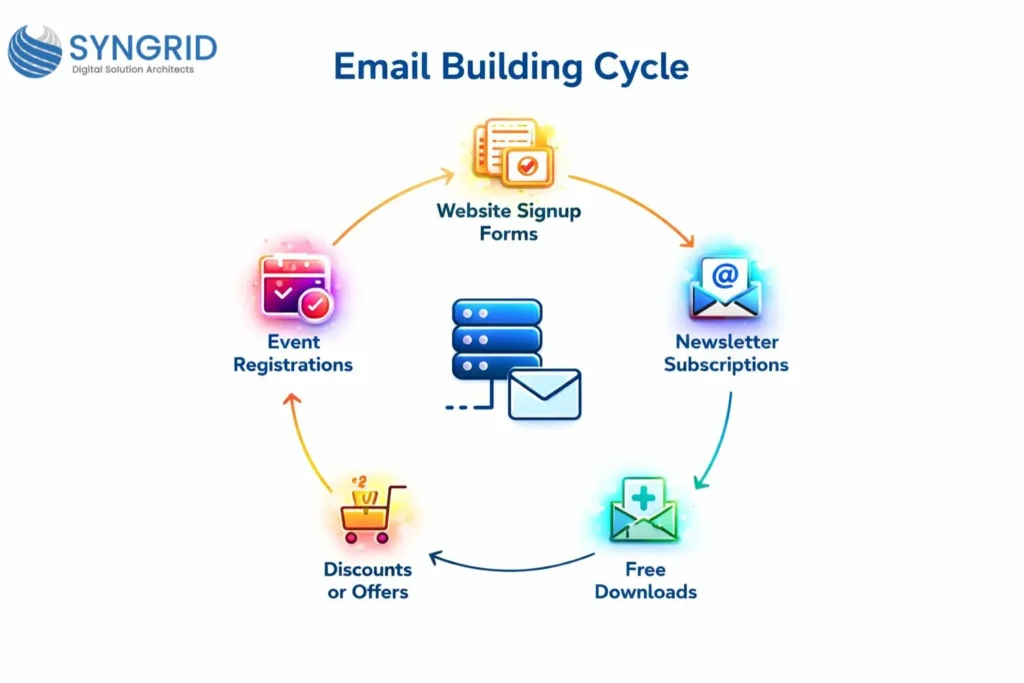
A successful email marketing campaign starts with a high-quality subscriber list. The key is to grow your list ethically and organically.
Use Sign-Up Forms
Place email opt-in forms on:
Website homepage
Blog pages
Landing pages
Checkout pages
Make it easy for visitors to subscribe.
Offer Incentives (Lead Magnets)
People are more likely to share their email if they receive value in return, such as
Free eBooks
Discount coupons
Webinar access
Exclusive content
Collect Subscribers Through Social Media
Promote your newsletter on platforms like Instagram, LinkedIn, or Facebook and direct users to a sign-up page.
Never Buy Email Lists
Purchased lists often lead to low engagement, spam complaints, and damage to your sender reputation. Always focus on genuine subscribers.
Best Practices for Successful Email Marketing
To achieve strong engagement and conversions, businesses must follow proven strategies.
Segment Your Audience
Email segmentation means dividing subscribers into smaller groups based on:
Interests
Location
Purchase history
Engagement level
This improves relevance and increases open rates.
Craft Compelling Subject Lines
Your subject line is the first thing people see. Keep it:
Short
Clear
Curiosity-driven
Relevant
Example: “Exclusive Offer Inside—Don’t Miss Out!”
Provide Valuable Content
Avoid sending only promotional emails. Mix in educational and helpful content, such as:
Tips and guides
Industry insights
Customer success stories
This builds trust and authority.
Optimize Send Times
Timing matters. Test different days and hours to find when your audience is most active.
Use Email Automation
Automation helps businesses send emails based on customer actions, such as
Welcome emails
Abandoned cart reminders
Birthday offers
Follow-up sequences
Automation improves efficiency and personalization.
Monitor and Analyze Performance
Track key email marketing metrics like
Open rate
Click-through rate (CTR)
Conversion rate
Bounce rate
Unsubscribe rate
Analyzing data helps you continuously improve campaigns.
Common Email Marketing Mistakes to Avoid
Even experienced marketers can make errors. Avoid these common mistakes:
Avoid the common mistakes of sending too many emails, which can lead to unsubscribes.
Ignoring mobile-friendly design
Not personalizing content
Using misleading subject lines
Forgetting a clear call-to-action (CTA)
A well-balanced strategy ensures long-term success.
Email Marketing Tools Businesses Can Use
Modern email marketing platforms make it easier to manage campaigns professionally. Popular tools include
Mailchimp
HubSpot
ActiveCampaign
ConvertKit
These tools support automation, segmentation, analytics, and template design.
Doing Email Marketing the Right Way
Email marketing remains one of the most powerful ways for businesses to connect with customers, drive conversions, and build brand loyalty. When done correctly, it helps you build trust, stay connected with your audience, and generate consistent results over time.
To do email marketing the right way, focus on:
Building a genuine and high-quality email list
Delivering valuable and personalized content
Using segmentation and automation for better targeting
Tracking performance and optimizing campaigns regularly
When approached strategically, email marketing becomes more than just sending messages; it becomes a long-term relationship-building tool that supports sustainable business growth.
At Syngrid Technologies, we help businesses run email marketing the right way by creating professional email campaigns, building automation workflows, improving audience segmentation, and tracking performance to ensure better engagement and conversions.