

Managing payroll is already a critical responsibility for any business. However, when payroll expands across countries, currencies, and compliance systems, it becomes significantly more complex.
Global payroll operations are no longer just about paying employees on time. They involve navigating international labor laws, handling multiple tax structures, and ensuring accurate payments across different regions.
As companies grow internationally and hire remote talent worldwide, understanding the major challenges in managing global payroll operations becomes essential. Businesses that handle payroll correctly build trust, improve employee satisfaction, and reduce legal risk.
In this article, we’ll explore the biggest obstacles organizations face in global payroll and how they can overcome them with the right strategies.
Understanding Global Payroll Complexity
Global payroll refers to the process of managing employee compensation across multiple countries. This includes salaries, bonuses, tax deductions, social contributions, and benefits.
Unlike local payroll, global payroll requires businesses to align with varying regulations and financial systems. Each country has its own rules regarding minimum wages, overtime, employee benefits, and tax reporting.
Because of these differences, global payroll operations demand careful planning, strong expertise, and reliable systems.
Challenge 1: Compliance with Local Tax and Labor Laws
One of the most difficult aspects of global payroll management is staying compliant with local regulations.
Each country has unique tax requirements, employment laws, and reporting standards. Payroll teams must ensure they follow:
Income tax rules
Social security contributions
Mandatory employee benefits
Termination and severance policies
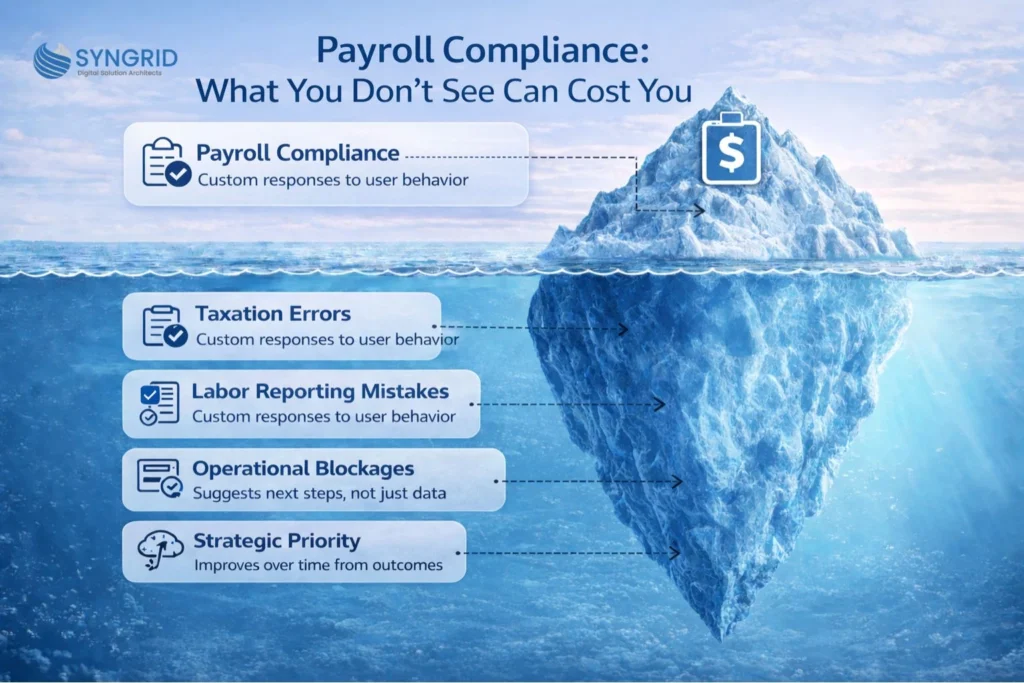
Even a small mistake can lead to penalties, audits, or reputational damage.
Additionally, laws frequently change. Payroll teams must stay updated constantly, which can be time-consuming and stressful.
Challenge 2: Managing Multiple Currencies and Exchange Rates
When paying employees in different countries, businesses must handle multiple currencies.
Exchange rates fluctuate daily, which can affect payroll accuracy and budgeting. Employers must ensure that employees receive the correct amount in their local currency while also managing costs in the company’s base currency.
This challenge becomes even greater when payroll involves bonuses, reimbursements, or cross-border payments.
Without automated systems, currency conversion errors can easily occur, leading to employee dissatisfaction.
Challenge 3: Data Security and Privacy Concerns
Payroll data includes highly sensitive employee information such as:
Bank account details
Identification numbers
Salary records
Tax documents
Handling this data across multiple regions introduces serious security challenges.
Different countries also enforce different privacy laws, such as GDPR in Europe. Businesses must ensure payroll systems meet strict compliance standards for data protection.
A data breach in payroll operations can have severe financial and legal consequences.
Challenge 4: Lack of Standardization Across Countries
Standardizing payroll processes globally is extremely difficult.
Some countries require monthly payroll, while others may require weekly or bi-weekly cycles. Certain regions mandate specific payslip formats, tax filings, or benefit contributions.
Because of these variations, businesses often end up managing payroll through multiple vendors or fragmented systems.
This lack of consistency increases administrative workload and reduces efficiency.
Challenge 5: Payroll Errors and Manual Processing
Many organizations still rely on manual payroll spreadsheets or outdated tools.
Manual processing increases the risk of:
Miscalculations
Late payments
Incorrect tax deductions
Missing compliance filings
Even small payroll errors can lead to employee frustration and costly corrections.
Automation and payroll technology can significantly reduce these risks, but implementation can take time and expertise.
Challenge 6: Remote Workforce and Cross-Border Hiring
The rise of remote work has changed global payroll dramatically.
Companies now hire employees and contractors from different parts of the world, sometimes without having a legal entity in those countries.
This creates challenges related to:
Worker classification
Local tax obligations
Employment contracts
Benefit eligibility
Global payroll teams must ensure remote employees are paid correctly while remaining compliant with local laws.
Challenge 7: Choosing the Right Payroll Partner or Platform
With so many payroll vendors available, selecting the right solution can be overwhelming.
Businesses must consider:
Country coverage
Compliance support
Integration with HR systems
Data security standards
Scalability
A poor payroll provider can create long-term operational risks.
Many companies work with experienced service partners to streamline payroll across regions and ensure accuracy. For example, Syngrid Technologies supports businesses with digital payroll upgrade and compliance-driven solutions that help reduce complexity in international workforce management.
Best Practices to Overcome Global Payroll Challenges
Although global payroll is complex, businesses can manage it successfully by adopting smart strategies.
Here are some effective approaches:
Use centralized payroll platforms that support multi-country operations.
Invest in compliance expertise to stay updated constantly on changing regulations.
Automate payroll processes to reduce manual errors.
Ensure strong cybersecurity measures to protect employee data.
Partner with experienced payroll and HR technology providers.
When payroll is managed correctly, companies improve employee trust, reduce legal exposure, and scale internationally with confidence.
Conclusion
The major challenges in managing global payroll operations include compliance, currency management, data security, process standardization, and remote workforce complexities. By understanding these challenges and investing in the right tools and expertise, organizations can build reliable payroll systems that support growth and employee satisfaction worldwide.Global payroll success is ultimately about accuracy, trust, and long-term operational stability.
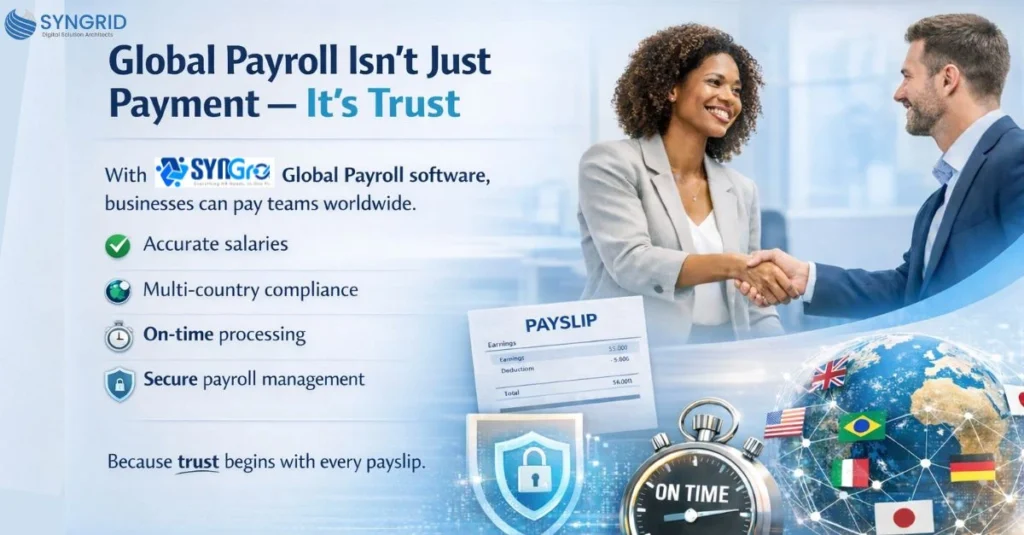
To make this journey easier, businesses can also leverage modern solutions with Syngroo, the Syngrid Global Payroll Product, which is built to streamline international payroll processing, improve compliance tracking, and reduce payroll complexity for growing global teams.