


The Moment Every Field Service Manager Dreads
It is 9:15 AM on a Monday.
Three jobs are scheduled for the morning. One technician called in sick. Another is stuck in traffic. A customer just called to reschedule. And your only way of knowing where your remaining technicians are is to call them individually.
This is not a staffing problem. This is a visibility problem.
Field service businesses that manage multiple technicians face a unique operational challenge. People, jobs, locations, and schedules all move constantly. And without the right system holding everything together, control slips away fast.
Field service management software solves this at its root. It gives managers complete real-time visibility over every technician, every job, and every schedule from one centralized platform.
In this blog, we break down exactly how field service management software helps businesses take control of multiple technicians, improve job completion rates, and deliver consistently better customer experiences.
Managing multiple technicians can quickly become complicated.
Most field service businesses start small. Two or three technicians. A handful of daily jobs. Simple coordination through phone calls and WhatsApp.
Then the business grows. More technicians. More jobs. More customers. More complexity.
And the systems that worked at five technicians completely break down at fifteen.
What Breaks Down Without the Right System
Scheduling becomes a guessing game. Assigning the right technician to the right job requires knowing who is available; where they are; what skills they have; and how long their current job will take. Without a centralized system, this becomes impossible to manage accurately.
Job status is always unknown. When managers cannot see job progress in real time, they rely on technicians calling in updates. Calls get missed. Updates arrive late. And customers get left waiting without any communication.
Response times suffer. When urgent jobs arrive, dispatching the nearest available technician requires knowing exactly where every technician is at that moment. Without location tracking, urgent response becomes slow and inefficient.
Customer communication breaks down. Customers expect accurate arrival times and job updates. Without real-time visibility, managers cannot provide them. As a result, customer satisfaction drops and complaints increase.
Performance becomes invisible. Without data on job completion times, travel distances, and individual productivity, managers cannot identify under performance, reward top performers, or improve operational efficiency systematically.
What Field Service Management Software Actually Does
Field service management software is a centralized platform that connects technicians, jobs, schedules, and customers in one real-time system.
It gives managers complete visibility and control over every aspect of field operations. From job assignment and technician tracking to customer communication and performance reporting, everything happens within one integrated platform.
Businesses use field service management software to manage:
Real-time technician location tracking across all field areas
Job scheduling and intelligent dispatch based on proximity and availability
Live job status monitoring from assignment through to completion
Customer communication and appointment management
Route optimization to reduce travel time and fuel costs
Digital job records; service histories; and completion reports
Performance analytics and technician productivity reporting
Furthermore, the system works continuously. Managers see live updates without calling technicians. Technicians receive job details without waiting for a call. And customers receive accurate updates without anyone manually sending them
The Control Framework: How Field Service Management Software Keeps You in Charge
Managing multiple technicians requires more than just tracking their location. It requires a complete operational framework that connects every moving part of your field service business.
Here is how field service management software builds that framework:
Real-Time Location Visibility
The foundation of technician control is knowing where every technician is at every moment.
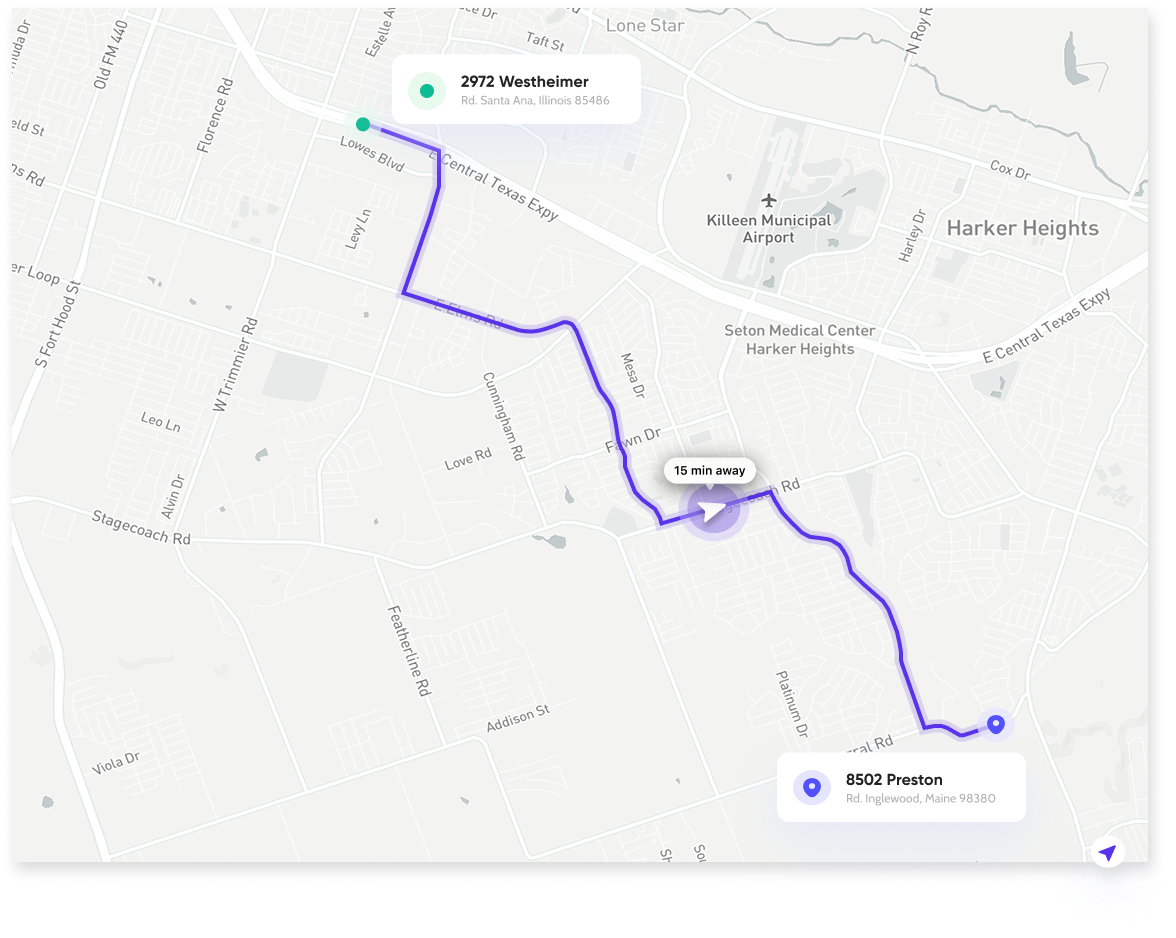
Field service management software tracks technician locations continuously throughout the working day. Managers see a live map showing every technician, their current location, their assigned job, and their movement in real time.
This transforms dispatch decisions entirely. When an urgent job arrives, the manager identifies the nearest available technician instantly. No phone calls. No guessing. No delays.
Furthermore, location data builds accountability across the field team. Technicians know their location and job progress are visible. As a result, productivity improves and time on site is used more efficiently.
Intelligent Job Scheduling and Dispatch
Scheduling multiple technicians manually is one of the most time-consuming tasks in field service management. Field service management software automates it.
The system considers technician location, current workload, skill set, and availability when assigning each job. It matches every job to the most appropriate technician automatically. And it updates schedules dynamically when circumstances change.
When a technician calls in sick, the system redistributes their jobs to available colleagues based on proximity and capacity. When a job runs over schedule, subsequent appointments adjust automatically. Consequently, managers spend less time on scheduling logistics and more time on operational decisions that require human judgment.
Live job status monitoring
Knowing that a job was assigned is only the beginning. Knowing whether that job is progressing as planned is what gives managers real operational control.
Field service management software tracks every job through every stage. Job assigned. Technician en route. On site. Job in progress. Job completed. Each status update happens in real time without the technician needing to call in.
Managers see the current status of every active job simultaneously. They identify delays before they become problems. They communicate proactively with customers when schedules change. And they make informed dispatch decisions based on accurate, live job data.
Route Optimization That Reduces Cost and Time
Unoptimized routes waste fuel, time, and technician capacity every single day. Field service management software calculates the most efficient routes for every technician automatically.
Jobs are sequenced to minimize travel distance. Routes update in real time based on traffic conditions. And technicians arrive at each job faster, completing more jobs per day without working longer hours.
The financial impact is direct and measurable. Fuel costs decrease. Vehicle wear reduces itself. And daily job capacity increases without adding headcount. As a result, field service businesses improve profitability simply by routing their existing team more efficiently.
Digital Job Records and Service Histories
Paper job sheets get lost. Information scribbled on site rarely makes it back to the office accurately. And customer service histories stored in filing cabinets are impossible to access quickly.
Field service management software eliminates paper from the job process entirely. Technicians complete digital job records on site. They capture signatures, photographs, and service notes directly on their mobile devices.
All of this information is stored against the customer record automatically. The next technician who visits that customer has complete access to the full service history before they arrive on site. Consequently, service quality improves and repeat visits become more efficient from the very first minute.
Performance Analytics and Reporting
Managing multiple technicians without performance data means managing on assumption rather than evidence.
Field service management software tracks every measurable aspect of technician performance. Jobs completed per day. Average time on site. Travel time between jobs. First-time fix rate. Customer satisfaction scores. And schedule adherence across the entire team.
This data gives managers the insight they need to coach underperformers, recognize top performers, and make evidence-based decisions about team structure, training, and resource allocation.
Furthermore, leadership teams use aggregate performance data to identify operational bottlenecks, assess capacity needs, and plan for business growth with confidence rather than guesswork.
Field Service Management: Before and After the Software
Factor Without Software in Field Service Management Software Technician Location Unknown until you call Real-time live map tracking Job scheduling is manual and time-consuming. Automated and intelligent Job Status: Updated by phone call Live status tracking Urgent Dispatch: Slow and inefficient. Instant nearest technician Route Planning: Left to each technician. Optimized Automatically: Customer Updates Manual calls from the office. Automated real-time notifications Job Records: Paper-based and unreliable Digital and always accessible performance data Unavailable or manual Real-time analytics dashboard scalability Breaks down with growth. Scales without limitation.
The operational difference is not incremental. Businesses that implement field service management software consistently report faster response times, higher job completion rates, lower operational costs, and significantly improved customer satisfaction scores.
How Syngrid Technologies Helps Field Service Businesses Take Control
Syngrid Technologies delivers advanced field service management software designed for businesses managing multiple technicians across complex, fast-moving field operations.
The platform gives managers real-time control over technician locations, job schedules, performance data, and customer communication from one centralized dashboard.
Real-Time Technician Tracking
Syngrid’s platform tracks every technician’s live location throughout the working day. Managers see a continuously updated map showing every technician, their current assignment, and their movement across all field areas simultaneously.
This visibility eliminates the need for constant check-in calls. Furthermore, it enables faster dispatch decisions, better resource allocation, and improved accountability across the entire field team.
Intelligent Scheduling and Dispatch
Syngrid automates job scheduling and dispatch using real-time technician location, availability, skill set, and current workload data. Every job is matched to the most appropriate technician automatically.
When schedules change, the system adapts instantly. Managers maintain control without spending their day manually reassigning jobs and updating spreadsheets.
Live Job Progress Monitoring
Every job moves through clearly defined stages within the Syngrid platform. Managers see the status of every active job in real time. Delays are visible immediately. Customer communication is proactive rather than reactive.
As a result, managers spend less time chasing updates and more time making decisions that improve operational performance.
Route Optimization
Syngrid calculates the most efficient routes for every technician automatically. Travel time and fuel costs decrease. Daily job capacity increases. And technicians arrive at each job with more time to deliver quality service rather than recovering from inefficient travel.
Digital Job Management
Technicians complete digital job records on-site through the Syngrid mobile application. Signatures, photographs, service notes, and completion data are captured digitally and stored automatically against the customer record.
Paper job sheets are eliminated entirely. Service histories are always complete, always accurate, and always accessible to every team member with appropriate permissions.
Performance Analytics
Syngrid provides comprehensive performance reporting across every technician and every operational metric. Job completion rates, response times, time on site, travel efficiency, and customer satisfaction scores are all tracked and reported in real time.
Managers use this data to coach their teams more effectively, identify operational improvements, and make evidence-based decisions about resource allocation and business growth.
Seamless Integration
Syngrid integrates with your existing CRM, billing, and business management tools. Field operation data flows consistently across your entire business technology stack without manual data transfer or duplication.
Who Benefits Most From Field Service Management Software?
Field service management software delivers measurable operational improvements across a wide range of industries and business types:
HVAC and Plumbing Services: Schedule and dispatch technicians efficiently across multiple service areas with real-time job tracking.
Electrical and Maintenance Services: Manage complex job schedules, compliance documentation, and multi-site technician deployment.
IT Field Services: Track technician locations, manage SLA compliance, and monitor job completion rates across client sites
Pest Control and Cleaning Services: Optimize routes, manage recurring appointments, and track technician performance across high-volume job schedules.
Telecommunications: Coordinate installation and repair technicians across large geographic areas with intelligent dispatch and route optimization
Healthcare Equipment Services: Manage compliance-critical service visits; maintain complete service histories; and ensure technician accountability across all client locations.
The Self-Assessment: Does Your Field Service Business Need This?
Answer these questions honestly:
Do you know where every technician is right now without calling them?
Can you see the status of every active job at this moment?
Does your scheduling process take less than five minutes per technician per day?
Do customers receive automatic updates when technician arrival times change?
Can you pull a performance report for any technician in under sixty seconds?
Does adding a new technician to your team improve capacity without adding management complexity?
If you answered no to three or more of these questions, your field service operation is losing efficiency, revenue, and customer satisfaction every single day that you operate without field service management software.
Conclusion
Managing multiple technicians without the right system is a daily exercise in reactive management. Problems get addressed after they happen. Customers get updates after they complain. And performance gets reviewed after opportunities to improve have already passed.
Field service management software changes this entirely. It gives managers proactive control over every technician, every job, and every customer interaction in real time. Decisions happen faster. Operations run more efficiently. And customers receive the consistent, professional service experience that builds long-term loyalty.
Syngrid Technologies delivers field service management software built for the real demands of businesses managing complex, fast-moving field operations. From real-time technician tracking and intelligent scheduling to digital job records and performance analytics, the platform gives you everything you need to stay in control regardless of how many technicians you manage.
Ready to take control of your field service operations? Connect with Syngrid Technologies today and book a free consultation.
Frequently Asked Questions About This Blog
What is field service management software?
It is a platform that helps businesses manage field technicians, job scheduling, real-time location tracking, job status monitoring, customer communication, and performance reporting from one centralized system.
How does field service management software improve technician control?
It provides real-time location tracking; automated job scheduling; live job status updates; and performance analytics that give managers complete visibility and control over every technician and every job simultaneously.
Is Syngrid's platform suitable for small field-service businesses?
Yes. Syngrid’s field service management software is fully scalable. It works for businesses managing five technicians and enterprises coordinating hundreds of field workers across multiple regions.
How does route optimization work in Syngrid's platform?
The system automatically calculates the most efficient routes for each technician based on job locations, traffic conditions, and schedule requirements, reducing travel time and fuel costs measurably.
Can Syngrid integrate with our existing business tools?
Yes. Syngrid integrates with CRM, billing, and business management platforms, ensuring field operation data flows consistently across your entire technology stack.