
Why Understanding Generative AI vs. AI Chatbots Matters Today?
Artificial intelligence is no longer experimental; it is actively shaping how businesses operate, communicate, and scale. Across industries, AI is increasingly used in customer engagement, internal operations, and decision support. However, many organizations still confuse generative AI with AI chatbots, often using the terms interchangeably despite their very different capabilities.
Understanding this distinction is critical for making informed technology decisions that influence productivity, customer experience, and long-term return on investment.
What Is Generative AI?
Generative AI refers to advanced AI systems capable of creating new content, including text, images, code, audio, and video, by learning patterns from large datasets. Unlike rule-based automation, generative AI can reason contextually and generate original outputs based on intent rather than predefined scripts.
This makes generative AI especially valuable for functions such as marketing, software development, design, research, and data analysis, where creativity, synthesis, and contextual understanding play a major role.
“Generative AI improves productivity by 30–45% in content-heavy and knowledge-based roles, accelerating research, content creation, and decision-making.”
What Are AI Chatbots?
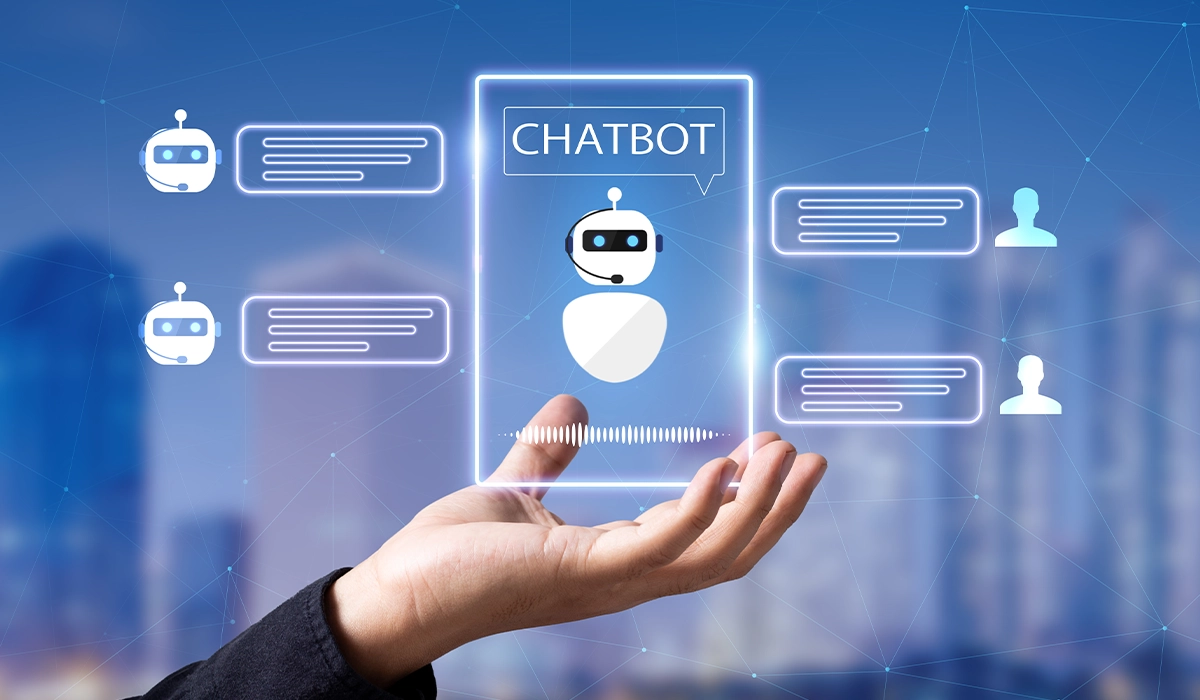
AI chatbots are conversational systems designed to respond to user queries, automate support, and guide interactions through predefined logic or trained intent models. While modern chatbots use natural language processing (NLP) to understand user input, their primary objective is task completion rather than content generation.
They are commonly deployed for FAQs, ticket routing, appointment scheduling, lead qualification, and first-level customer support, where speed and consistency are essential.
The following are the key differences between generative AI and AI chatbots.
The core difference lies in purpose and capability.
Generative AI focuses on creation, reasoning, and synthesis across open-ended scenarios, enabling adaptive responses and original output.
AI chatbots focus on interaction, automation, and structured support within clearly defined boundaries.
While chatbots operate effectively within set workflows, generative AI can adapt dynamically to new prompts and evolving business needs.
“Businesses that clearly differentiate between generative AI and AI chatbots are 40% more likely to deploy AI successfully without overengineering.”
Business Use Cases: Choosing the Right AI Approach
From an implementation standpoint, selecting the right AI approach depends on the problem being solved.
Generative AI is well suited for content generation, code assistance, market analysis, personalization engines, and internal productivity tools that require contextual intelligence.
AI chatbots are ideal for customer support, internal helpdesks, workflow automation, and repetitive interaction-based processes.
When AI initiatives are aligned with clear business objectives, organizations experience smoother adoption and stronger operational outcomes.
AI Development & Implementation Support with Syngrid Technologies
To help businesses move from experimentation to real-world impact, Syngrid Technologies provides end-to-end AI development services tailored to diverse business needs. with over 9 years of experience, Syngrid specializes in building scalable, secure, and business-focused AI solutions.
With expertise spanning generative AI, AI chatbots, machine learning models, NLP, computer vision, AI agents, and system integrations, Syngrid combines automation, predictive analytics, and industry insight to transform complex data into intelligent systems that enhance decision-making and operational efficiency.
Syngrid supports startups, SMEs, and enterprises through AI strategy consulting, custom development, and seamless integration with existing platforms.
Final Thoughts: Making the Right AI Choice
Generative AI and AI chatbots are not competing technologies; they serve different purposes within the broader AI ecosystem. Businesses that understand where each fits are better positioned to invest wisely, manage risk, and scale AI responsibly.
By grounding AI strategies in real-world experience, validated data, and transparent implementation practices, organizations can build trust, improve efficiency, and unlock sustainable business value.