


Businesses across industries are adopting mobile applications to improve efficiency, customer engagement, and operational scalability. A well-designed mobile app supports core business objectives by connecting users, systems, and data through a single digital interface.
Mobile applications are not limited to customer-facing use cases. They are increasingly used for internal workflows, sales enablement, data analytics, and service delivery. When aligned with business strategy, mobile apps become a measurable growth asset rather than a standalone technology investment.
Aligning Mobile Applications With Business Objectives
A successful mobile application begins with clarity around business goals. Whether the objective is revenue growth, customer retention, operational efficiency, or market expansion, the app architecture and features must directly support those outcomes.
Business-aligned mobile apps focus on usability, performance, and integration rather than isolated functionality. This approach ensures the application delivers long-term value instead of short-term engagement.
Improving Customer Engagement and Experience
Mobile applications create a direct, always-accessible communication channel between businesses and users. Features such as personalized dashboards, push notifications, and in-app support help maintain consistent engagement.
By analyzing user behavior within the app, businesses can refine services, improve product offerings, and deliver more relevant experiences. Enhanced engagement contributes to higher retention rates and improved customer lifetime value.
Streamlining Internal Operations
Mobile apps are increasingly used to optimize internal business processes. Applications designed for employee use can support task management, approvals, reporting, inventory access, and real-time collaboration.
Digitizing workflows through mobile platforms reduces dependency on manual processes, minimizes errors, and improves response times. This operational efficiency directly supports scalability and cost control.
Supporting Data-Driven Decision Making
Mobile applications generate actionable data across user interactions, transactions, and system performance. Integrated analytics dashboards allow leadership teams to track KPIs, monitor trends, and identify improvement areas.
Access to real-time data through mobile platforms improves decision-making speed and accuracy, particularly for sales, operations, and customer support teams.
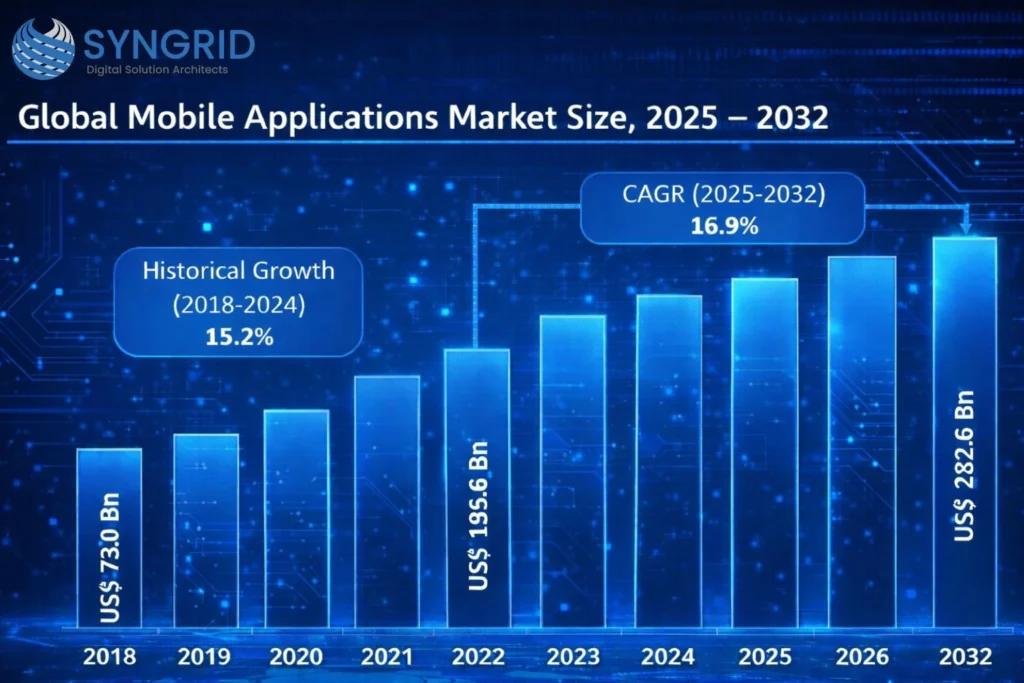
Global Mobile Applications Market Size (2025–2032)
The global mobile applications market continues to experience strong growth driven by enterprise digital transformation, increased mobile workforce adoption, and demand for scalable digital services.
Forecasts between 2025 and 2032 indicate sustained investment in mobile platforms across industries such as retail, healthcare, logistics, finance, and professional services. Businesses are prioritizing mobile applications that support operational resilience, customer accessibility, and system integration.
This growth highlights the strategic importance of building secure, scalable, and performance-driven mobile applications that align with long-term business goals.
Enhancing Revenue and Sales Performance
For B2B organizations, mobile apps can function as sales enablement tools, providing teams with instant access to customer data, pricing, and documentation, improving conversion efficiency.
Strengthening Brand Presence and Market Reach
A mobile application extends brand visibility beyond traditional digital channels. Consistent design, performance, and usability reinforce brand credibility and trust.
Mobile apps also allow businesses to enter new markets with localized experiences, multilingual support, and region-specific services, supporting international expansion strategies.
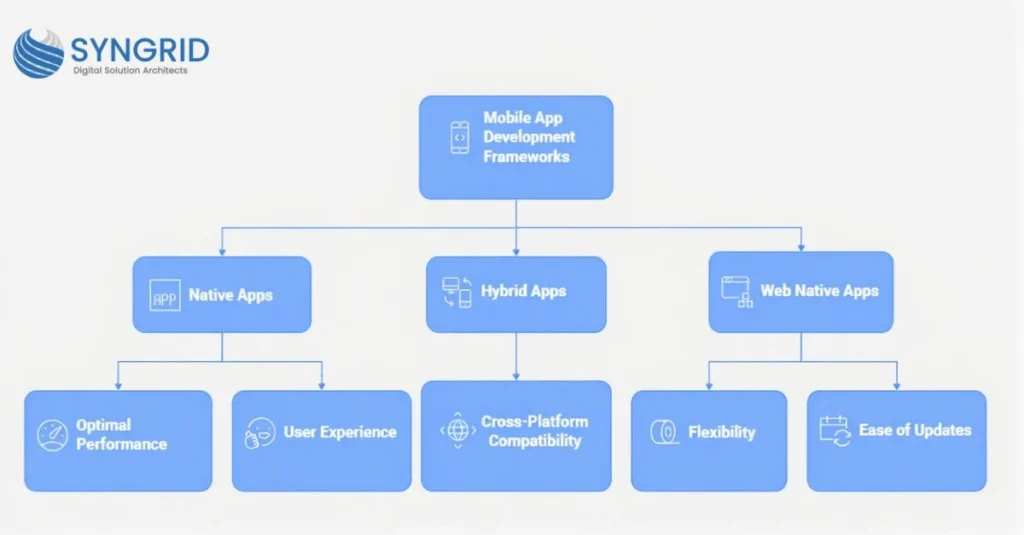
Mobile App Development Frameworks
Choosing the right mobile app development framework plays a critical role in performance, scalability, and long-term maintenance.
Native development offers high performance and deep device integration, while cross-platform frameworks support faster deployment across multiple operating systems. Hybrid frameworks provide flexibility for content-driven applications with moderate customization needs.
Selecting the appropriate framework ensures compatibility with existing systems, optimized user experience, and cost-effective future enhancements.
Security and Compliance Considerations
Mobile applications handle sensitive user and business data, making security a core requirement. Secure authentication, encrypted data storage, role-based access controls, and compliance with industry standards protect both users and organizations.
Applications designed with security-first architecture reduce operational risk and support regulatory requirements across regions and industries.
Integration With Business Systems
Mobile apps deliver maximum value when integrated with CRM, ERP, HRMS, and analytics platforms. Seamless system integration ensures synchronized data flow, eliminates duplication, and improves operational visibility.
An integrated mobile ecosystem supports automation, reporting accuracy, and improved cross-department collaboration.
Scalability for Long-Term Growth
Business needs evolve over time, and mobile applications must scale accordingly. Scalable architecture allows businesses to add features, users, and integrations without performance degradation.
Applications built with modular design principles support future enhancements, market expansion, and increased transaction volumes.
Why Businesses Choose Strategic Mobile App Development Partners?
A strategic development partner focuses on business outcomes rather than just technical delivery. This includes requirement analysis, UX strategy, architecture planning, security implementation, and post-launch optimization.
Experienced teams ensure that mobile applications align with business objectives, integrate seamlessly with existing systems, and support long-term digital growth.
Final Thoughts
Mobile applications play a critical role in achieving core business goals by improving engagement, operational efficiency, data visibility, and scalability. When built with a clear strategy, secure architecture, and integration-first approach, mobile apps become a strong driver of both operational and commercial success.
Syngrid Technologies provides end-to-end mobile app development services, helping businesses design, develop, and deploy scalable mobile applications aligned with long-term growth objectives. Organizations investing in mobile platforms today position themselves for sustained growth, stronger customer relationships, and a competitive edge in a digitally driven business environment.