

Introduction
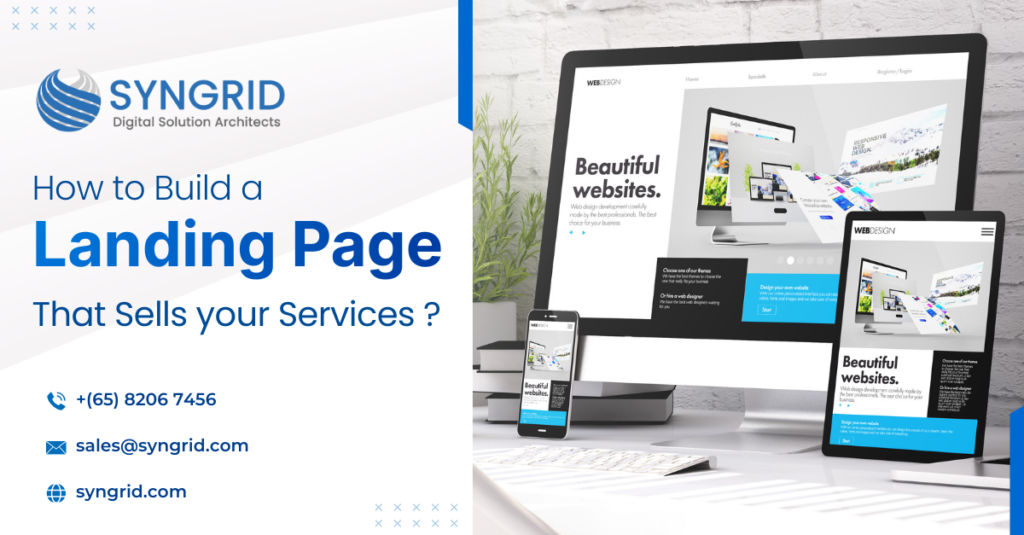
In today’s competitive digital landscape, a landing page is more than just a web page; it is a focused conversion tool for service-based businesses. A well-designed landing page helps capture leads, explain service value clearly, and guide users toward a specific action, such as booking a consultation or requesting a demo.
What Makes a High-Converting Landing Page for Services?
A high-converting service landing page shares several key characteristics:
Clear and benefit-driven headline
Focused messaging with a single conversion goal
Strong call to action (CTA)
Distraction-free layout
Trust-building elements such as testimonials and certifications
Fast loading speed and mobile responsiveness
These elements work together to turn visitors into qualified leads.
Understanding Your Target Audience and Service Offering
Before creating a landing page, it is essential to understand who your audience is and what they expect. A service landing page performs best when it directly addresses real business challenges, speaks the audience’s language, and clearly positions the service as the solution. When user intent and service messaging align, conversions naturally increase.
Key Elements Every Service Landing Page Must Include
Every effective service landing page should include the following components:
Headline – Clearly explains the main service benefit
Subheading – Adds clarity and reinforces value
Service Overview—Brief explanation of what you offer
Benefits Section – Highlights outcomes, not just features
Call-to-Action (CTA) – Encourages users to take the next step
Lead Capture Form – Simple and easy to complete
Visual Elements – Icons, images, or illustrations to support content
Writing Persuasive Copy That Converts Visitors into Leads
Conversion-focused copywriting is essential for service landing pages. Effective copy:
Focuses on customer pain points and solutions
Highlights measurable business benefits
Uses simple, action-oriented language
Includes SEO-friendly service keywords naturally
Guides users toward the CTA without overwhelming them
Well-written copy builds trust and motivates users to convert.
UI/UX Design Best Practices for Conversion-Focused Landing Pages
Good UI/UX design ensures users can navigate and understand the page effortlessly. Best practices include:
Clean and uncluttered layout
Consistent branding and typography
Clear visual hierarchy
Prominent and well-placed CTAs
Easy-to-use forms with minimal fields
A strong UI/UX design improves engagement and reduces bounce rates.
SEO Optimization for Service Landing Pages
To attract high-intent traffic, service landing pages must be SEO-optimized. Key SEO practices include:
Optimized meta title and meta description
Proper use of H1, H2, and H3 headings
Keyword-rich but natural content
Fast page speed and mobile optimization
Internal linking to relevant service pages
SEO ensures your landing page ranks well and attracts the right audience.
Using Trust Signals to Build Credibility and Increase Conversions
Trust signals help reduce hesitation and improve conversion rates. Effective trust elements include:
Client testimonials and reviews
Case studies and success stories
Certifications and partner logos
Industry awards or recognitions
Clear contact information
These elements reassure visitors that your services are reliable and proven.
Mobile Optimization and Page Speed for Better Performance
Mobile optimization is critical for modern landing pages. Key focus areas include:
Fully responsive design
Fast loading speed across devices
Easy-to-tap buttons and forms
Minimal pop-ups and interruptions
A mobile-friendly landing page improves both user experience and SEO rankings.
How Syngrid Technologies Builds Landing Pages That Drive Results?
Syngrid Technologies creates service landing pages that combine strategy, design, and performance. The approach focuses on:
Conversion-driven UI/UX design
SEO-optimized content and structure
Clear service positioning
High-performing lead capture systems
This ensures landing pages not only attract visitors but also consistently generate qualified leads.
Conclusion
Building a landing page that sells services requires the right balance of strategy, design, content, and optimization. When these elements work together, a landing page becomes a powerful tool for lead generation and business growth. With a structured approach and expert execution, service landing pages can deliver measurable results and long-term value.