
Syngrid

Author name: admin

IT Services and IT Solutions

Why Singapore Businesses Need an ERP System in 2026?

Singapore continues to lead Asia as a center for innovation and digital transformation. As businesses expand across markets, they face growing challenges in managing data, compliance, and operations efficiently. Manual systems and disconnected software often lead to delays, errors, and missed opportunities. An ERP system (Enterprise Resource Planning) integrates every part of a business—from finance and HR to inventory, procurement, and sales—into one unified platform. This improves visibility, reduces costs, and allows data-driven decision-making. By 2026, implementing an ERP system in Singapore will no longer be optional but essential for companies that want to stay competitive in a data-driven economy. Syngrid Technologies provides the insights and expertise Singaporean businesses need to plan and implement ERP systems effectively. What is an ERP System? An ERP system is a centralized software that manages key business functions through a single platform. It connects departments such as finance, accounting, HR, sales, and supply chain, helping businesses operate more efficiently. For Singapore-based companies, ERP systems help achieve greater transparency, improve collaboration between teams, and ensure compliance with local authorities like IRAS, MOM, and ACRA. Instead of managing separate systems, companies gain a single source of truth for all operations. repurpose blog posts into newsletters or social media snippets to maximize reach.Consistent, educational content keeps your brand visible and trustworthytwo vital components of long-term e-commerce success. How ERP Enhances Business in Singapore? ERP systems bring measurable improvements to business performance and growth. In Singapore’s fast-moving business environment, companies must adopt systems that improve accuracy, cut costs, and enable smarter decisions. Here’s how ERP enhances business operations: Centralized Data: All departments can access real-time, accurate data for faster decision-making. Regulatory Compliance: ERP systems help meet Singapore’s tax and reporting standards. Improved Productivity: Automation reduces manual work and boosts team efficiency. Informed Decision-Making: Business leaders gain insights through dashboards and analytics. Customer Satisfaction: Faster response times and better order tracking improve client relationships. ERP implementation allows businesses in Singapore to maintain control and scalability while adapting to rapid technological and market changes. Challenges in ERP Implementation Despite its benefits, ERP implementation comes with challenges that require proper planning and execution: Data Migration: Transferring legacy data accurately takes time and precision. User Training: Employees must adapt to new digital workflows and processes. Customization: Aligning ERP modules with unique business needs is crucial. Budget and Timeline: Implementation requires investment and structured rollout phases. When handled strategically, these challenges become opportunities for process improvement and long-term growth. Benefits of ERP Systems in Singapore ERP systems create measurable value across departments and industries. Some key benefits include: Greater Efficiency – Automates tasks and reduces duplication. Accurate Reporting – Offers real-time financial and operational insights. Cost Savings – Eliminates inefficiencies and improves resource allocation. Enhanced Collaboration – Improves communication between teams and departments. Scalability – Supports business expansion and multi-location management. For Singaporean SMEs and enterprises, these advantages support both local and regional competitiveness. Choose a Scalable and Future Ready ERP Approach ERP systems continue to evolve with cloud computing, analytics, and AI integration. Singapore businesses should focus on choosing ERP systems that can adapt as technology advances. A future-ready ERP system offers: Cloud-based access and scalability Integration with CRM, HRM, and financial tools Real-time analytics for performance tracking Strong data security and compliance management Adopting a scalable ERP approach ensures businesses stay flexible, efficient, and well-positioned for growth beyond 2026. Why Singapore Businesses Need an ERP System in 2026? The digital economy in Singapore is advancing rapidly, driven by government initiatives and a strong focus on innovation. To stay ahead, businesses must manage information, operations, and compliance efficiently. An ERP system plays a crucial role in achieving this. Here are the key reasons why ERP systems will become essential for Singapore businesses by 2026: 1. Rising Need for Data Accuracy and Real-Time Insights   Businesses today handle large volumes of data from multiple sources. An ERP system ensures accuracy by centralizing all data in one place. It provides real-time insights that help management make informed, timely decisions. 2. Greater Operational Efficiency   ERP systems automate repetitive tasks and integrate various departments—finance, HR, procurement, and sales—into a unified platform. This improves coordination, reduces manual errors, and boosts overall productivity. 3. Compliance with Local Regulations   Singapore’s business environment demands strict adherence to financial and employment laws. ERP systems simplify compliance with agencies such as IRAS, MOM, and ACRA by automating reporting, tax submissions, and payroll management. 4. Cost Control and Resource Optimization   By providing visibility into every aspect of operations, ERP systems help businesses manage budgets, track expenses, and allocate resources effectively. Over time, this leads to significant cost savings and better financial control. 5. Enhanced Decision-Making through Analytics   Modern ERP systems include analytics and dashboards that deliver insights into business performance. Leaders can track KPIs, monitor trends, and predict future demands—helping them plan strategically and stay competitive. 6. Scalability for Business Growth   As companies in Singapore expand regionally or globally, ERP systems make it easier to manage multiple branches, currencies, and tax jurisdictions. They grow with the organization and adapt to changing needs without major disruptions. 7. Competitive Advantage in a Digital Economy   By 2026, automation, data-driven decisions, and operational visibility will define successful businesses. ERP systems enable organizations to respond faster to market changes, improve customer satisfaction, and maintain a competitive edge. Why Choose Syngrid Technologies for ERP Software in Singapore? Choosing the right ERP partner is as important as selecting the system itself. A successful ERP project requires experience, customization, and continued support. Syngrid Technologies is a trusted ERP partner in Singapore, providing complete guidance and industry-focused implementation that helps businesses get maximum value from their ERP investment. 1. Understanding of Singapore’s Business Environment   With deep experience across local industries, Syngrid Technologies ensures your ERP system aligns with Singapore’s compliance, tax, and financial standards. 2. Industry Expertise   We deliver ERP systems tailored for sectors like retail, manufacturing, logistics, and services—supporting your specific workflows and business goals. 3. Scalable ERP Systems   Our ERP solutions grow with your business, adapting easily as you expand
Global Payroll

Why Should Small & Medium Businesses in Singapore Consider Global Payroll services?

Singapore has become a leading hub for regional and international business operations. As more companies expand into new markets and hire talent across borders, managing payroll for a distributed workforce has become increasingly complex. Different tax systems, currencies, and employment laws add layers of difficulty, and even small payroll errors can lead to compliance issues or employee dissatisfaction. To manage these challenges, many businesses are turning to global payroll services that centralize salary and compliance management across countries. Syngrid Technologies offers global payroll services in Singapore tailored for small, medium, and large enterprises. Our solutions support accurate and compliant payroll operations across multiple regions, helping businesses focus on growth while ensuring employees are paid correctly and on time.  What is Global Payroll Services? Global payroll services provide companies with a single system to manage salary processing, compliance, and reporting for employees located in different countries. Instead of maintaining separate payroll systems in each country, businesses can use a centralised solution to handle all calculations, payments, and statutory requirements. This approach improves consistency and allows management to monitor payroll performance across all locations from one platform. With Syngrid Technologies, companies in Singapore can manage payroll for both local and overseas employees through a unified system, ensuring accuracy and compliance across multiple regions. Why Global Payroll Services in Singapore Are on the Rise? Singapore’s position as a global business and technology hub attracts organizations with operations across Asia, Europe, and beyond. Managing payroll across several countries can be challenging due to different regulations, tax structures, and labor laws. To manage this complexity, businesses are increasingly adopting global payroll solutions that allow them to operate efficiently while meeting diverse compliance standards. Syngrid Technologies supports this demand by offering cloud-based payroll management designed to handle multi-country requirements. Our platform helps Singapore businesses maintain consistency, transparency, and compliance as they grow internationally. Key Advantages of Global Payroll Outsourcing Outsourcing payroll through a trusted provider offers several advantages to organizations of all sizes. 1. Centralized Payroll Management   All payroll operations are managed from one system, providing clear visibility and reducing administrative workload. 2. Regulatory Compliance   Each country has its own employment and tax laws. Partnering with a provider like Syngrid Technologies ensures compliance with local regulations and prevents costly errors. 3. Operational Efficiency   Automated calculations, CPF submissions, and tax filings reduce manual work and allow HR teams to focus on strategic business functions. 4. Data Security and Accuracy   Payroll data is highly sensitive. Syngrid Technologies uses secure cloud infrastructure and advanced encryption to protect employee information and maintain accurate records. 5. Scalability for Growth   Whether expanding into new countries or adding more employees, a global payroll solution can easily scale with the organization’s growth. Essential Features of a Trusted Global Payroll Provider in Singapore When selecting a payroll provider, businesses should look for key features that ensure reliability and compliance. Multi-country payroll management and reporting Compliance with Singapore’s MOM, CPF, and IRAS regulations, as well as international standards Currency conversion and multi-language support Integration with HR, accounting, and ERP platforms Transparent analytics and real-time payroll data Secure cloud hosting and encrypted access Dedicated customer support based in Singapore Syngrid Technologies incorporates all these features into its payroll platform, giving organizations a unified and compliant payroll experience. Why Should Small and Medium Businesses in Singapore Consider Global Payroll Services? Global payroll is not limited to large corporations. Many small and medium-sized businesses in Singapore now employ regional or remote staff. Managing salaries across different countries without a centralized system can lead to delays, compliance issues, and administrative strain. By adopting Syngrid Technologies’ global payroll services, SMEs gain: Access to professional payroll expertise without increasing HR headcount Accurate reporting and compliance with local and international laws Time and cost savings through automation Greater visibility over regional workforce expenses For SMEs planning to expand, a global payroll solution helps maintain control and consistency as operations grow. Potential Drawbacks in Global Payroll Services While global payroll solutions offer many advantages, businesses should be aware of potential challenges. Integration with existing HR or ERP systems may take time and careful planning. Data privacy laws, such as Singapore’s PDPA and the EU’s GDPR, require strict compliance. Selecting the right vendor is crucial, as reliability and compliance vary among providers. Initial setup or migration may involve some implementation costs. Syngrid Technologies minimises these risks through structured onboarding, transparent communication, and compliance-driven processes tailored for Singapore businesses. Why Choose Syngrid Technologies as Your Payroll Service Provider in Singapore? Syngrid Technologies is a Singapore-based provider specializing in payroll, ERP, and business process automation. Our global payroll platform is designed to meet the needs of businesses managing both local and international teams. Our approach focuses on accuracy, compliance, and adaptability. Key benefits include: Deep understanding of Singapore’s employment and tax framework Multi-country payroll capability with centralized reporting Integration with HR and accounting systems Secure cloud infrastructure with data protection controls Dedicated local support for Singapore clients With Syngrid Technologies, organizations can manage their global workforce with confidence and clarity. Conclusion As businesses in Singapore expand globally, managing payroll across different regions becomes a strategic priority. Global payroll services simplify this process by offering a unified way to handle compliance, reporting, and employee payments. Syngrid Technologies provides the expertise and technology to support companies at every stage of their growth. Our solutions help ensure payroll accuracy, compliance with local and international laws, and visibility across all operations. For organizations looking to improve payroll management and support international expansion, Syngrid Technologies delivers a practical and trusted solution built for Singapore’s evolving business environment.  .

Digital Marketing, Digital Transformation, IT Services and IT Solutions

Top 10 Punggol Digital District Companies List

1. Introduction Singapore continues to cement its reputation as Asia’s premier technology and innovation hub, and the Punggol Digital District (PDD) stands as a symbol of that transformation. Designed to unite business, academia, and government, PDD fosters collaboration between startups, global tech firms, and digital leaders. As we move into 2025, the district hosts a growing ecosystem of companies driving advancements in AI, cybersecurity, blockchain, robotics, and fintech. This article explores the top 10 companies in Punggol Digital District, showcasing the organizations shaping the future of Singapore’s digital economy. 2. Why Singapore Is a Leading Software Development & Tech Innovation Hub? 2.1 Strong Government Backing for Smart cities & Tech Projects Singapore’s Smart Nation initiative has positioned it as a global leader in digital transformation. Through agencies like JTC Corporation, the government actively supports innovation districts such as PDD, offering businesses a platform to test, scale, and commercialize technologies. The government’s commitment to infrastructure, cybersecurity, and AI development ensures that Punggol Digital District remains a strategic base for future-focused enterprises. 2.2 High-Quality Talent Pool and Thriving Innovation Ecosystem With institutions like the Singapore Institute of Technology (SIT) integrated within the district, companies have direct access to highly skilled graduates and R&D support. The synergy between academia and industry fosters a constant exchange of ideas, nurturing innovation in every corner of PDD. 3. Top 10 Companies in Punggol Digital District (2025) 3.1 Group-IB A global leader in cyber intelligence and digital forensics, Group-IB plays a crucial role in Singapore’s cybersecurity landscape. Their presence in PDD enhances collaboration with SIT on cybersecurity training and threat research, reinforcing Singapore’s digital resilience. 3.2 Wanxiang Blockchain Solution Wanxiang Blockchain brings expertise in decentralized finance and blockchain infrastructure, empowering businesses to explore secure, transparent transaction systems. The firm contributes to Singapore’s reputation as a regional blockchain innovation hub. 3.3 Syngrid Technologies Pte Ltd   Syngrid Technologies stands out as a trusted Zoho Partner and global IT solutions provider offering ERP systems, web development, and digital transformation services to businesses worldwide. The company’s presence in Punggol Digital District underscores its commitment to driving digital growth across sectors such as education, finance, and commerce. In addition to ERP and automation, Syngrid Technologies provides HubSpot services worldwide, helping organizations streamline their marketing, sales, and customer engagement through integrated CRM solutions that enhance productivity and scalability.   3.4 dConstruct Technologies This robotics and automation firm develops cutting-edge robotic systems for logistics, manufacturing, and smart facilities. Their solutions align with Singapore’s Smart Nation vision, enhancing operational efficiency across industries. 3.5 Target Media Creative A creative digital agency specializing in digital signage and media communication, TMCC enhances audience engagement across Singapore’s commercial spaces through AI-powered content distribution and analytics. 3.6 Boston Dynamics Globally recognized for its robotic innovations, Boston Dynamics brings advanced mobility and automation systems to Singapore’s tech ecosystem. Its involvement in PDD accelerates innovation in autonomous systems and smart robotics research. 3.7 Delteq Delteq, a Singapore-based systems integrator, supports digital transformation through cloud computing, enterprise solutions, and IT infrastructure modernization. Its relocation to PDD allows it to collaborate more closely with other tech-driven enterprises. 3.8 United Overseas Bank (UOB) Innovation Centre UOB’s technology hub in PDD focuses on fintech innovation, data analytics, and digital banking solutions. The bank’s collaboration with startups and tech partners positions it as a financial leader in Singapore’s evolving digital landscape. 3.9 Government Technology Agency (GovTech) GovTech plays a central role in Singapore’s public-sector digitalization. Its initiatives in AI governance, citizen services, and smart infrastructure help make PDD a testbed for national digital transformation projects. 3.10 Cyber Security Agency of Singapore (CSA) As the nation’s cybersecurity guardian, the CSA enhances collaboration between government and industry to safeguard digital assets. Its PDD presence strengthens Singapore’s standing as a secure and trusted digital economy. 4. Future Outlook: The Rise of Digital Districts in Singapore (2025–2026) The success of Punggol Digital District is inspiring the development of similar smart business hubs across Singapore. With plans to integrate sustainability, AI-driven logistics, and green architecture, these districts will shape the next decade of innovation in Southeast Asia. Companies that join PDD not only gain access to top-tier talent and infrastructure but also benefit from proximity to government-backed digital initiatives and global collaboration opportunities. 5. How to Choose the Right Tech Partner in Singapore When selecting a tech partner, businesses should prioritize: Proven expertise in digital transformation and automation Integration capabilities across CRM, ERP, and AI tools Transparent communication and global delivery support  Syngrid Technologies combine deep technical experience with strategic implementation—helping clients deploy solutions that enhance efficiency, scalability, and customer experience. 6. Conclusion The Punggol Digital District represents the future of Singapore’s digital innovation ecosystem. With a thriving mix of global leaders, research institutions, and emerging tech firms, it is driving advancements across AI, robotics, fintech, and cybersecurity. As 2025 unfolds, companies that collaborate within this ecosystem—or partner with trusted solution providers like Syngrid Technologies—will be well-positioned to lead in the digital economy of tomorrow.

E-Commerce Development

How to Boost Your E-Commerce Delivery Strategy  ?

A successful e-commerce delivery strategy starts with clear business goals. Every online store must know what it wants to achieve more website traffic, higher conversion rates, or improved customer retention.When your goals are measurable, it becomes easier to align your digital marketing efforts and delivery operations. Defining key objectives also helps your team track progress and adjust strategies as needed. Content Marketing for E-Commerce Success   Content marketing is essential for attracting and engaging potential customers. High-quality blogs, product videos, and guides help your brand stand out in a crowded online marketplace.Well-optimized content improves your search visibility, drives organic traffic, and builds credibility with your audience. You can also repurpose blog posts into newsletters or social media snippets to maximize reach.Consistent, educational content keeps your brand visible and trustworthytwo vital components of long-term e-commerce success. Leveraging Social Media and Email Marketing   Social media platforms and email campaigns play a big role in improving your e-commerce delivery strategy. Social media allows businesses to connect directly with audiences, showcase new products, and gather customer feedback.Email marketing, on the other hand, is perfect for nurturing relationships. Sending tailored offers, seasonal promotions, and post-purchase follow-ups increases retention and repeat orders.Together, these channels create a continuous engagement loopattracting new buyers and keeping existing ones loyal. Key Performance Indicators (KPIs) for E-Commerce Businesses   Tracking key performance indicators helps you measure what works and what doesn’t. Some essential KPIs for e-commerce delivery include: Conversion Rate: Tracks how many visitors complete a purchase. Customer Acquisition Cost (CAC): Monitors marketing efficiency. Customer Lifetime Value (CLV): Measures long-term customer value. Cart Abandonment Rate: Highlights checkout friction points. Return on Ad Spend (ROAS): Shows how well your ads perform. Regular KPI monitoring ensures every marketing and logistics effort supports your e-commerce goals. The Role of Digital Marketing in E-Commerce Sales   Digital marketing is the foundation of any strong e-commerce delivery strategy. It combines SEO, social media, email, and paid campaigns to ensure your brand reaches the right audience.A unified digital approach builds awareness, encourages conversions, and drives post-sale satisfaction. When digital marketing supports your delivery process, you gain visibility, speed, and better customer experiences. Benefits of Digital Marketing for E-Commerce Businesses   Investing in digital marketing delivers measurable benefits: Higher Visibility: SEO and online ads help your store rank higher. Improved Engagement: Social media interactions strengthen brand loyalty. Precise Targeting: Audience segmentation ensures relevant promotions. Lower Costs: Digital channels offer better ROI than traditional marketing. Scalability: Automation supports your business as it grows. Each of these factors contributes to a stronger and more flexible e-commerce delivery model. Importance of SEO and Social Media in E-Commerce Strategy   SEO and social media form the backbone of your online visibility. With effective SEO, your e-commerce site ranks higher, loads faster, and reaches buyers actively searching for products.Social media complements these methods by driving awareness and engagement. Platforms like Instagram, Facebook, and LinkedIn help create a community around your brand.When SEO and social media strategies work together, they deliver consistent traffic, higher conversions, and stronger customer loyalty. Making Data-Driven Decisions for E-Commerce Success   Modern e-commerce success depends on data. Analytics reveal patterns in customer behavior, campaign performance, and delivery efficiency. Businesses that analyze data can predict demand and make smarter decisions. Syngrid Technologies provides HubSpot services worldwide, empowering e-commerce businesses with advanced CRM, automation, and analytics tools. HubSpot dashboards help you track customer interactions, optimize workflows, and improve delivery outcomes all in one unified system. Why Choose Syngrid Technologies for Your E-Commerce Sales Strategy  Syngrid Technologies helps businesses optimize their entire sales and marketing journey. From HubSpot CRM implementation to SEO, marketing automation, and analytics integration, Syngrid provides end-to-end digital transformation solutions.By partnering with Syngrid, e-commerce companies can streamline operations, improve delivery efficiency, and boost customer satisfaction. The result? Faster growth and higher profitability in a competitive online landscape. Conclusion   An optimized e-commerce delivery strategy blends technology, marketing, and analytics to deliver seamless customer experiences.Setting clear goals, tracking KPIs, and embracing data-driven tools ensure every order reaches customers efficiently and profitably. With the right partner like Syngrid Technologies, you can transform your e-commerce business into a high-performing, customer-focused powerhouse.Start your journey toward better sales, smarter marketing, and faster deliveries-all powered by innovation and data.

Other IT Services

How CRM Software Can Improve Your Customer Support and Engagement  ? 

In the digital age, customer experience defines brand success. Companies no longer compete solely on product or price they compete on how well they understand and serve their customers. Modern consumers expect fast responses, personalized attention, and consistent communication.This is where Customer Relationship Management (CRM) software comes in. At Syngrid Technologies, we help businesses harness the full power of CRM systems to strengthen customer support and build meaningful engagement. A properly implemented CRM not only manages customer data but also transforms how teams connect, assist, and build relationships with clients. The Role of CRM in Modern Customer Support   Customer support has evolved far beyond answering emails or phone calls. Today’s support teams need complete visibility into customer histories, preferences, and previous interactions to deliver thoughtful, efficient service. With Syngrid Technologies’ CRM solutions, all customer information is stored in a unified platform. Support agents can instantly view purchase records, past tickets, and communication logs allowing them to resolve issues faster and offer accurate solutions without repetitive questioning. A modern CRM system acts as the backbone of customer service operations, enabling teams to: Track all interactions in one place Assign, monitor, and prioritize support tickets Identify recurring issues and prevent them proactively Measure support performance and satisfaction By integrating CRM into your customer support process, you create an environment where each customer feels heard and valued. How CRM Software Improves Customer Engagement   Customer engagement is the continuous effort to build trust, loyalty, and emotional connection with your audience. With the help of CRM software, businesses can create personalized communication strategies that foster engagement at every touchpoint. Syngrid Technologies enables companies to use CRM data to understand customer behaviour from browsing patterns to feedback trends. This allows you to anticipate needs and engage customers at the right moment with relevant messages. CRM systems help businesses: Segment audiences based on interests or purchase history Send targeted follow-ups and reminders Deliver personalized offers and recommendations Maintain consistent communication across email, chat, and social media These engagement tactics not only boost satisfaction but also drive repeat business and advocacy. Key Features of CRM That Enhance Support and Engagement   A CRM platform is packed with features designed to simplify how teams interact with customers. Syngrid Technologies ensures every CRM system we build includes the tools businesses need to maintain high-quality support and engagement. Some of the most impactful features include: Ticket management: Automatically log and track support requests from multiple channels. Communication tools: Enable instant updates between teams and customers. Customer insights dashboard: Analyse feedback, track satisfaction scores, and uncover patterns. Automation: Schedule reminders, send thank-you notes, or trigger surveys after support resolutions. Reporting and analytics: Evaluate performance metrics such as response time, issue resolution rates, and customer sentiment. These features help organizations operate more efficiently while improving the customer journey from the first interaction to post-sale support. Benefits of Using CRM for Customer Support Teams  When your support team has access to the right CRM tools, their entire workflow becomes more effective. Syngrid Technologies focuses on developing CRM systems that empower teams with data-driven insights and easy collaboration. Key benefits include: Quicker responses: Centralized data allows agents to find answers immediately. Stronger teamwork: Departments like marketing, sales, and support can collaborate effortlessly. Customer loyalty: Personalized communication keeps customers coming back. Proactive service: Use CRM analytics to detect patterns and resolve issues before they escalate. Ultimately, CRM transforms your support operations into a customer-focused ecosystem that boosts trust and loyalty. Real-World Examples of CRM Impact on Support and Engagement Businesses that adopt CRM systems often see measurable improvements within months. Companies working with Syngrid Technologies have reported shorter response times, higher satisfaction ratings, and better retention rates. For instance, a retail client used our CRM solution to connect its sales and support data. Within three months, they noticed a 25% increase in first-contact resolutions and a 30% improvement in repeat purchase rates. Another SaaS client reduced customer churn by implementing automated follow-ups and behaviour tracking features. These examples highlight how CRM technology drives both operational efficiency and customer happiness. How to Choose the Right CRM for Your Business  Choosing the right CRM system is crucial not all solutions fit every business model. Syngrid Technologies assists organizations in evaluating their needs, goals, and existing infrastructure before implementing a CRM. When selecting a CRM, consider factors such as: Scalability: Can it grow with your business? Integration: Does it connect with your marketing, sales, and support tools? Ease of use: Is your team comfortable using it daily? Analytics and reporting: Can it provide actionable insights? The right CRM should complement your business processes and enhance how your team interacts with customers at every stage. Hiring the Right Team to Manage Your CRM System  Technology alone doesn’t create success the people behind it do. Syngrid Technologies emphasises the importance of hiring a dedicated CRM team or training existing staff to manage the system effectively. A skilled CRM management team should understand: Customer journey mapping Data analysis and reporting Automation and workflow optimization Communication best practices Hiring the right people ensures your CRM operates at its full potential. This team becomes the link between technology and customer experience, ensuring every customer touchpoint adds value. Best Practices for Maximizing CRM Effectiveness   To benefit from your CRM investment fully, your organization needs to follow consistent best practices. At Syngrid Technologies, we guide clients through proven methods that maximize results: Maintain accurate data: Regularly update customer profiles to ensure precision. Train employees: Provide continuous learning opportunities on CRM features. Integrate across departments: Connect marketing, sales, and support teams through one system. Monitor performance: Track key metrics like resolution time and satisfaction rates. Act on feedback: Use insights from customers to improve processes and offerings. By making CRM usage a company-wide habit, you create a culture centered on customer understanding and improvement. Conclusion   CRM software is no longer a luxury it’s a necessity for businesses aiming to improve customer support and engagement. By combining advanced tools with strategic implementation, your organization can transform customer interactions

Web Application

How Much Does Payroll Software Development Cost?   

In a competitive business landscape, accurate payroll management is essential for maintaining employee satisfaction and ensuring legal compliance. Manual payroll processing can be time-consuming, error-prone, and inefficient especially as your workforce grows. This is why businesses are increasingly turning to payroll software solutions that automate salary disbursements, tax deductions, and compliance tracking. But one of the most common questions we hear at Syngrid Technologies is:“How much does payroll software development cost?” The answer depends on various factors including business size, required features, integration needs, and pricing models. In this comprehensive guide, Syngrid Technologies breaks down the costs, models, and strategies involved in developing payroll software that fits your organization’s goals and budget. Cost of Payroll Software for Different Business Sizes   Payroll software development costs vary significantly based on the scale of your business and the complexity of your payroll processes. Syngrid Technologies has experience working with startups, mid-sized companies, and large enterprises, and we’ve seen firsthand how requirements shift at each level. 1. Payroll Software Cost for Small Businesses   Estimated Cost: $10,000 – $30,000For small businesses, the focus is usually on simplifying core payroll functions. Features typically include: Basic salary processing Tax calculation and deduction Payslip generation Leave and attendance tracking Employee data management This level of payroll software helps small businesses move away from spreadsheets and manual systems without requiring a large investment. 2. Payroll Software Cost for Mid-Sized Companies   Estimated Cost: $30,000 – $80,000As businesses grow, payroll management becomes more complex. Mid-sized companies often need: Multi-department management Integration with HR and accounting systems Employee self-service portals Automated compliance with regional tax laws Detailed reports and analytics Syngrid Technologies designs scalable systems that support growth, ensuring that your payroll solution can expand as your workforce does. 3. Payroll Software Cost for Large Enterprises   Estimated Cost: $80,000 – $200,000+Enterprises often require end-to-end payroll systems that handle high employee volumes, multiple currencies, and regional tax variations. Common enterprise features include: Multi-country payroll management Role-based access control AI-driven analytics and predictive insights Real-time compliance updates Integration with ERP, HRMS, and accounting platforms At this level, the investment delivers a robust system that enhances efficiency, ensures compliance, and supports strategic decision-making. Payroll Software Pricing Models   Choosing the right pricing model is key to managing development costs effectively. Syngrid Technologies offers multiple models based on your project type, scope, and business priorities. 1. Subscription-Based (SaaS)   Ideal for businesses that prefer lower upfront costs and quick deployment. You pay a monthly or annual subscription fee based on usage or the number of employees.Advantages: Fast implementation Regular updates and maintenance Predictable monthly expensesBest for: Small and mid-sized businesses seeking flexible, cloud-based payroll management. 2. Custom Development (One-Time Investment)   This model involves a one-time cost for developing fully customized payroll software. It provides complete control over design, data security, and integration.Advantages: Tailored features and workflows No long-term subscription fees Strong data ownership and privacyBest for: Enterprises and organizations with unique payroll needs or compliance standards. 3. Hybrid Pricing Model   A balanced approach that combines the flexibility of SaaS with custom modules developed exclusively for your company.Advantages: Scalable and customizable Efficient cost management Adaptable to future business changesBest for: Companies looking for flexibility without sacrificing personalization. Payroll Software Development Price Comparison   Here’s a breakdown comparing different solution levels typically developed by Syngrid Technologies: Feature Basic Solution Advanced Solution Enterprise Solution Employee Management ✔ ✔ ✔ Payslip Generation ✔ ✔ ✔ Tax & Compliance Automation ✖ ✔ ✔ HR and Accounting Integration ✖ ✔ ✔ Multi-Country Payroll ✖ ✖ ✔ Reporting & Analytics ✖ ✔ ✔ Data Security Basic Standard Advanced Cost Range $10K–$30K $30K–$80K $80K–$200K+ These estimates serve as a reference. The actual cost can vary depending on the project’s technical complexity, chosen tech stack, and integration scope. Syngrid Technologies provides customized quotations after a detailed requirement analysis to ensure cost transparency and accuracy. Types of Payroll Software Development Pricing   Syngrid Technologies uses flexible engagement models to fit different client requirements. Each pricing type offers specific benefits based on project nature and development goals. 1. Fixed Price Model   A defined scope, timeline, and cost ideal for projects with clear requirements.Best for: Startups and small businesses with limited or well-defined features. 2. Time & Material Model   You pay based on actual time spent and resources used. This model works well for projects that may evolve during development.Best for: Companies seeking ongoing development flexibility and iterative updates. 3. Dedicated Team Model   A long-term collaboration model where Syngrid Technologies provides a dedicated development team.Best for: Enterprises needing continuous enhancements, maintenance, or feature expansions. Potential Additional Costs of Payroll Software Development  When planning payroll software budgets, companies often overlook some secondary costs. To ensure complete clarity, Syngrid Technologies outlines all possible additional expenses upfront. Common Add-Ons Include:   Third-Party Integrations: Connecting payroll software with HRMS, ERP, or accounting tools. Cloud Hosting and Infrastructure: Depending on whether the system is on-premises or cloud-based. Data Migration: Moving existing payroll data into the new system securely. Security & Compliance Audits: Ensuring protection against data breaches and legal non-compliance. Mobile App Extensions: Building mobile versions for employees and managers. Ongoing Support & Maintenance: Regular updates, bug fixes, and technical assistance. Understanding these add-ons helps avoid unexpected expenses later and ensures that your payroll software remains efficient and up-to-date. Maximizing Payroll Software ROI   A well-developed payroll solution doesn’t just reduce workload it improves profitability and compliance accuracy over time. Syngrid Technologies focuses on long-term ROI (Return on Investment) by aligning development strategies with business goals. Here’s how you can maximize returns on your payroll software investment: Automate Repetitive Tasks: Reduce manual errors and processing time. Integrate Systems: Connect HR, finance, and accounting tools to maintain unified data. Leverage Analytics: Use reports to forecast payroll expenses and workforce trends. Ensure Compliance: Stay updated with local and international tax regulations. Plan for Scalability: Choose technologies that can grow with your business. By focusing on these aspects, companies can quickly recover their initial investment through reduced administrative costs, improved data accuracy, and enhanced productivity. Final Conclusion on Payroll Software Development

Web Application

How to Choose a Software Development Partner in Singapore?

In Singapore’s fast-paced digital landscape, businesses must innovate constantly to stay ahead. From startups to enterprises, everyone is looking to build smarter, faster, and more user centric digital solutions. But here’s the truth – success doesn’t depend only on technology; it depends on choosing the right software development partner. The right partner can transform your ideas into impactful digital products that deliver measurable business outcomes.At Syngrid Technologies, we help Singapore businesses accelerate innovation through custom software development and dedicated development teams that combine local understanding with global talent.  Why Singapore Companies Need a Software Development Partner? Singapore’s focus on digital transformation, automation, and innovation has created a strong demand for software development expertise. Yet, hiring and retaining in-house developers can be costly and time consuming. Partnering with an experienced IT firm like Syngrid Technologies helps businesses: Access world class development talent without overhead costs Accelerate digital transformation and product launches Scale teams up or down quickly based on project needs Stay focused on business goals while experts handle the tech A strategic partnership allows your company to innovate faster without the complexity of managing large technical teams internally. Key Factors to Evaluate a Software Development Partner Before signing any contract, consider these critical evaluation factors: Technical Expertise: Confirm they have proven experience with your tech stack React, Node.js, Python, Java, .NET, and modern cloud platforms. Domain Knowledge: A partner who understands your industry delivers smarter, compliant, and more relevant solutions. Syngrid Technologies has experience across fintech, logistics, retail, and healthcare. Project Management: Look for structured Agile or Scrum methodologies, transparent progress tracking, and dedicated project managers. Security & Compliance: Ensure adherence to PDPA, data protection, and secure coding practices. Scalability & Flexibility: The partner should easily adapt to changes in project scope or team size. Client Success Stories: Genuine testimonials and case studies reflect long-term reliability. Steps to Choose the Right IT Partner in Singapore Here’s a simple three step process to find your ideal software development partner: Step 1 – Define Your Goals   Identify project objectives, target users, and desired outcomes. Prioritize core features and determine your timeline and budget. Set measurable success indicators (e.g., delivery time, user engagement). Step 2 – Evaluate and Shortlist   Research potential vendors with relevant case studies and client feedback. Request technical portfolios and assess process maturity. Compare not just cost but technical expertise, communication, and reliability. Step 3 – Test the Collaboration   Start with a short pilot project to evaluate delivery quality. Assess communication, responsiveness, and alignment. Once confident, scale the engagement for long term collaboration. At Syngrid Technologies, every new partnership starts with a pilot allowing clients to experience our process, quality, and team synergy before committing fully.  Software Development Engagement Models   Choosing the right engagement model is a crucial step in building a successful software development partnership. It determines how you collaborate, manage costs, and scale your team to meet evolving business goals. At Syngrid Technologies, we provide flexible engagement models that align with your project scope, timeline, and budget helping Singapore businesses accelerate digital transformation with confidence. Model Description Key Benefits Onshore Model Collaborate with a development team based in Singapore. Efficient communication, shared time zone, and strong cultural understanding. Offshore Model Partner with a team located in another country (e.g., Vietnam). Significant cost savings, access to global expertise, and faster delivery cycles. Nearshore Model Work with a regional team located in a nearby country. Balanced cost, convenient time overlap, and smoother collaboration. Dedicated Team Model A fulltime development team works exclusively on your projects. Deep integration, consistent quality, and easy scalability. Fixed Price Model Ideal for projects with well defined requirements and timelines. Predictable costs, clear milestones, and reduced financial risk. Time & Materials Model Best suited for dynamic projects with evolving requirements. Pay only for actual work, ensuring flexibility and transparency. Common Mistakes to Avoid When Choosing a Software Development Partner   Even with clear goals, many projects fail due to poor partner selection. Avoid these common mistakes to ensure a smooth experience: Mistake Why It’s a Problem Smart Fix Focusing Only on Price Low cost vendors often deliver poor quality and unreliable support. Balance cost with proven experience and technical capability. Ignoring Domain Expertise Lack of industry understanding leads to inefficiency and rework. Choose partners like Syngrid Technologies, experienced in your sector. Weak Communication Misalignment causes delays and missed goals. Ensure your partner uses Agile methods and clear progress reporting. Skipping Security Checks Poor compliance risks data breaches and penalties. Verify PDPA compliance and secure coding practices. No Post-Launch Plan Without support, your system may quickly face issues. Include ongoing maintenance and optimization in your contract.   Why Choose Syngrid Technologies as Your IT Outsourcing Partner   Syngrid Technologies empowers businesses across Singapore and Asia to transform their digital ideas into powerful, real-world solutions. Here’s why clients choose us: Comprehensive Development Services: From concept, design, and coding to testing and support. Expert Engineers: Skilled in full-stack, cloud, and enterprise-grade development. Client-Centric Approach: Transparent communication, proactive updates, and measurable progress. Security & Compliance: Aligned with PDPA and international data standards. Regional Advantage: Onsite collaboration in Singapore + development strength in Vietnam for quality and cost efficiency. We go beyond outsourcing we become your technology partner, focused on building digital success stories. Conclusion   Finding the right software development partner in Singapore is about building trust, ensuring technical alignment, and working with a team that truly understands your vision. Define your goals, evaluate carefully, and always test the collaboration before scaling. With the right partner, your digital product can go from concept to market faster and smarter. At Syngrid Technologies, we help businesses create meaningful digital impact through expert development, collaboration, and continuous support. Ready to begin your project?Let’s build something exceptional together.Contact Syngrid Technologies to schedule your free consultation.

Other IT Services

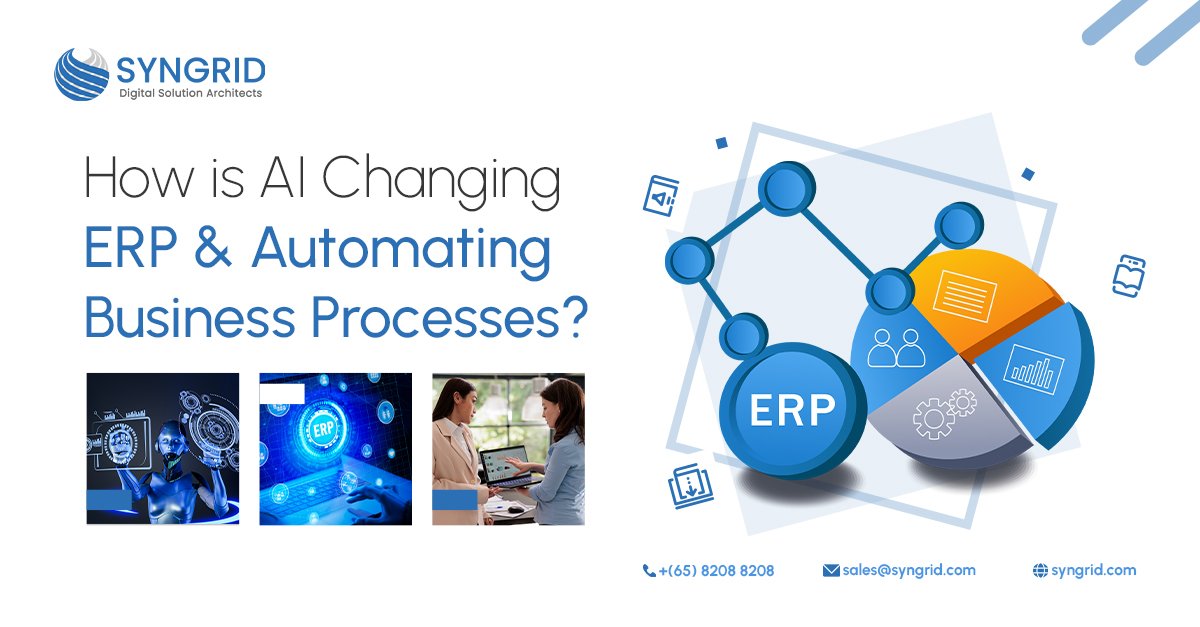
How is AI Changing ERP and Automating Business Processes? 

Artificial Intelligence (AI) is reshaping the modern enterprise. What started as experimental automation has evolved into intelligent systems that learn, adapt, and improve over time.Across industries, AI is becoming the foundation of digital transformation that helping organizations make faster decisions, improve accuracy, and operate with agility. In the heart of this transformation lies ERP (Enterprise Resource Planning). Traditionally designed to manage operations and resources, ERP systems are now evolving into AI-powered engines that drive automation, insight, and efficiency.At Syngrid Technologies, we help businesses unlock this potential by integrating AI into ERP systems to turn raw data into real-time intelligence. The State of ERP with AI in 2025   In 2025, ERP is no longer just a data management platform it’s a strategic decision-making tool powered by AI.Modern ERP solutions integrate machine learning, predictive analytics, and intelligent automation to help organizations adapt instantly to market changes. AI-driven ERP systems can: Predict sales trends and optimize supply chains Automate reporting and approvals Identify risks before they escalate Personalize user experiences with smart dashboards These systems not only manage business processes they enhance them. Benefits of AI-Enabled ERP   The benefits of embedding AI into ERP are measurable and transformative: Smarter Decision-Making – AI transforms complex data into actionable insights for faster, more informed business choices. Predictive Planning – Machine learning models forecast demand, revenue, and costs with high precision. Enhanced Efficiency – Intelligent automation reduces manual workloads and human error. Improved Customer Experience – AI personalises interactions based on behaviour and preferences. Cost Optimization – By identifying inefficiencies, AI lowers operational costs and increases ROI. With Syngrid Technologies, enterprises can harness these benefits through tailor-made AI-driven ERP solutions. Features of AI ERP  AI introduces next-generation capabilities that redefine ERP performance: Machine Learning: Learns from data to predict business outcomes. Natural Language Processing (NLP): Enables voice and text-based interaction with ERP systems. Robotic Process Automation (RPA): Handles repetitive tasks automatically. Intelligent Chatbots: Manage customer queries and support operations 24/7. Predictive Analytics: Forecasts risks, opportunities, and performance trends. Cognitive Insights: Provides deeper visibility into patterns and anomalies within large datasets. Together, these features turn ERP into a dynamic and intelligent ecosystem. Top ERP AI Tools to Supercharge Your System Several AI platforms are empowering ERP systems across industries: SAP S/4HANA AI: Delivers predictive analytics for finance and supply chain. Oracle Fusion Cloud AI: Enhances automation and real-time insights. Microsoft Dynamics 365 AI: Combines CRM and ERP data for smarter operations. NetSuite Intelligent Cloud: Streamlines workflows with built-in machine learning. UiPath & Automation Anywhere: Add powerful robotic automation to ERP processes. At Syngrid Technologies, we integrate and customize these tools to match each organization’s unique workflow and business goals. Future of AI in ERP   He next phase of ERP is defined by intelligence and adaptability.AI-driven ERP systems will soon learn continuously, anticipate business challenges, and make autonomous adjustments to optimize outcomes. Future ERP will: Self-correct and adapt based on performance metrics Provide prescriptive recommendations for strategic decisions Integrate with IoT and advanced analytics for real-time visibility Reduce downtime and improve productivity across all departments At Syngrid Technologies, we are shaping this future by developing ERP solutions that evolve with your business. How Does AI Revolutionize ERP?  AI revolutionises ERP by transforming it from a data management tool into a strategic decision-making engine.Instead of reacting to changes, AI-powered ERP anticipates them providing insights that drive innovation and resilience. For example: In finance, AI automates forecasting and detects anomalies. In supply chain, it predicts disruptions and suggests alternatives. In HR, it identifies hiring needs and optimises workforce planning. This transformation allows organizations to move from managing operations to mastering intelligence. Need Help with Integrating AI into Your ERP?  Integrating AI into ERP may seem challenging, but with the right partner, it becomes a powerful opportunity.Syngrid Technologies specialises in designing and implementing AI-ERP solutions that fit your business objectives and streamline complex workflows. Our experts ensure smooth integration, maximum efficiency, and measurable results  helping your enterprise stay competitive and future-ready. Conclusion   AI is reshaping ERP and redefining how businesses function.By combining intelligent automation with predictive analytics, organizations can make faster decisions, optimize resources, and drive growth. At Syngrid Technologies, we help enterprises transform their ERP systems into intelligent ecosystems that adapt, learn, and grow with them. The journey toward AI-powered ERP is not just a technological upgrade it’s a strategic move toward building smarter, more agile, and future-ready enterprises.Now is the time to embrace this transformation and lead your industry through intelligence, automation, and innovation with Syngrid Technologies

Mobile app development

Mobile Application Development – A Complete Guide

Mobile Application Development   In today’s vibrant digital world, mobile applications provide exciting opportunities for businesses to connect with their audience anytime, anywhere. At Syngrid Technologies, we transform innovative ideas into exceptional mobile experiences that enhance engagement, growth, and success. Mobile apps are more than tools they are dynamic platforms that allow businesses to showcase their products, deliver personalized experiences, and strengthen connections with customers. Every feature, design choice, and interaction can elevate your brand and create meaningful engagement. This guide explores mobile application development, its advantages, key features, development process, and strategies to create applications that inspire and empower users. At Syngrid Technologies, we focus on turning every idea into a mobile solution that drives business success.  What Is Mobile App Development?   Mobile application development is the process of creating software applications designed to run on mobile devices, such as smartphones and tablets. It combines programming, design, and testing to deliver apps that meet user needs and business objectives. Mobile apps can be: Native Apps – Built specifically for a single platform using programming languages like Swift (iOS) or Kotlin (Android). Cross-Platform Apps – Developed to work across multiple platforms using frameworks like Flutter or React Native. Web Apps – Mobile-friendly websites that function like apps in a browser. At Syngrid Technologies, we develop apps that leverage the right technologies to deliver exceptional performance and user experience.  Benefits of Mobile Application Development   Mobile apps provide numerous advantages for businesses and their customers: Enhanced Customer Engagement – Apps allow businesses to interact directly with their users, driving loyalty. Brand Visibility – A well-designed app strengthens brand recognition and recall. Accessibility – Users can access services and information anytime, anywhere. Revenue Opportunities – Apps offer monetization options such as in-app purchases, subscriptions, or ads. Actionable Insights – Mobile apps collect user data, enabling businesses to make informed decisions. By leveraging these benefits, Syngrid Technologies ensures your app delivers tangible business results.  Key Features of a Successful Mobile App  A high-performing mobile app should include: User-Friendly Interface – Easy navigation and intuitive design. Fast Performance – Quick load times and smooth operations. Data Security – Protecting sensitive user information. Offline Functionality – Access to app features without an internet connection, when needed. Integration – Ability to connect with third-party services or platforms. Our team at Syngrid Technologies develops apps with these essential features to create meaningful user experiences. The Mobile App Development Process   – A Complete Guide Developing a mobile application requires a structured approach. Here’s a step-by-step process followed at Syngrid Technologies: a. Ideation and Research   Every successful app starts with a clear idea. Research helps understand the target audience, competitor apps, and market demands. b. Planning   Planning involves defining the app’s features, functionalities, and technology stack. This phase sets the foundation for design and development. c. Design   Designing a mobile app involves creating user interfaces and user experiences that are visually appealing and intuitive. d. Development   During development, the app is coded based on the chosen platform and design. Developers integrate functionalities, databases, and external APIs as required. e. Testing   Testing ensures the app is free from bugs and works as intended across different devices and screen sizes. f. Deployment   Once the app passes testing, it is launched on app stores such as Google Play Store or Apple App Store. g. Maintenance and Updates   Post-launch, continuous updates and improvements are necessary to keep the app current and functional.  What Are The Best Mobile App Development Platforms?  Choosing the right platform is key to your app’s success: iOS (Apple) – Ideal for reaching Apple users; known for higher monetization potential. Android – Provides access to a large global audience with flexible distribution options. Cross-Platform Frameworks – Tools like Flutter and React Native allow building apps for multiple platforms efficiently. At Syngrid Technologies, we guide clients in selecting the platform that best aligns with their goals.  Different Types of Mobile Apps   Mobile apps can be categorised into: Native Apps – Platform-specific apps with optimal performance. Web Apps – Lightweight applications accessed through mobile browsers. Hybrid Apps – Combine elements of native and web apps for broader compatibility. We design apps that fit your business model, whether native, web-based, or hybrid.  Cross-Platform Or Progressive Web Application?   Businesses often face a choice between cross-platform apps and progressive web applications (PWAs): Cross-Platform Apps – Provide a near-native experience on multiple platforms using a single codebase. PWAs – Web-based apps that can function like native apps, accessible via browsers, often lighter and quicker to develop. Our experts at Syngrid Technologies help you make the right choice based on budget, functionality, and target audience.  Industries We Serve  At Syngrid Technologies, we provide mobile application solutions for a diverse range of industries. Our expertise allows us to deliver customized apps that meet the unique needs of each sector. Key industries we serve include: E-commerce – Mobile apps for online shopping, product catalogues, and customer engagement. Healthcare – Solutions for patient management, telemedicine, and wellness tracking. Finance – Apps for banking, payments, and financial management. Education – E-learning platforms, virtual classrooms, and student management systems. Travel & Hospitality – Booking apps, itinerary management, and travel guides. Logistics & Transportation – Fleet management, tracking, and delivery solutions. Entertainment & Media – Streaming apps, content platforms, and interactive experiences. By serving multiple industries, Syngrid Technologies ensures every mobile application is tailored to meet industry-specific requirements, providing meaningful value to both businesses and users. Why Choose Syngrid Technologies for Mobile App Development?   At Syngrid Technologies, we deliver comprehensive mobile app solutions tailored to your business needs. Our team offers: End-to-end development from ideation to deployment. Expertise in latest technologies and industry trends. Customized solutions designed to maximize engagement and growth. Continuous support and enhancements post-launch. Partnering with Syngrid Technologies ensures your mobile app stands out in a competitive digital landscape. Conclusion Mobile applications offer incredible opportunities for businesses to engage their audience, showcase their offerings, and grow in a mobile-first world. At Syngrid Technologies, we handle every step of the mobile app

Web Development

How Can Digital Marketing Drive Revenue for Small and Medium Businesses?   

Introduction For small and medium-sized businesses (SMBs), growth depends on one key factor  attracting the right customers and increasing sales. Whether you’re in services, retail, consulting, or local businesses, digital channels are where customers search, compare, and decide. Digital marketing is more than just online promotion it’s a strategic growth engine. With the right mix of SEO, PPC, SEM, social media, content, and analytics, SMBs can generate leads, improve conversions, and scale effectively. This shift makes digital marketing an essential tool for businesses of all kinds from service providers and consultants to retail stores and local enterprises. Digital marketing helps businesses reach their ideal audience, build credibility, and create measurable results, even with limited marketing budgets. The beauty of digital marketing lies in its versatility: it can target high-intent customers, drive immediate sales, build long-term brand authority, and provide actionable insights to continually optimize your strategy. At Syngrid Technologies, we help businesses turn their online presence into a measurable source of business growth and profitability.  1. SEO (Search Engine Optimization): Building Long-Term Revenue Growth   SEO (Search Engine Optimization) is the foundation of sustainable digital success. It focuses on improving your website’s visibility on search engines like Google ensuring your business appears when customers actively search for your products or services. Here’s how SEO drives long-term revenue: Increases Organic Traffic: Ranking higher means more visitors and more potential customers without paying for every click. Attracts High-Intent Leads: SEO targets users searching for specific keywords, ensuring they’re already interested in what you offer. Improves Brand Credibility: Appearing on the first page builds trust, making people more likely to choose your business. Reduces Acquisition Costs: Once established, SEO continues delivering leads over time with minimal ongoing cost. At Syngrid Technologies, we implement proven SEO techniques from keyword research and on-page optimization to local SEO and content strategies that grow your organic reach and convert visitors into long-term customers.  2. Pay-Per-Click (PPC): Driving Immediate, Measurable Revenue   While SEO builds lasting growth, Pay-Per-Click (PPC) advertising drives immediate visibility and fast revenue results. Platforms like Google Ads, Meta Ads, and LinkedIn Ads let you target specific audiences and appear instantly at the top of search results. Here’s how PPC impacts revenue directly: Instant Results: Ads begin generating traffic and leads as soon as campaigns go live. Precise Targeting: You can focus on location, demographics, job roles, or even behaviors to reach your ideal audience. Measurable ROI: You know exactly how much revenue each click or conversion generates. Flexible Spending: Adjust budgets anytime to focus on top-performing campaigns. At Syngrid Technologies, our PPC experts design performance-focused ad campaigns that maximize ROI ensuring your budget drives tangible results and measurable revenue growth. 3. Combining SEO and PPC for Maximum Revenue Impact SEO and PPC work best when they work together. While SEO delivers steady, organic leads, PPC offers quick visibility and valuable data insights. When combined, businesses can: Dominate search engine results with both paid and organic listings. Capture customers at every stage of the buying journey. Use PPC performance data to refine SEO strategies. Balance short-term gains with long-term growth. Syngrid Technologies integrates SEO and PPC into unified strategies ensuring consistent traffic, higher conversion rates, and stronger revenue performance across all marketing channels.  4. Beyond Search: Social Media, Email, and Content Marketing That Converts   Digital marketing extends far beyond Google searches. Channels like social media, email marketing, and content creation play a vital role in generating and sustaining revenue. Here’s how these strategies contribute to sales growth: Social Media Marketing: Platforms like Facebook, Instagram, and LinkedIn build brand awareness and foster engagement that leads to conversions. Email Marketing: Personalized emails nurture relationships, promote offers, and encourage repeat business. Content Marketing: Blogs, videos, and infographics establish authority, attract leads, and build long-term trust. At Syngrid Technologies, we design cross-channel strategies that connect with your audience wherever they are helping you convert engagement into measurable sales.  5. Data-Driven Strategies That Maximize Profitability   Every digital marketing action generates data clicks, impressions, conversions, and more. The power lies in analyzing that data to make smarter decisions. With analytics tools like Google Analytics and Meta Business Suite, businesses can: Identify which channels generate the most revenue. Optimize campaigns based on performance data. Reduce wasted spend and improve ROI. Forecast future growth with accurate insights. At Syngrid Technologies, we turn analytics into strategy helping you make data-driven decisions that increase both efficiency and profitability.  Why Syngrid Technologies is the Ideal Partner to Drive Growth for Small and Medium Businesses   Choosing the right digital marketing partner is crucial for small and medium businesses that want measurable results and sustainable growth. At Syngrid Technologies, we stand out because we: Offer Customized Strategies: Every business is unique. We tailor our SEO, PPC, SEM, social media, and content strategies to your specific goals and audience. Focus on Results: We don’t just drive traffic we focus on conversions, lead generation, and business growth. Leverage Data-Driven Insights: Every campaign is optimised using analytics to maximize ROI and improve performance continuously. Provide End-to-End Solutions: From planning and execution to reporting and optimization, we manage all aspects of digital marketing for your business. Support SMB Growth: We specialise in helping small and medium businesses compete with larger players by using smart, cost-effective digital strategies. At Syngrid Technologies, we offer all these digital marketing services to help your business grow and increase revenue.  Conclusion: Digital Marketing is the Growth Engine for Modern Businesses   For small and medium businesses, digital marketing is more than just promotion it’s a strategic growth driver. SEO builds sustainable visibility, PPC delivers quick results, social media and content marketing engage audiences, and analytics ensures every effort supports sales, business expansion, and overall profitability. By leveraging these tools, SMBs can reach the right customers at the right time, generate qualified leads, improve conversion rates, and establish long-term brand authority in their market. Digital marketing provides measurable results, allowing businesses to make data-driven decisions that maximize return on investment and ensure continued growth. All these digital marketing services are

× Offer
Scroll to Top