
Syngrid

Digital Marketing

Digital Marketing

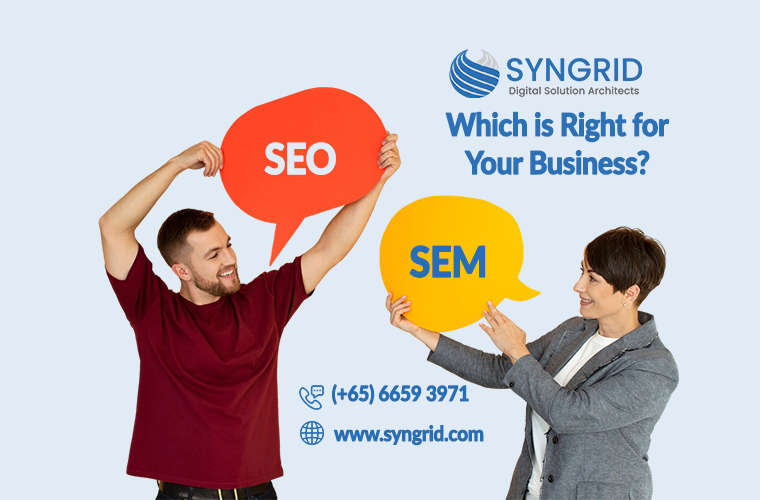
SEO vs. SEM: Which is Right for Your Business?

SEO vs. SEM: Which is Right for Your Business? SEO vs SEM in digital marketing is a critical comparison every business must understand to achieve online success. While both strategies aim to increase visibility on search engines and drive targeted traffic, they operate in distinct ways. Search Engine Optimization (SEO) focuses on organic growth through keyword optimization, content creation, and technical improvements, whereas Search Engine Marketing (SEM) involves paid advertising like Google Ads to appear at the top of search results instantly. Understanding the core differences between SEO and SEM in digital marketing enables businesses to choose the right strategy or a combination of both for maximum ROI and digital growth. What is SEO? SEO stands for Search Engine Optimization. It helps your website rank higher in search results without paying for ads. This is done by improving your website’s structure, content, and relevance. Key Components of SEO   On-Page SEO: Adjusting content, meta tags, headers, and keywords to fit search engine rules. Off-Page SEO: Getting backlinks, social shares, and mentions from other websites. Technical SEO: Making sure your site is fast, mobile-friendly, secure, and has clean code. Content Marketing: Writing helpful content that keeps people on your site. Benefits of SEO   Brings in long-term, free traffic Builds trust and brand reputation Offers a higher return on investment over time More budget-friendly than paid ads What is SEM? SEM stands for Search Engine Marketing. It uses paid ads to boost your visibility in search engines. This includes Google Ads, display ads, and shopping campaigns. Key Components of SEM   Google Ads & Bing Ads: Paid listings that appear at the top of search results Keyword Bidding: Choosing specific keywords to show your ads Ad Copy & Landing Pages: Writing attractive ad text and optimizing pages to convert visitors Performance Tracking: Monitoring clicks, conversions, and cost to improve campaigns Benefits of SEM   Delivers fast results and traffic Targets the right audience using search behavior Easy to scale up or down based on budget Offers detailed data for tracking success SEO vs. SEM: Key Differences Feature SEO SEM Cost Mostly free, but time-intensive Paid, needs ongoing budget Timeframe Takes months to show results Immediate visibility after setup Traffic Type Organic and steady Paid and depends on ad spend Click-Through Rate Higher for top organic results Lower but more targeted Conversion Rate Improves over time High from day one Maintenance Requires regular updates Needs constant funding and tweaks Which Strategy Is Right for You? Go with SEO if: You aim for steady, long-term traffic Your market isn’t too competitive You want to build authority and trust You’re ready to create and update content consistently Choose SEM if: You want fast results Your industry is highly competitive You have a paid ad budget You’re promoting a launch or time-limited offer The Best Approach: Combining SEO and SEM   If you want the best results, don’t choose one over the other combine both SEO and SEM. This way, you can enjoy the long-term benefits of SEO and the quick wins from SEM. Here’s how to make it work:   Start with SEM to gain fast visibility and attract early traffic. Invest in SEO alongside SEM to build long-lasting organic traffic. Use SEM data (like top-performing keywords) to refine your SEO strategy. Track and adjust both strategies regularly to stay competitive. By blending both approaches, your business can enjoy steady growth, immediate exposure, and higher conversion rates over time. Summary  Both SEO and SEM are powerful tools in digital marketing. Choosing between them depends on your business goals, timeline, and budget.For the best results, use a smart mix of both. SEO builds trust and brings long-term traffic. SEM provides quick exposure and measurable returns. At Syngrid Technologies, we offer expert SEO and SEM solutions tailored to your business. Whether you’re aiming for long-term growth or immediate impact, we’ve got the tools and expertise to help.

Digital Marketing

The Ultimate Guide to Digital Marketing for Singaporean Businesses

The Ultimate Guide to Digital Marketing for Singaporean Businesses With Singapore’s rapid digital transformation, businesses must embrace innovative marketing strategies to stay competitive. As more consumers rely on online platforms for shopping, information, and engagement, a structured digital marketing approach becomes essential. Whether you’re a startup, SME, or large corporation, using SEO, social media, content marketing, and paid advertising can significantly boost your online visibility and revenue. 1. Understanding the Singapore Digital Market Singapore boasts one of the world’s highest internet penetration rates, with over 90% of the population online. This tech-savvy audience prefers brands that engage them through digital channels. Hence, businesses must align their strategies to suit a digitally inclined market. Key Aspects of the Local Digital Landscape: Mobile-first behavior: Most users access the internet via smartphones, making mobile optimization critical. Social media influence: Platforms like Facebook, Instagram, LinkedIn, and TikTok dominate user interaction. E-commerce expansion: Platforms such as Shopee, Lazada, and Qoo10 fuel the online shopping trend. Analytics-driven: Data and insights drive decision-making and campaign refinement. 2. Search Engine Optimization (SEO) – The Foundation of Digital Presence SEO helps improve website rankings on search engines and attract organic traffic. A well-optimized site increases visibility and builds credibility. Effective SEO Tactics: Local SEO: Use Google My Business (GMB) for better local visibility. Keyword Research: Use tools like Google Keyword Planner and SEMrush to find relevant search terms. On-Page SEO: Optimize titles, meta descriptions, and headings. Technical SEO: Enhance site speed, mobile usability, and security. Content Optimization: Publish high-quality blogs and media rich in keywords. 3. Content Marketing – Engaging Your Audience Quality content builds authority, trust, and customer relationships. It also supports SEO and social sharing. Top Content Strategies: Blogging: Offer insights, industry updates, and thought leadership. Videos: Use YouTube and TikTok for interactive, short-form content. Infographics: Simplify data for better understanding. E-books/Whitepapers: Deliver detailed value to potential clients. Email Newsletters: Keep your audience informed and engaged. 4. Social Media Marketing – Expanding Brand Awareness With over 5 million social media users in Singapore, social platforms are ideal for reaching audiences and promoting your brand. Social Media Approaches: Targeted Ads: Run Facebook and Instagram ads based on demographics. LinkedIn Campaigns: Reach B2B clients and decision-makers. Video Content: Publish engaging videos on TikTok and YouTube. Community Engagement: Actively reply to comments and messages. Influencer Partnerships: Boost reach and credibility with local influencers 5. Pay-Per-Click (PPC) Advertising – Driving Instant Traffic PPC delivers fast results and measurable ROI by targeting specific user queries or demographics. Major PPC Platforms: Google Ads: Best for intent-based keyword targeting. Meta Ads (Facebook/Instagram): Effective for detailed audience targeting. LinkedIn Ads: Ideal for niche B2B audiences. Retargeting: Reconnect with visitors who didn’t convert initially. 6. Email Marketing – Strengthening Customer Relationships Email campaigns help nurture leads, re-engage past customers, and build brand loyalty. Email Success Tips: Personalization: Address users by name and segment lists. Automation: Send triggered emails like welcome messages and cart reminders. Testing: Use A/B testing for subject lines and calls to action. Responsive Design: Ensure emails look good on all devices. 7. E-commerce Marketing – Boosting Online Sales Selling online requires more than listing products. Marketing drives traffic and conversions. Winning Strategies: Product Page SEO: Use keyword-rich titles and descriptions. Shopping Ads: Display items in search results. Cart Abandonment Emails: Bring back potential buyers. Social Commerce: Enable shopping on Facebook and Instagram. User Content: Showcase testimonials and customer photos. 8. Data Analytics – Measuring and Improving Performance Tracking results ensures that marketing efforts are effective and budget-efficient. Recommended Tools: Google Analytics: Understand site behavior and conversions. Meta Business Suite: Monitor ad metrics across platforms. Hotjar/Crazy Egg: Visualize user behavior via heatmaps. Email Analytics: Review open and click-through rates. 9. Marketing Automation – Streamlining Processes Automation simplifies repetitive tasks, improves consistency, and enhances personalization. Top Automation Platforms: CRM Systems: Tools like HubSpot and Salesforce automate email and lead flows. Social Schedulers: Platforms such as Hootsuite automate content publishing. Smart PPC: Google Ads automation uses AI to maximize ROI. Top Digital Marketing Companies in Singapore Partnering with a reliable digital agency can amplify your results. Look for companies with industry expertise, proven case studies, and local market knowledge. Conclusion Digital marketing is an essential component of business success in Singapore. By leveraging SEO, content marketing, social media, PPC, email marketing, e-commerce strategies, and automation, businesses can enhance brand visibility, engage customers, and drive conversions. If you’re looking for professional digital marketing services tailored to your business needs, Syngrid technologies provides comprehensive solutions. From SEO optimization to PPC management, social media marketing, and automation, Syngrid helps businesses maximize their digital presence and growth. Contact Syngrid today to elevate your digital marketing strategy and achieve success in the Singaporean market!

Scroll to Top