
Syngrid

Author name: admin

E-Commerce Development

Top E-Commerce Platforms for Singaporean Businesses

Top E-Commerce Platforms for Singaporean Businesses In Singapore’s thriving digital economy, E-commerce platforms Singapore businesses rely on have become a central pillar for success. With more consumers preferring to shop online, it’s essential for local companies to build a strong digital presence. Whether you’re an SME, a startup, or a growing enterprise, selecting the right e-commerce service platform is a strategic decision that influences how effectively you sell products, engage your audience, and scale operations in a competitive marketplace. This blog explores the top platforms suited to Singaporean companies, highlighting their core features, benefits, and suitability for various business models. From user-friendly tools like Shopify to robust open-source options like WooCommerce, and even regionally dominant marketplaces like Lazada and Shopee, this guide will help you evaluate the best fit for your e-commerce journey. 1. Shopify   Overview: Shopify is one of the most popular e-commerce platforms globally and is gaining rapid traction in Singapore. Its intuitive user interface, all-in-one feature set, and reliability make it a top choice for entrepreneurs and small business owners. Key Features: User-friendly drag-and-drop store builder Secure, fast, and reliable hosting Supports various payment gateways including Shopify Payments and PayNow App store with thousands of integrations for marketing, shipping, accounting, etc. Mobile-responsive themes Abandoned cart recovery Multichannel selling (Facebook, Instagram, TikTok, Shopee, Lazada) Why Choose Shopify? If you’re a small to medium-sized business seeking a seamless way to launch and manage an online store without technical headaches, Shopify is ideal. Its scalability also means you can start small and grow over time without needing to change platforms. 2. WooCommerce   Overview: WooCommerce is an open-source WordPress plugin that turns your website into a customizable e-commerce store. It’s especially popular among businesses that already have a WordPress website or are looking for maximum flexibility. Key Features: Completely customizable with plugins and themes One-time setup cost, no monthly subscription Supports numerous payment gateways like Stripe, PayPal, and local Singapore options SEO-friendly structure using WordPress Integrated blogging for content marketing Strong developer community support Why Choose WooCommerce?WooCommerce is perfect for businesses that want full control over their store design, SEO, and functionality. While it may require more setup and maintenance compared to Shopify, the customization options are endless. 3. Lazada   Overview: Lazada is one of Southeast Asia’s largest e-commerce marketplaces. It allows businesses to list their products on an established platform without building a standalone website. Key Features: Access to a massive, ready customer base Integration with Lazada Logistics for seamless delivery Secure transactions and trusted payment solutions Seller Center dashboard with analytics and insights Marketing tools such as Sponsored Search, Flash Sales, and Vouchers Why Choose Lazada? For businesses that want to quickly get online without the time and cost of creating a standalone store, Lazada offers a powerful solution. It’s great for product-based businesses aiming to reach consumers across Singapore and beyond. 4. Shopee Overview: Shopee is another dominant e-commerce platform in Singapore with a strong mobile-first design. It’s popular among young shoppers and offers unique seller tools like live streaming and gamified marketing. Key Features: Intuitive mobile shopping experience Social commerce tools (Shopee Live, chat features) Various promotional campaigns and seller participation options Free shipping and vouchers Localised payment systems including ShopeePay Why Choose Shopee? If you want to focus on mobile commerce and tap into a highly engaged customer base, Shopee is a great option. Its tools for boosting product visibility and engaging with buyers make it especially appealing to startups and SMEs. 5. Magento (Adobe Commerce) Overview: Magento is an enterprise-level e-commerce platform built for large-scale businesses with complex needs. Owned by Adobe, Magento offers robust flexibility, deep customization, and powerful integrations. Key Features: Multi-store management capabilities Advanced inventory and customer segmentation Customizable checkout process Scalable infrastructure suitable for thousands of SKUs Built-in analytics and reporting tools Seamless integration with CRMs, ERPs, and third-party apps Why Choose Magento? Magento is best suited for medium to large enterprises that require a high degree of functionality, performance, and security. While it involves a steeper learning curve and higher costs, it offers a tailored experience that grows with your business. Other Notable Mentions   While the five platforms listed above are the most widely used, a few other platforms are worth considering: BigCommerce: Great for B2B businesses and enterprises needing strong analytics and customization Squarespace Commerce: Ideal for creatives and lifestyle brands looking for sleek design with basic e-commerce functions Zalora Marketplace: A popular platform for fashion retailers in Singapore Carousell: Best for second-hand goods or unique handmade items Factors to Consider When Choosing an E-Commerce Platform   Before making your decision, consider the following key factors: Business Size & Budget: Small businesses might prefer plug-and-play platforms like Shopify or Shopee, while large businesses may benefit from Magento’s power. Customization Needs: WooCommerce and Magento offer more flexibility, while platforms like Lazada and Shopee are less customizable but faster to deploy. Customer Base: Are you targeting B2B, B2C, or a niche audience? Choose a platform that aligns with your marketing goals. Integration with Local Systems: Check if the platform supports Singapore payment gateways (e.g., PayNow, GrabPay) and logistics providers. Mobile Friendliness: Shopee and Lazada are mobile-first, while Shopify and WooCommerce offer responsive themes. Long-Term Scalability: Look for a platform that can grow with your business without requiring a major migration later. Summary Selecting the right e-commerce platform is a strategic decision that significantly impacts your brand, customer experience, and sales. Whether you’re a solo entrepreneur, SME, or enterprise, there’s an ideal platform for your needs: Choose Shopify for a seamless, beginner-friendly store setup. Go with WooCommerce for full control and WordPress integration. Sell on Lazada or Shopee to reach wide audiences without building your own website. Opt for Magento if you’re an enterprise with large-scale and complex needs. At Syngrid Technologies, we specialize in helping businesses evaluate, implement, and optimize their e-commerce presence. From setting up a Shopify or WooCommerce store to managing listings on Lazada or Shopee, our experts ensure that your platform works flawlessly and aligns with your business

Web Development

Why Responsive Web Design Matters for Your Business ?

Why It’s Crucial for Your Business ? A well-designed website serves as the cornerstone of a thriving business in today’s digital world. However, its effectiveness depends on how well it adapts to various devices. Responsive web design (RWD) ensures that users enjoy a seamless experience, whether browsing on a desktop, tablet, or smartphone. This article explores the importance of responsive web design and how it impacts business success. What is Responsive Web Design? Responsive web design is an approach that enables websites to adapt seamlessly to different screen sizes and resolutions. It uses flexible grids, fluid images, and CSS media queries to create a dynamic user experience. Instead of maintaining multiple versions of a site for different devices, RWD provides a single, adaptive design that adjusts accordingly. How Responsive Design Impacts Branding A consistent visual experience across all devices strengthens brand identity. Responsive websites allow logos, colors, fonts, and messaging to appear uniformly, reinforcing trust and professionalism in the eyes of your audience. A disjointed experience, on the other hand, may lead users to question a brand’s credibility. Key Benefits of Responsive Web Design 1. Enhanced User Experience A website that is easy to navigate, loads quickly, and adjusts to various screen sizes keeps visitors engaged. Poor user experience due to improper formatting or difficult navigation can lead to high bounce rates and lost business opportunities. 2.Improved SEO Performance Search engines like Google prioritize mobile-friendly websites. Responsive web design helps improve search engine rankings by ensuring a consistent experience across all devices. Google’s mobile-first indexing means that sites optimized for mobile will rank higher in search results. 3. Increased Mobile Traffic With over half of global web traffic coming from mobile devices, businesses must cater to mobile users. A responsive design ensures that mobile visitors have a seamless experience, reducing frustration and increasing conversion rates. 4. Cost-Effective and Easier Maintenance Maintaining separate websites for desktop and mobile can be time-consuming and costly. Responsive design eliminates the need for multiple versions, reducing development and maintenance costs while ensuring consistency. 5. Higher Conversion Rates A smooth, accessible website experience leads to higher engagement and conversions. Whether customers are browsing products, filling out forms, or making purchases, a responsive design ensures they can complete their actions effortlessly. 6. Future-Proofing Your Business As new devices with varying screen sizes continue to emerge, a responsive website ensures compatibility. This adaptability safeguards your website from becoming outdated, ensuring long-term usability. Performance Optimization in Responsive Design Responsive design doesn’t just mean looking good—it also means performing well. Through professional web development services, fast load times, optimized images, and compressed scripts are implemented to ensure users don’t abandon your site due to slow performance. Tools like lazy loading and responsive image formats (like WebP) are integrated to dramatically improve loading speeds and overall user experience. 1. Mobile-First ApproachDesigning for mobile users first ensures that the most essential elements are prioritized, creating a streamlined experience that scales up for larger screens. 2. Flexible Grid LayoutsUsing percentage-based grid layouts instead of fixed-width structures allows elements to resize dynamically across different devices. 3. Optimized Images and MediaUsing responsive images and media queries ensures fast loading times without compromising quality, improving overall site performance. 4. Touch-Friendly NavigationMenus, buttons, and forms should be easily tappable for mobile users, reducing frustration and improving accessibility. 5. Consistent TestingRegularly test your website on various devices and screen sizes to ensure a flawless user experience. Common Mistakes to Avoid• Even with the best intentions, mistakes can hinder your responsive design efforts:• Overloading the mobile version with unnecessary content• Ignoring testing across devices and browsers• Using non-scalable fonts or fixed-width images• Failing to set proper viewport settings Avoiding these pitfalls ensures a smoother, more reliable experience for users Summary Responsive web design is no longer an option; it is a necessity for businesses looking to thrive in the digital landscape. A mobile-friendly, adaptable website enhances user experience, improves SEO rankings, and drives higher engagement and conversions. At Syngrid Technologies, we specialize in creating responsive web solutions tailored to your business needs. Let us help you build a future-proof website that delivers seamless performance across all devices.performance across all devices.

Digital Transformation

How Digital Transformation is Reshaping Businesses in Singapore?

How Digital Transformation is Reshaping Businesses in Singapore ? In today’s fast-evolving digital landscape, businesses must embrace technology to remain competitive. Singapore, known for its advanced infrastructure and pro-business policies, is at the forefront of digital transformation. From small enterprises to multinational corporations, companies are leveraging digital tools to enhance efficiency, improve customer experience, and drive growth. Understanding Digital Transformation Digital transformation refers to the integration of digital technologies into all aspects of business operations. This shift involves rethinking strategies, processes, and customer interactions to maximize efficiency and innovation. Key technologies such as cloud computing, artificial intelligence (AI), big data analytics, and automation are reshaping how businesses operate in Singapore. Impact of Digital Transformation Across Industries Retail and E-Commerce   Digital transformation has revolutionized the retail sector, with businesses leveraging online marketplaces, AI-driven customer insights, and cashless payment systems to improve efficiency. Financial Services   Fintech innovations, such as blockchain and digital banking, are streamlining transactions, enhancing security, and improving customer experiences in Singapore’s finance sector. Healthcare   Telemedicine, AI-powered diagnostics, and cloud-based patient records are improving healthcare accessibility and efficiency. Manufacturing and Logistics   Automation, IoT-driven supply chain management, and predictive analytics are optimizing production and delivery processes. Key Drivers of Digital Transformation in Singapore 1. Government Initiatives and Support   Singapore’s Smart Nation initiative and programs like the Infocomm Media Development Authority (IMDA) grants encourage businesses to adopt digital solutions. These government-led efforts provide funding, training, and infrastructure to support digitalization. 2. Rapid Technological Advancements   Emerging technologies such as AI, machine learning, and the Internet of Things (IoT) are driving innovation across industries. Businesses are integrating these solutions to enhance operations and gain a competitive edge. 3. Changing Consumer Behavior   With the rise of e-commerce, digital payments, and mobile applications, customer expectations have shifted. Businesses must leverage digital platforms to deliver seamless, personalized experiences. 4. Competitive Business Landscape   Singapore’s business ecosystem is highly competitive, pushing companies to innovate and adopt digital transformation strategies to stay ahead. Overcoming Challenges in Digital Transformation  While digital transformation offers numerous benefits, businesses must address challenges such as cybersecurity threats, high implementation costs, and skill gaps among employees. Companies must invest in cybersecurity measures, upskill their workforce, and adopt scalable digital solutions. Summary Digital transformation is reshaping businesses across Singapore, driving efficiency, innovation, and customer satisfaction. Companies that embrace digital technologies gain a competitive advantage and future-proof their operations. At Syngrid Technologies, we specialize in digital transformation services, offering tailored solutions to help businesses in Singapore navigate this technological shift. Let us assist you in unlocking new growth opportunities through innovative digital strategies.

Zoho Consulting

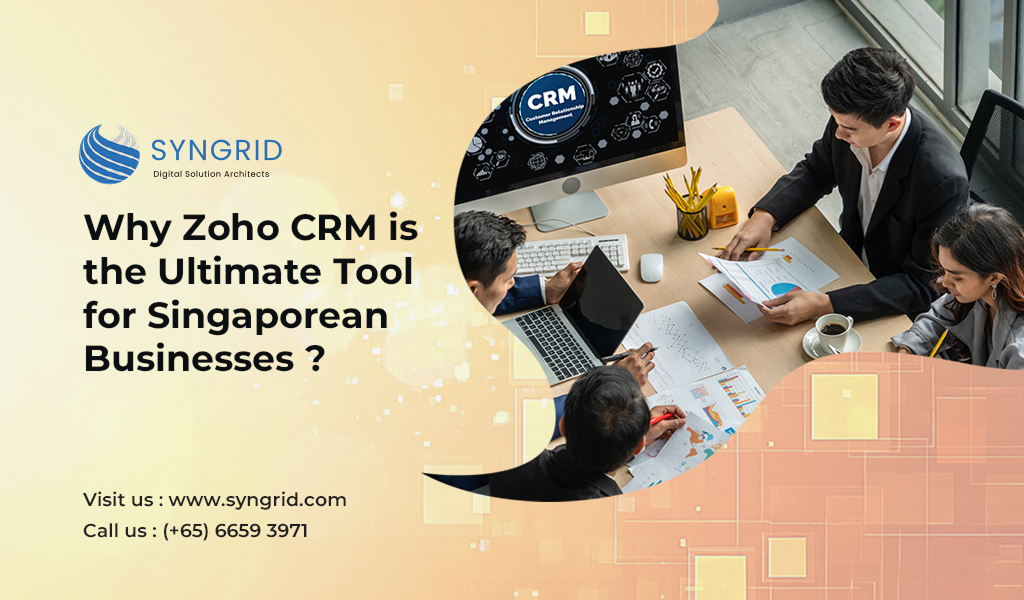
Why Zoho CRM is the Ultimate Tool for Singaporean Businesses ?

Why Zoho CRM is the Ultimate Tool for Singaporean Businesses ? In the competitive business landscape of Singapore, companies must leverage cutting-edge technology to stay ahead. Customer relationship management (CRM) is a crucial aspect of business success, ensuring seamless customer interactions, efficient sales management, and data-driven decision-making. Zoho CRM for business stands out as the ultimate tool for Singaporean businesses looking to optimize customer engagement and drive growth. Understanding Zoho CRM Zoho CRM is a cloud-based platform designed to streamline business operations by automating sales, marketing, customer support, and analytics. It enables businesses to manage customer interactions efficiently, track leads, and gain valuable insights to improve overall performance. Key Benefits of Zoho CRM for Singaporean Businesses 1. Seamless Integration with Local Business Ecosystem Singapore’s business environment demands efficiency and compliance with regulations. Zoho CRM integrates seamlessly with local payment gateways, government portals, and third-party applications such as SingPass and PayNow, ensuring smooth operations. 2. AI-Powered Automation   Zoho CRM’s AI assistant, Zia, helps businesses automate lead generation, sales forecasting, and workflow management. This automation reduces manual effort, allowing sales teams to focus on closing deals and enhancing customer relationships. 3. Customization for Diverse Business Needs   Every business operates differently, and Zoho CRM offers extensive customization options. Companies in Singapore can tailor Zoho CRM to match their industry-specific requirements, from finance and retail to healthcare and logistics. 4. Data Security and Compliance   Singapore has strict data protection laws, including the Personal Data Protection Act (PDPA). Zoho CRM provides enterprise-grade security features, ensuring businesses comply with local regulations while safeguarding customer data. 5. Enhanced Customer Engagement   With features like omnichannel communication, Zoho CRM enables businesses to interact with customers through email, social media, live chat, and phone calls, ensuring a unified and personalized customer experience. 6. Real-Time Analytics and Reporting   Data-driven decision-making is key to success. Zoho CRM offers real-time analytics, customizable dashboards, and predictive insights that help businesses track performance, identify trends, and optimize strategies for growth. How Zoho CRM Supports Different Industries in Singapore Retail and E-Commerce   Automates customer interactions and follow-ups Integrates with online stores and payment gateways Provides personalized marketing campaigns Financial Services   Ensures compliance with financial regulations Automates lead tracking and customer profiling Enhances fraud detection with AI-driven insights Healthcare   Manages patient interactions and appointments Streamlines medical billing and invoicing Ensures compliance with health data security standards Real Estate   Tracks property listings and customer inquiries Automates contract management and follow-ups Enhances communication with prospective buyers Best Practices for Maximizing Zoho CRM Efficiency 1. Implement Workflow Automation   Use automation to streamline repetitive tasks such as email responses, appointment scheduling, and follow-ups, freeing up time for strategic initiatives. 2. Utilize AI Insights   Leverage Zia’s AI capabilities to gain actionable insights, predict customer behavior, and optimize sales strategies. 3. Train Employees Effectively   Ensuring your team is well-trained on Zoho CRM’s features helps maximize productivity and enhances user adoption rates. 4. Integrate with Other Zoho Applications   Zoho CRM works seamlessly with other Zoho products like Zoho Books (accounting), Zoho Campaigns (email marketing), and Zoho Desk (customer support) to create a fully integrated business ecosystem. 5. Monitor Performance with Analytics   Regularly review reports and performance metrics to refine strategies and improve customer engagement. Summary Zoho CRM is the ultimate tool for Singaporean businesses looking to enhance efficiency, improve customer relationships, and drive sales growth. With its AI-powered automation, robust security, and customizable features, Zoho CRM empowers businesses to stay ahead in a competitive market. At Syngrid Technologies, we specialize in Zoho CRM implementation, customization, and integration to help businesses in Singapore achieve their goals. Let us assist you in leveraging the power of Zoho CRM for seamless business operations and increased ROI.

Other IT Services

How IT Services Can Help Your Business Stay Competitive in Singapore ?

How IT Services Can Help Your Business Stay Competitive in Singapore? In Singapore’s fast-paced business landscape, staying competitive requires a robust and efficient IT infrastructure. Businesses that leverage modern IT services in Singapore can enhance productivity, improve security, and gain a strategic edge over their competitors. This article explores how IT services in Singapore can help businesses maintain a competitive advantage and achieve long-term success. Enhancing Operational Efficiency IT services streamline business operations by automating routine tasks, optimizing workflows, and reducing downtime. Companies that invest in IT solutions can improve overall efficiency and ensure smooth operations. Key Benefits:   Automates repetitive tasks, reducing manual errors. Improves workflow efficiency with cloud-based solutions. Enhances collaboration with secure communication tools. Strengthening Cybersecurity Measures Cyber threats pose significant risks to businesses of all sizes. IT service providers help implement strong security protocols to protect sensitive data and prevent cyberattacks. Security Advantages:   Regular updates and threat monitoring. Data encryption and secure backup solutions. Compliance with cybersecurity regulations and industry standards. Supporting Business Scalability As businesses grow, their IT needs evolve. IT services offer scalable solutions that adapt to changing requirements, ensuring seamless expansion without major infrastructure investments. How IT Supports Growth:   Flexible cloud storage and computing options. Scalable IT support based on business demands. Integration with emerging technologies for future growth. Ensuring Reliable IT Support and Maintenance A reliable IT support system ensures minimal downtime and prompt resolution of technical issues, allowing businesses to focus on their core operations without disruptions. IT Support Benefits:   Proactive monitoring to prevent system failures. Faster resolution of technical issues. Regular system maintenance to ensure optimal performance. Summary Leveraging IT services is crucial for businesses in Singapore to remain competitive, secure, and efficient. From improving cybersecurity to enabling scalability, IT solutions help organizations navigate the evolving digital landscape with confidence. Syngrid Technologies provides tailored IT solutions to help businesses optimize their operations, enhance security, and drive growth. Contact us today to discover how our IT services can give your business a competitive edge in Singapore.

Digital Marketing

The Ultimate Guide to Digital Marketing for Singaporean Businesses

The Ultimate Guide to Digital Marketing for Singaporean Businesses With Singapore’s rapid digital transformation, businesses must embrace innovative marketing strategies to stay competitive. As more consumers rely on online platforms for shopping, information, and engagement, a structured digital marketing approach becomes essential. Whether you’re a startup, SME, or large corporation, using SEO, social media, content marketing, and paid advertising can significantly boost your online visibility and revenue. 1. Understanding the Singapore Digital Market Singapore boasts one of the world’s highest internet penetration rates, with over 90% of the population online. This tech-savvy audience prefers brands that engage them through digital channels. Hence, businesses must align their strategies to suit a digitally inclined market. Key Aspects of the Local Digital Landscape: Mobile-first behavior: Most users access the internet via smartphones, making mobile optimization critical. Social media influence: Platforms like Facebook, Instagram, LinkedIn, and TikTok dominate user interaction. E-commerce expansion: Platforms such as Shopee, Lazada, and Qoo10 fuel the online shopping trend. Analytics-driven: Data and insights drive decision-making and campaign refinement. 2. Search Engine Optimization (SEO) – The Foundation of Digital Presence SEO helps improve website rankings on search engines and attract organic traffic. A well-optimized site increases visibility and builds credibility. Effective SEO Tactics: Local SEO: Use Google My Business (GMB) for better local visibility. Keyword Research: Use tools like Google Keyword Planner and SEMrush to find relevant search terms. On-Page SEO: Optimize titles, meta descriptions, and headings. Technical SEO: Enhance site speed, mobile usability, and security. Content Optimization: Publish high-quality blogs and media rich in keywords. 3. Content Marketing – Engaging Your Audience Quality content builds authority, trust, and customer relationships. It also supports SEO and social sharing. Top Content Strategies: Blogging: Offer insights, industry updates, and thought leadership. Videos: Use YouTube and TikTok for interactive, short-form content. Infographics: Simplify data for better understanding. E-books/Whitepapers: Deliver detailed value to potential clients. Email Newsletters: Keep your audience informed and engaged. 4. Social Media Marketing – Expanding Brand Awareness With over 5 million social media users in Singapore, social platforms are ideal for reaching audiences and promoting your brand. Social Media Approaches: Targeted Ads: Run Facebook and Instagram ads based on demographics. LinkedIn Campaigns: Reach B2B clients and decision-makers. Video Content: Publish engaging videos on TikTok and YouTube. Community Engagement: Actively reply to comments and messages. Influencer Partnerships: Boost reach and credibility with local influencers 5. Pay-Per-Click (PPC) Advertising – Driving Instant Traffic PPC delivers fast results and measurable ROI by targeting specific user queries or demographics. Major PPC Platforms: Google Ads: Best for intent-based keyword targeting. Meta Ads (Facebook/Instagram): Effective for detailed audience targeting. LinkedIn Ads: Ideal for niche B2B audiences. Retargeting: Reconnect with visitors who didn’t convert initially. 6. Email Marketing – Strengthening Customer Relationships Email campaigns help nurture leads, re-engage past customers, and build brand loyalty. Email Success Tips: Personalization: Address users by name and segment lists. Automation: Send triggered emails like welcome messages and cart reminders. Testing: Use A/B testing for subject lines and calls to action. Responsive Design: Ensure emails look good on all devices. 7. E-commerce Marketing – Boosting Online Sales Selling online requires more than listing products. Marketing drives traffic and conversions. Winning Strategies: Product Page SEO: Use keyword-rich titles and descriptions. Shopping Ads: Display items in search results. Cart Abandonment Emails: Bring back potential buyers. Social Commerce: Enable shopping on Facebook and Instagram. User Content: Showcase testimonials and customer photos. 8. Data Analytics – Measuring and Improving Performance Tracking results ensures that marketing efforts are effective and budget-efficient. Recommended Tools: Google Analytics: Understand site behavior and conversions. Meta Business Suite: Monitor ad metrics across platforms. Hotjar/Crazy Egg: Visualize user behavior via heatmaps. Email Analytics: Review open and click-through rates. 9. Marketing Automation – Streamlining Processes Automation simplifies repetitive tasks, improves consistency, and enhances personalization. Top Automation Platforms: CRM Systems: Tools like HubSpot and Salesforce automate email and lead flows. Social Schedulers: Platforms such as Hootsuite automate content publishing. Smart PPC: Google Ads automation uses AI to maximize ROI. Top Digital Marketing Companies in Singapore Partnering with a reliable digital agency can amplify your results. Look for companies with industry expertise, proven case studies, and local market knowledge. Conclusion Digital marketing is an essential component of business success in Singapore. By leveraging SEO, content marketing, social media, PPC, email marketing, e-commerce strategies, and automation, businesses can enhance brand visibility, engage customers, and drive conversions. If you’re looking for professional digital marketing services tailored to your business needs, Syngrid technologies provides comprehensive solutions. From SEO optimization to PPC management, social media marketing, and automation, Syngrid helps businesses maximize their digital presence and growth. Contact Syngrid today to elevate your digital marketing strategy and achieve success in the Singaporean market!

E-Commerce Development

Building a Successful E-Commerce Store: Key Strategies for 2025

Building a Successful E-Commerce Store: Key Strategies for 2025 The e-commerce industry is evolving rapidly, and businesses must adopt modern strategies to stay ahead of the competition. Whether you’re launching a new online store or improving an existing one, understanding key success factors will help drive growth and profitability in 2025. Here are essential e-commerce strategies 2025 for building a successful online store. 1. Choose the Right E-Commerce Platform Selecting a reliable e-commerce platform is crucial. Platforms like Shopify, WooCommerce, Magento, and BigCommerce offer robust features, scalability, and security. Consider factors like pricing, ease of use, customization options, and third-party integrations when making your choice. The right platform should align with your business needs and allow seamless scalability as your store grows. 2. Optimize for Mobile Shopping With mobile commerce (m-commerce) on the rise, your e-commerce website must be mobile-friendly. A responsive design, fast-loading pages, and an easy checkout process enhance the shopping experience, reducing cart abandonment rates. Google’s mobile-first indexing also means that mobile optimization significantly impacts search engine rankings. 3. Implement SEO Best Practices E-commerce SEO is essential for driving organic traffic. Use keyword research, optimized product descriptions, structured URLs, and high-quality images to improve search rankings and increase visibility. Additionally, having a well-structured sitemap, proper meta descriptions, and internal linking can boost your site’s performance on search engines. 4. Enhance User Experience (UX) A seamless user experience improves customer retention. Ensure intuitive navigation, fast-loading product pages, clear CTAs, and secure payment gateways to build trust and increase conversions. Keep your checkout process simple by reducing the number of steps required for completing a purchase. 5. Leverage Social Media & Influencer Marketing Social media platforms like Instagram, Facebook, and TikTok drive brand awareness and sales. Collaborate with influencers, run targeted ads, and engage with customers to boost engagement and revenue. Utilizing shoppable posts and live shopping events can further enhance customer interaction and encourage purchases. 6. Utilize Personalization & AI AI-driven product recommendations, chatbots, and dynamic pricing enhance customer engagement. Use customer data to provide a personalized shopping experience. AI-powered email marketing automation can also improve customer retention by sending tailored product recommendations based on past behaviour. 7. Offer Multiple Payment Options Provide a variety of secure payment methods, including credit/debit cards, PayPal, digital wallets, and BNPL (Buy Now, Pay Later) to cater to different customer preferences. Offering regional payment options for international customers can significantly improve conversion rates. 8. Improve Website Security Security is a top priority in e-commerce. A secure website protects customer information and builds trust. Implement SSL certificates, two-factor authentication (2FA), and PCI-compliant payment gateways to ensure customer safety. Regular security audits help identify and fix vulnerabilities before they become a threat. 9. Leverage Data Analytics for Growth Understanding customer behaviour through data analytics can help optimize your marketing strategies. Utilize tools like Google Analytics, heatmaps, and customer journey tracking to monitor performance and make informed decisions. Data-driven insights allow you to refine product offerings, pricing strategies, and promotional efforts. 10. Offer Fast & Reliable Shipping Fast shipping and reliable order fulfillment are crucial for customer satisfaction. Partnering with trusted logistics providers and offering options like same-day or next-day delivery can give your store a competitive advantage. Providing real-time tracking enhances transparency and improves the overall customer experience. 11. Implement Customer Loyalty Programs Loyalty programs encourage repeat purchases and foster customer engagement. Offer incentives such as discounts, reward points, exclusive deals, and referral bonuses to retain customers. An effective customer retention strategy is just as important as acquiring new customers. 12. Utilize Email Marketing for Customer Retention Email marketing is a cost-effective way to maintain engagement with your audience. Send personalized emails, abandoned cart reminders, promotional offers, and product recommendations to keep customers engaged and encourage repeat purchases. 13. Ensure Accessibility & Compliance Making your website accessible to all users, including those with disabilities, is essential for inclusivity. Follow Web Content Accessibility Guidelines (WCAG) by providing alt text for images, keyboard navigation, and proper contrast ratios to enhance usability. 14. Utilize Automation to Streamline Operations Automating processes such as order fulfillment, customer support, and inventory management can save time and reduce errors. Integrating AI-driven chatbots and automated inventory tracking ensures efficiency and enhances the customer experience. 15. Optimize Customer Support Providing excellent customer service can set your business apart from competitors. Implement live chat, AI chatbots, 24/7 support, and clear return policies to improve customer satisfaction. Quick resolution of customer queries can enhance brand loyalty. 16. Test & Optimize for Continuous Improvement Regularly testing different aspects of your website, ads, and content strategies ensures continuous improvement. A/B testing your landing pages, checkout process, and product descriptions can help optimize performance and drive higher conversions. Conclusion Building a successful e-commerce store in 2025 requires a combination of cutting-edge technology, strategic marketing, and a customer-centric approach. By implementing these key strategies, you can create a high-performing online store that attracts, engages, and converts customers. If you need professional e-commerce development services, Syngrid technologies offers tailored solutions to help your business thrive in the competitive e-commerce landscape. From website development to SEO optimization, security, and automation, Syngrid provides comprehensive solutions to ensure your online store’s success. Contact Syngrid today to build a high-converting e-commerce website for 2025 and beyond!

Web Development

10 Must-Have Features for a High-Performing Business Website

10 Must-Have Features for a High-Performing Business Website A well-optimized business website is essential for success in today’s digital landscape. Whether you run a small business or a large enterprise, your website serves as the primary touchpoint for customers. To stand out from the competition and drive conversions, your website must incorporate key features that enhance user experience, functionality, and performance. Here are 10 must-have features for a high-performing business website. 1. Responsive Design With mobile users surpassing desktop users, having a responsive website is no longer optional. A mobile-friendly website ensures that your content is easily accessible on any device, providing a seamless experience regardless of screen size. Google also prioritizes mobile-friendly websites in search rankings, making responsiveness crucial for SEO success. 2. Fast Loading Speed Website speed directly impacts user experience and SEO. Studies show that 53% of users abandon a website that takes more than three seconds to load. To enhance speed, optimize images, leverage caching, use a content delivery network (CDN), and minimize unnecessary scripts. A fast-loading website reduces bounce rates and keeps visitors engaged. 3. User-Friendly Navigation A well-structured navigation system ensures that users can easily find the information they need. A clear menu, intuitive layout, and logical content hierarchy improve the user journey, increasing engagement and conversions. Ensure that your navigation is simple, with minimal clicks required to reach important pages. 4. SEO Optimization Search Engine Optimization (SEO) is vital for driving organic traffic to your website. Optimize your site for keywords relevant to your business, use descriptive meta tags, create high-quality content, and build backlinks. Additionally, ensure your website follows technical SEO best practices, such as proper URL structures, sitemaps, and schema markup. 5. High-Quality Content Content is the backbone of any successful website. Engaging blog posts, informative articles, product descriptions, and compelling landing pages establish your authority in the industry and provide value to visitors. Regularly updated content helps improve search engine rankings and encourages repeat visits. 6. Secure SSL Certification Website security is paramount, and an SSL certificate is a fundamental requirement. It encrypts user data, ensuring safe interactions between your website and visitors. Websites without SSL (HTTPS) are flagged as insecure by browsers, deterring potential customers and harming your credibility. Secure websites also rank better in Google searches. 7. Strong Call-to-Action (CTA) A high-performing business website should guide visitors toward specific actions, such as making a purchase, signing up for a newsletter, or contacting your team. Well-placed, compelling CTAs with clear messaging encourage users to take the next step in the buyer journey. 8. Contact Information & Live Chat Support Your website should make it easy for visitors to reach you. A dedicated contact page with phone numbers, email addresses, and location details enhances credibility. Additionally, integrating live chat support improves customer service by offering instant assistance, increasing the likelihood of conversions. 9. Social Media Integration Social proof plays a crucial role in building trust. Integrating social media links, share buttons, and embedded feeds allows visitors to engage with your brand across multiple platforms. Displaying testimonials and user-generated content from social media further strengthens credibility and boosts engagement. 10. Analytics & Performance Tracking To optimize your website’s performance, you need data-driven insights. Using tools like Google Analytics, you can track visitor behaviour, page performance, traffic sources, and conversion rates. These insights help refine your strategy, enhance user experience, and drive business growth. Conclusion A high-performing business website is a blend of design, functionality, and performance optimization. By implementing these 10 essential features, you ensure your website not only attracts visitors but also converts them into loyal customers. If you’re looking for a reliable partner to help you build and optimize your business website, Syngrid provides expert web development and optimization services. From responsive design to SEO, security, and performance tracking, Syngrid ensures your website meets industry standards and drives business success. Contact Syngrid  technologies today to take your website to the next level!

Cybersecurity Services

Top Cybersecurity Threats Facing Singaporean Businesses in 2025

Top Cybersecurity Threats Facing Singaporean Businesses in 2025 In today’s digitally interconnected world, Singaporean businesses face an ever-evolving landscape of cybersecurity threats 2025. Protecting sensitive data, maintaining operational continuity, and preserving customer trust have become paramount. In 2025, businesses must stay vigilant and proactive to defend against increasingly sophisticated cyberattacks. This article will delve into the top cybersecurity threats 2025 facing Singaporean businesses and provide insights into how to mitigate these risks. Understanding the Evolving Threat Landscape: An Overview Singapore, a hub for innovation and technology, attracts cybercriminals seeking to exploit vulnerabilities. The increasing reliance on cloud services, IoT devices, and AI technologies has expanded the attack surface, making businesses more susceptible to cyber threats. Understanding the nature and scope of these threats is crucial for developing effective defense strategies. Key Cybersecurity Threats For Singaporean Businesses 1. Ransomware Attacks: Persistent and Sophisticated Ransomware remains a significant threat, with attackers employing advanced tactics to encrypt data and demand ransom. Modern ransomware attacks often involve double extortion, where data is both encrypted and exfiltrated. Targeting Critical Infrastructure: Attacks on essential services like healthcare and finance can cause significant disruptions. Ransomware-as-a-Service (RaaS): This model allows less skilled attackers to launch sophisticated campaigns. Data Exfiltration and Public Shaming: The threat of data leaks forces businesses to consider paying ransoms. Cybersecurity Gains: Strengthened backup and recovery systems to minimize data loss. Enhanced endpoint protection to detect and prevent ransomware infections. Improved incident response plans to quickly contain and recover from attacks. 2. Phishing and Social Engineering: Exploiting Human Vulnerability Phishing attacks, including spear-phishing and business email compromise (BEC), continue to be effective due to human error. Attackers exploit psychological vulnerabilities to gain access to sensitive information. Spear Phishing: Targeted attacks that impersonate trusted individuals. Business Email Compromise (BEC): Attacks that trick employees into transferring funds. AI-Powered Phishing: Advanced phishing attacks using AI to create realistic emails and voice calls. Cybersecurity Gains: Comprehensive employee training programs to raise awareness about phishing tactics. Implementation of Multi-factor authentication (MFA) to enhance account security. Advanced email filtering and threat detection tools to block malicious emails. 3. Supply Chain Attacks: Targeting Interconnected Networks Supply chain attacks exploit vulnerabilities in interconnected networks by compromising a single supplier to gain access to multiple targets. Software Supply Chain Vulnerabilities: Malicious code injected into software updates. Vendor Compromises: Attackers target vendors with weaker security postures. Third-Party Data Breaches: Leaks from vendors expose sensitive data. Cybersecurity Gains: Thorough vendor risk assessments and due diligence. Implementation of robust security controls for third-party access. Continuous monitoring of the supply chain for potential vulnerabilities. 4. Cloud Security Risks: Managing Shared Responsibility As businesses increasingly rely on cloud services, securing cloud environments becomes crucial. Misconfigurations and unauthorized access can lead to data breaches. Misconfigurations: Improperly configured cloud services expose sensitive data. Lack of Visibility and Control: Managing security across multiple cloud environments. Shared Responsibility Model Challenges: Understanding and fulfilling responsibilities in the cloud. Cybersecurity Gains: Regular security audits and penetration testing of cloud environments. Implementation of strong access controls and data encryption. Continuous monitoring of cloud activity for suspicious behaviour. 5. AI-Driven Cyberattacks: Advanced and Automated AI-powered cyberattacks are becoming more sophisticated, with attackers using AI to automate attacks and create advanced malware. Automated Attacks: AI automates reconnaissance and exploitation. Deep fake Technology: Creating convincing phishing emails and voice calls. AI-Powered Malware: Malware that evades traditional security defenses. Cybersecurity Gains: Deployment of AI-powered threat detection and response systems. Continuous monitoring of network traffic for anomalies. Regular updates of security software to address emerging threats. 6. IoT and OT Security: Expanding the Attack Surface The proliferation of IoT devices and operational technology (OT) systems expands the attack surface. Vulnerable IoT Devices: Weak security features make IoT devices easy targets. OT System Vulnerabilities: Outdated OT systems lack robust security. Convergence of IT and OT: Increased risk of cascading failures. Cybersecurity Gains: Implementation of network segmentation to isolate IoT and OT devices. Regular patching and updating of IoT and OT systems. Monitoring of IoT and OT networks for suspicious activity. Conclusion Singaporean businesses must prioritize cybersecurity to protect themselves from the evolving threat landscape. By understanding the top threats and implementing robust security measures, businesses can mitigate risks and maintain their competitive edge. Syngrid Technologies Pvt Ltd offers top-notch cybersecurity solutions and services tailored to today’s needs. We take a holistic approach to cybersecurity, defining a unique security roadmap for your business. We offer services such as web application firewalls, dark web monitoring, DNS security, data leak prevention, and IT assessments. Let us assist you in building a resilient cybersecurity posture and ensuring business continuity.

Digital Transformation

Why Your Business Can’t Afford to Wait ?

Why Your Business Can’t Afford to Wait ? In a rapidly evolving digital world, businesses that fail to embrace digital transformation risk falling behind. From streamlining operations to enhancing customer experiences, adopting digital strategies is no longer an option it’s a necessity. Organizations that proactively invest in technology-driven solutions gain a competitive edge, increase efficiency, and drive sustainable growth. Business growth urgency is key, and businesses must act swiftly to adapt to the changing landscape. The Growing Need for Digital Transformation 1. Enhanced Customer Expectations Modern consumers expect personalized experiences, instant support, and seamless interactions across digital platforms. Businesses must adopt AI-powered chatbots, data analytics, and automation tools to meet these expectations. 2. Operational Efficiency and Cost Savings Automating repetitive tasks, optimizing workflows, and integrating cloud-based systems improve operational efficiency. By eliminating manual processes, businesses save time and resources, allowing teams to focus on innovation and strategic growth. 3. Data-Driven Decision Making With access to vast amounts of real-time data, businesses can make informed decisions that enhance productivity and profitability. Advanced analytics tools help track performance, identify inefficiencies, and uncover new opportunities. 4. Competitive Advantage Companies that embrace digital solutions stay ahead of competitors by offering faster services, better products, and more engaging customer experiences. Digital transformation enables businesses to adapt to market trends swiftly and scale operations efficiently. Key Areas of Digital Transformation 1. Business Process Automation Automating core business functions like finance, HR, supply chain, and customer support significantly reduces errors and improves efficiency. Efficiency Gains: Automates billing, payroll, and inventory management Reduces operational costs and human errors Enhances productivity by streamlining workflows 2. Cloud Computing and IT Modernization Moving to cloud-based solutions ensures scalability, security, and remote accessibility, enabling businesses to operate efficiently from anywhere. Efficiency Gains: Ensures data security and business continuity Reduces IT infrastructure costs Supports remote and hybrid work models 3. Artificial Intelligence and Machine Learning AI and ML are transforming how businesses interact with customers, analyze data, and automate processes. Efficiency Gains: Enhances customer support with AI-driven chatbots Provides predictive insights for better decision-making Automates marketing and personalizes user experiences 4. Digital Marketing and Customer Engagement With increasing online interactions, businesses must focus on SEO, social media, email marketing, and personalized advertising. Efficiency Gains: Expands customer reach and engagement Increases conversion rates with targeted campaigns Strengthens brand loyalty through data-driven insights Overcoming Challenges in Digital Transformation 1. Resistance to Change Many employees and stakeholders may resist adopting new digital strategies. Businesses must prioritize training, change management, and clear communication to ensure smooth transitions. 2. Data Security and Compliance As companies digitize operations, protecting customer data and ensuring compliance with regulations like GDPR and CCPA is essential. Investing in cybersecurity solutions and conducting regular audits can mitigate risks. 3. Integration of Legacy Systems Many businesses struggle with integrating new digital solutions with existing legacy systems. A phased approach to modernization ensures seamless integration without disrupting operations. The Future of Digital Transformation The rapid evolution of technology, including blockchain, IoT, 5G, and edge computing, will continue reshaping industries. Businesses that adopt an agile approach to digital transformation will remain competitive and adaptable in an ever-changing landscape. Conclusion Digital transformation goes beyond merely adopting new technologies; it involves reshaping business models, improving operational efficiency, enhancing cybersecurity, leveraging cloud computing, and elevating customer experiences. Organizations that seize transformation opportunities today establish themselves as industry front runners, while those that delay may struggle to keep up in the competitive landscape. At Syngrid Technologies Pvt Ltd, we excel in assisting businesses through their digital evolution with customized solutions that enhance automation, optimize workflows, integrate AI-driven analytics, and drive overall success. Let us help you harness the full power of digital transformation for a more intelligent, data-driven, and streamlined future.

× Offer
Scroll to Top