

Syngrid

August 2025

Mobile app development

The Cost of Mobile App Development: What You Need to Know

Introduction In today’s digital era, mobile apps are no longer a luxury but a necessity for businesses of all sizes. From startups to enterprises, everyone is investing in mobile app development to engage customers, streamline operations, and boost revenue. However, one of the most common questions business owners ask is, “How much does mobile app development cost?” The answer is not straightforward because the cost depends on multiple factors, including complexity, features, design, and development approach. Understanding these elements will help you plan your budget and make informed Factors That Influence Mobile App Development Costs The cost of developing a mobile app depends on several interconnected factors. The type of app, chosen platform, design requirements, and development model all play a role in determining the final investment. One of the primary cost drivers is the complexity of the app. A basic app with minimal features, such as a simple calculator or note-taking app, will cost significantly less compared to an e-commerce or on-demand delivery app that requires payment integration, GPS tracking, and real-time notifications. The more complex the features, the more time and expertise required, which increases costs. Another factor is the platform choice. Businesses often face the decision of whether to build an app for iOS, Android, or both. Developing for a single platform can be more affordable, while creating apps for both platforms will naturally require a higher budget due to the additional design, coding, and testing needed. Native vs. Cross-Platform Development  Choosing between native and cross-platform development can greatly influence the overall cost of your mobile app project. Native apps are built specifically for one operating system, iOS or Android, using dedicated programming languages like Swift for iOS or Kotlin for Android. These apps provide superior performance, security, and user experience but are pricier since separate development is required for each platform. On the other hand, cross-platform apps are developed using frameworks like React Native or Flutter, enabling developers to use a single codebase for both iOS and Android. This approach reduces development time and cost but may compromise slightly on performance compared to fully native apps. The right choice depends on your business goals, target audience, and budget. The Role of App Design in Cost  Design is one of the most important aspects of mobile app development and directly affects both cost and user engagement. A well-designed app ensures smooth navigation, an intuitive interface, and a pleasant user experience, all of which are essential for retaining users. Basic designs with standard templates are cost-effective but may not help your brand stand out in a competitive marketplace. On the other hand, custom UI/UX design tailored to your brand identity involves more effort, creativity, and testing, which raises the development cost. However, investing in design is highly recommended, as it directly influences how users perceive and interact with your app. Backend Development and Integrations Mobile apps often require a backend system to manage data, user accounts, transactions, and integrations with external services. For example, e-commerce apps need a backend to manage product catalogs, payment gateways, and order histories, while social media apps rely on backends to handle messaging, notifications, and user profiles. The cost of backend development depends on its complexity and the type of integrations required. Adding advanced features like artificial intelligence, augmented reality, chatbots, or third-party integrations such as payment systems and cloud storage can significantly increase costs. However, these features often add immense value to the app and can set your business apart from competitors. App Maintenance and Updates   The cost of mobile app development does not end once the app is launched. Continuous maintenance and updates are crucial to keep the app running smoothly, fix bugs, and introduce new features based on user feedback. Ongoing costs include hosting fees, regular security patches, performance optimization, and adapting to new OS updates released by Apple and Google. Businesses must allocate at least 15–20% of their initial app development budget annually for maintenance to ensure long-term success. How Much Does Mobile App Development Actually Cost?   While it is difficult to give an exact figure, industry standards provide some useful estimates. Simple apps with minimal features may cost between $5,000 and $20,000. Moderately complex apps with features like user authentication, payments, and data integration can cost between $20,000 and $80,000. Highly complex apps, such as enterprise-level applications or apps with advanced technologies like AI, AR/VR, or blockchain, can cost upwards of $100,000. These figures can vary based on the development team’s location. Developers in North America or Europe typically charge higher hourly rates than those in Asia. Many businesses choose to work with outsourcing partners to balance quality and cost-effectiveness. Why Planning and Strategy Matter   Without proper planning, mobile app development costs can easily spiral out of control. It is essential to start with a clear strategy that includes a detailed scope of features, target platforms, and technology choices. A well-planned roadmap not only helps you avoid unexpected expenses but also ensures your app is aligned with your business objectives. Many companies also benefit from starting with a Minimum Viable Product (MVP). An MVP allows you to launch a simplified version of your app with essential features, test it with real users, and gather feedback before investing in additional functionalities. This approach reduces risks and ensures your budget is spent wisely. Conclusion Choosing the Right Partner for Mobile App Development   The cost of mobile app development depends on multiple factors such as complexity, design, platform, and ongoing maintenance. While it may seem like a significant investment, a well-designed and functional app can deliver long-term value by enhancing customer engagement and driving business growth. Partnering with the right development team is critical to getting the best return on your investment. Syngrid Technologies, a trusted software development company, specializes in creating tailored mobile applications that align with your business goals. With expertise in native and cross-platform development, innovative design, and robust backend solutions, Syngrid ensures that your app is not only cost-effective but also future-ready. Whether you’re a startup

Web Development

Top 7 HubSpot Integrations to Supercharge Your Workflow  

Introduction In today’s competitive digital landscape, efficiency and alignment are key to business success. Companies relying on multiple tools often face fragmented workflows, data silos, and communication gaps. HubSpot integrations help solve this problem. HubSpot, a leading CRM and marketing automation platform, offers a wide range of integrations that connect your favorite tools, streamline processes, and drive business growth. With the right integrations, businesses can unify sales, marketing, and customer service efforts eliminating inefficiencies while improving productivity. In this blog, we’ll explore the top 7 HubSpot integrations that can supercharge your workflow, enhance customer experiences, and maximize ROI. 1. HubSpot + Salesforce   Why it matters: For businesses using Salesforce as their primary CRM, integrating it with HubSpot ensures smooth alignment between sales and marketing. Data flows seamlessly, eliminating duplicate entries and keeping teams updated. Key Benefits: Automatic syncing of leads, contacts, and deals Better collaboration between marketing and sales teams Improved lead nurturing with marketing automation 2. HubSpot + Slack   Why it matters: Integrating HubSpot with Slack brings CRM updates directly into your team’s communication hub. Key Benefits: Instant notifications about new leads, deals, or support tickets Share reports and updates within Slack channels Accelerate response times by notifying the right teams in real-time 3. HubSpot + Zoom   Why it matters: Integrating Zoom with HubSpot simplifies scheduling, hosting, and tracking meetings. Key Benefits: Automatically log Zoom meetings within HubSpot Sync recordings, notes, and attendee details to CRM records Streamlined webinar management for marketing campaigns 4. HubSpot + Shopify   Why it matters: For e-commerce businesses, syncing Shopify with HubSpot bridges the gap between online sales and marketing campaigns. Key Benefits: Sync customer and order data into HubSpot Create personalized email campaigns based on purchase history Automate abandoned cart recovery workflows Example: A Shopify store can use HubSpot to send personalized product recommendations based on customers’ past purchases, boosting repeat sales. 5. HubSpot + LinkedIn Ads   Why it matters: Paid advertising is a vital growth driver. Integrating LinkedIn Ads with HubSpot ensures ad performance data is connected with CRM insights. Key Benefits: Track ROI on ad campaigns directly in HubSpot Automatically sync leads from LinkedIn forms to HubSpot CRM Optimize targeting using HubSpot’s rich customer data Pro Tip: Combine this integration with HubSpot workflows to retarget prospects with tailored ads. 6. HubSpot + Gmail/Outlook  Why it matters: Sales teams rely heavily on email. Integrating HubSpot with Gmail or Outlook simplifies communication while ensuring every interaction is logged. Key Benefits: Automatic email logging and tracking Access HubSpot templates directly from your inbox Real-time notifications when leads open emails Why it matters: Not every app integrates with HubSpot natively. Zapier acts as a bridge, connecting HubSpot with thousands of other tools. Key Benefits: Automate repetitive tasks across multiple platforms Build custom workflows without coding Save time by creating “Zaps” that trigger actions in HubSpot Example: Automatically add webinar registrants from Eventbrite to HubSpot CRM and trigger a nurturing email sequence. How Syngrid Technologies Supports HubSpot Users   While HubSpot integrations are powerful, implementation and ongoing optimization are critical to getting real results. Syngrid Technologies provides professional HubSpot services to help businesses leverage the platform effectively, including: HubSpot Implementation: Setting up CRM, CMS, and automation tools tailored to your business needs. CRM Migration: Ensuring smooth transitions from other platforms to HubSpot. Customization: Configuring workflows, pipelines, and templates to match business processes. Training & Support: Equipping teams to maximize HubSpot’s features for sales, marketing, and customer service. With Syngrid’s guidance, businesses can streamline workflows, nurture leads efficiently and unlock the full potential of HubSpot—without the learning curve or risk of misconfiguration. Conclusion   The right integrations can transform HubSpot from a CRM into a complete business growth engine. From sales and marketing alignment to enhanced customer service and e-commerce automation, these top 7 HubSpot integrations ensure teams work smarter, not harder. Syngrid Technologies provides end-to-end HubSpot services designed to simplify implementation, optimize workflows, and maximize ROI. The process begins with a thorough assessment of your business goals and current tools, followed by customized HubSpot implementation, app integrations, and automated workflows tailored to your processes. Existing customer and lead data is securely migrated, and real-time syncing is established across integrated platforms.By choosing Syngrid, businesses gain a strategic partner that streamlines workflows, enhances collaboration, boosts customer engagement, and drives measurable growth.

Digital Marketing

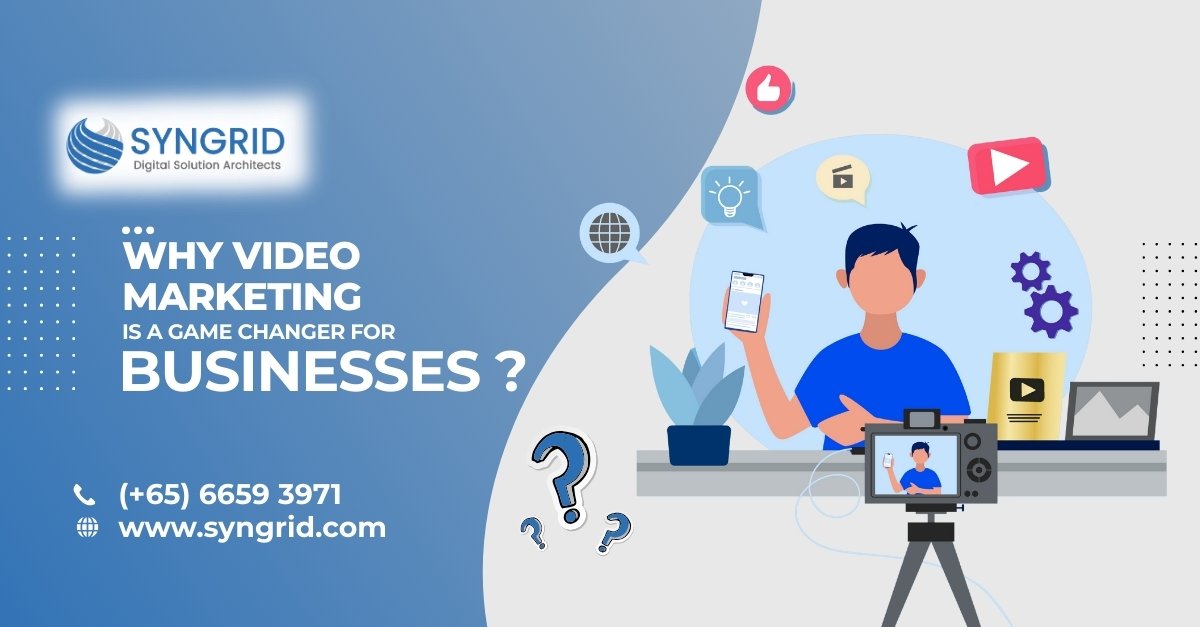
Why Video Marketing Is a Game Changer for Businesses

Introduction   In today’s hyper-digital economy, businesses face an overwhelming challenge how to stand out in a crowded online marketplace where audiences are bombarded with endless streams of content every second. Traditional advertising methods are losing their edge, and text-heavy campaigns often fail to engage users who crave quick, engaging, and visually appealing content. This is where video marketing has emerged as a transformative force. As consumer preferences continue to shift toward interactive, visual formats, video marketing is no longer optional; it is a cornerstone of modern digital strategy and a proven driver of business growth. At Syngrid Technologies, we recognize the strategic value of video marketing and provide tailored solutions that enable businesses to harness its full potential. This blog will explore why video marketing matters, its undeniable importance in today’s digital landscape, and how Syngrid Technologies empowers brands to succeed with innovative video-driven campaigns. Why Video Marketing Matters   Imagine landing on a webpage filled only with text. While informative, it may not capture your attention for long. Now, imagine the same webpage enriched with a vibrant, story-driven video introducing the brand. Which one would you engage with longer? The answer is obvious and it highlights why video marketing is one of the most effective tools in content marketing today. 1. Capturing Attention in a Saturated Market Audiences have shorter attention spans than ever before. Research by Microsoft shows that the average human attention span has dropped to just 8 seconds. Video content is designed to captivate within those crucial moments, combining visuals, sound, and storytelling into a highly engaging format. Unlike static posts or lengthy articles, videos instantly communicate brand value while evoking emotional connections that text alone often cannot achieve. 2. Driving Higher Engagement   Platforms like YouTube, TikTok, Instagram Reels, and LinkedIn video campaigns demonstrate that audiences prefer dynamic content over static ads. According to HubSpot, 92% of marketers say that video is a vital part of their content marketing strategy, with social videos generating 1200% more shares than text and image posts combined. This exponential engagement translates into greater brand visibility, stronger audience relationships, and more opportunities for conversion. 3. Boosting SEO and Organic Reach   Search engines reward websites that integrate video. Google’s algorithms prioritize multimedia content, making video-rich pages more likely to rank on the first page. Adding optimized videos with proper metadata, descriptions, and alt text can significantly enhance search visibility. For example, embedding explainer videos or testimonials on landing pages improves dwell time a key metric that search engines use to measure content value. At Syngrid Technologies, we ensure every video marketing campaign is crafted not only for engagement but also for maximum SEO impact. 4. Enhancing Brand Storytelling   Storytelling is at the heart of marketing, and video provides the perfect medium to tell compelling stories. Whether through brand documentaries, behind-the-scenes insights, or customer testimonials, video humanizes businesses. By blending narrative with visuals, companies can showcase authenticity and build trust. For instance, a brand that shares its journey in a cinematic video instantly becomes relatable and memorable to its audience. 5. Increasing Conversions and ROI.   Beyond engagement, video marketing directly impacts revenue. Statistics from Wyzowl’s 2025 State of Video Marketing Report show that 89% of marketers say video gives them a positive ROI. Product videos increase purchase likelihood by 73%, while landing pages with videos can improve conversion rates by up to 80%. For businesses seeking measurable growth, video isn’t just an accessory it’s a revenue driver. 6. Adapting Across Platforms and Formats   One of the most powerful aspects of video marketing is its versatility. From 6-second YouTube bumper ads to in-depth webinars and immersive AR/VR experiences, videos can be adapted to suit diverse audiences and platforms. Syngrid Technologies designs video strategies that maximize reach, ensuring businesses can connect with audiences wherever they are be it Instagram feeds, corporate websites, or email campaigns. Real-World Example: Nike’s Storytelling Approach   Take Nike as an example. Their short, emotionally charged videos consistently inspire audiences while aligning with their brand identity of empowerment and resilience. By leveraging video storytelling, Nike has maintained global relevance for decades. Businesses of all sizes can apply this principle using video as a medium to consistently communicate value and inspire loyalty. https://youtu.be/sCNfYQFL1yw Importance of Video Marketing   While its popularity is undeniable, let’s dive deeper into why video marketing has become indispensable for businesses worldwide. 1. Meeting Evolving Consumer Preferences   Modern consumers prefer watching over reading. According to Cisco, video will account for 82% of all consumer internet traffic by 2025. This shift emphasizes the importance of delivering content in formats audiences naturally gravitate toward. Video aligns seamlessly with these evolving behaviors, ensuring brands remain relevant and accessible. 2. Building Trust and Credibility   Trust is a cornerstone of business growth. Videos, particularly customer testimonials and case studies, provide authentic proof of a brand’s credibility. A professionally produced testimonial video has more persuasive power than dozens of written reviews. It shows real people, real results, and real experiences building stronger emotional connections with potential clients. 3. Educating and Informing Effectively   Complex products or services often require explanation. Video simplifies this by breaking down intricate ideas into digestible formats. Explainer videos, tutorials, and product demos are incredibly effective in guiding customers through the decision-making process. Businesses that use video to educate not only inform but also empower customers, fostering stronger long-term relationships. 4. Maximizing Social Media Impact   Social platforms prioritize video content. Algorithms on Facebook, Instagram, LinkedIn, and TikTok give preference to video posts, ensuring higher visibility. For businesses, this means greater reach without necessarily increasing advertising spend. Short-form videos, live streams, and interactive reels are some of the fastest-growing trends in digital strategy, enabling brands to stay ahead of the curve. 5. Expanding Global Reach   Videos transcend language and cultural barriers. A well-produced video with visuals, captions, and localized elements can appeal to global audiences without requiring major modifications. This adaptability makes video a universal marketing tool, allowing businesses to expand their market presence and connect with international customers seamlessly. 6. Future-Proofing Marketing Strategies  

Zoho Products

10 Key Benefits of Using Zoho People for HR Management

Introduction Effective human resource management is no longer a luxury, it’s a necessity. From recruitment to performance tracking, payroll to employee engagement, HR teams are expected to juggle multiple tasks efficiently. However, traditional methods and scattered tools often lead to errors, delays, and employee dissatisfaction. This is where Zoho People Software steps in. Designed as a comprehensive HR management software, Zoho People helps businesses streamline HR operations, automate repetitive tasks, and improve employee experiences. In this article, we’ll explore 10 key benefits of using Zoho People for HR management and how it can transform the way you manage your workforce. What is Zoho People?  Zoho People is a cloud-based HR management software, it is developed by  Zoho Corporation. It’s designed to handle every aspect of human resource operations from onboarding new hires to managing employee records, tracking attendance, handling leave requests, and conducting performance reviews. What makes Zoho People Services stand out is its user-friendly interface, customizable workflows, and integration capabilities. It can easily integrate with other Zoho apps and third-party tools, making it a versatile choice for businesses in various industries. Whether your team is working from the office, remotely, or in a hybrid model, Zoho People ensures communication, accurate data management, and better decision-making through insightful analytics. 10 Key Benefits of Using Zoho People for HR Management  1. Centralized Employee Database  One of the biggest challenges in HR is keeping track of employee data. Zoho People software provides a centralized database where you can store and manage all employee information in one place personal details, work history, skills, and more. This eliminates the need for manual spreadsheets and ensures quick access to accurate information whenever needed. 2. Hassle-free Employee Onboarding  A smooth onboarding process sets the tone for an employee’s experience. With Zoho People, you can create custom onboarding workflows that automate document submission, training schedules, and welcome kits. Instead of sending multiple emails, HR managers can assign tasks automatically, notify relevant departments, and track the progress of each new hire’s onboarding journey. 3. Efficient Attendance & Time Tracking  Manual attendance tracking is prone to errors and delays. Zoho People software offers biometric integration, geo-tracking, and mobile check-ins to monitor employee attendance accurately. It also allows you to set work shifts, track overtime, and integrate with payroll systems for precise salary calculations through Zoho People software integration. 4. Leave Management  Zoho People eliminate the hassle of leave management by allowing employees to apply for leave online, check their leave balance, and view the team calendar for better planning.Managers can approve or reject leave requests in just a few clicks, ensuring there’s no overlap that could disrupt business operations. 5. Performance Management   Tracking performance is crucial for employee growth and business success. Zoho People software provides tools to set custom performance goals, conduct 360-degree reviews, and generate performance reports. Managers can give timely feedback, track skill development, and align individual goals with organizational objectives.  6. Self-Service Portals for Employees  Zoho People include a self-service portal that empowers employees to update their own details, download payslips, request leave, and track performance without relying on HR for every small request. This not only reduces HR workload but also gives employees more control over their data and work-related information. 7. Compliance and Document Management  Keeping track of compliance documents, contracts, and certifications is a challenge for many businesses. Zoho People software allows you to store, organize, and retrieve documents securely in the cloud. It also helps ensure compliance with labor regulations by maintaining accurate employee records and tracking mandatory training programs. 8. Customizable Workflows and Automation  Every business has unique HR processes. Zoho People services offer customizable workflows that allow you to automate repetitive tasks like approvals, reminders, and notifications. With Zoho People software integration, you can connect your HR processes with payroll, accounting, and collaboration tools, creating a smooth flow of information across systems. 9. Real-Time Analytics and Reporting  Zoho People software comes with powerful reporting tools that help HR teams make informed decisions. You can generate reports on employee performance, attendance patterns, turnover rates, and more. Through Zoho People software integration, these analytics can be connected to BI tools for deeper insights, enabling data-driven strategies. 10. Scalability for Growing Businesses  Whether you have 10 employees or 1,000, Zoho People services can scale with your business. You can add new users, modules, and integrations as your needs evolve. This flexibility makes Zoho People software a long-term solution for companies looking to invest in reliable HR technology without worrying about outgrowing it.  End Of The Word    Where businesses are competing for top talent and operational efficiency, investing in the right HR management solution can make all the difference. Zoho People software stands out as an all-in-one platform that simplifies HR tasks, enhances employee engagement, and improves decision-making through automation and analytics. Zoho People services empower HR teams to focus less on manual administration and more on strategic growth initiatives. Syngrid Technologies is the trusted partner of Zoho products, and we will integrate the Zoho People software in your business so you can maximize its potential from day one. Our hands-on approach ensures that your HR team is fully trained, your processes are optimized, and your investment delivers measurable results. Whether you’re a startup looking for structure or an established enterprise aiming to modernize your HR operations, Zoho People software provides the tools and flexibility you need to stay ahead.

Scroll to Top