Syngrid

Other IT Services

Other IT Services

How CRM Software Can Improve Your Customer Support and Engagement  ? 

In the digital age, customer experience defines brand success. Companies no longer compete solely on product or price they compete on how well they understand and serve their customers. Modern consumers expect fast responses, personalized attention, and consistent communication.This is where Customer Relationship Management (CRM) software comes in. At Syngrid Technologies, we help businesses harness the full power of CRM systems to strengthen customer support and build meaningful engagement. A properly implemented CRM not only manages customer data but also transforms how teams connect, assist, and build relationships with clients. The Role of CRM in Modern Customer Support   Customer support has evolved far beyond answering emails or phone calls. Today’s support teams need complete visibility into customer histories, preferences, and previous interactions to deliver thoughtful, efficient service. With Syngrid Technologies’ CRM solutions, all customer information is stored in a unified platform. Support agents can instantly view purchase records, past tickets, and communication logs allowing them to resolve issues faster and offer accurate solutions without repetitive questioning. A modern CRM system acts as the backbone of customer service operations, enabling teams to: Track all interactions in one place Assign, monitor, and prioritize support tickets Identify recurring issues and prevent them proactively Measure support performance and satisfaction By integrating CRM into your customer support process, you create an environment where each customer feels heard and valued. How CRM Software Improves Customer Engagement   Customer engagement is the continuous effort to build trust, loyalty, and emotional connection with your audience. With the help of CRM software, businesses can create personalized communication strategies that foster engagement at every touchpoint. Syngrid Technologies enables companies to use CRM data to understand customer behaviour from browsing patterns to feedback trends. This allows you to anticipate needs and engage customers at the right moment with relevant messages. CRM systems help businesses: Segment audiences based on interests or purchase history Send targeted follow-ups and reminders Deliver personalized offers and recommendations Maintain consistent communication across email, chat, and social media These engagement tactics not only boost satisfaction but also drive repeat business and advocacy. Key Features of CRM That Enhance Support and Engagement   A CRM platform is packed with features designed to simplify how teams interact with customers. Syngrid Technologies ensures every CRM system we build includes the tools businesses need to maintain high-quality support and engagement. Some of the most impactful features include: Ticket management: Automatically log and track support requests from multiple channels. Communication tools: Enable instant updates between teams and customers. Customer insights dashboard: Analyse feedback, track satisfaction scores, and uncover patterns. Automation: Schedule reminders, send thank-you notes, or trigger surveys after support resolutions. Reporting and analytics: Evaluate performance metrics such as response time, issue resolution rates, and customer sentiment. These features help organizations operate more efficiently while improving the customer journey from the first interaction to post-sale support. Benefits of Using CRM for Customer Support Teams  When your support team has access to the right CRM tools, their entire workflow becomes more effective. Syngrid Technologies focuses on developing CRM systems that empower teams with data-driven insights and easy collaboration. Key benefits include: Quicker responses: Centralized data allows agents to find answers immediately. Stronger teamwork: Departments like marketing, sales, and support can collaborate effortlessly. Customer loyalty: Personalized communication keeps customers coming back. Proactive service: Use CRM analytics to detect patterns and resolve issues before they escalate. Ultimately, CRM transforms your support operations into a customer-focused ecosystem that boosts trust and loyalty. Real-World Examples of CRM Impact on Support and Engagement Businesses that adopt CRM systems often see measurable improvements within months. Companies working with Syngrid Technologies have reported shorter response times, higher satisfaction ratings, and better retention rates. For instance, a retail client used our CRM solution to connect its sales and support data. Within three months, they noticed a 25% increase in first-contact resolutions and a 30% improvement in repeat purchase rates. Another SaaS client reduced customer churn by implementing automated follow-ups and behaviour tracking features. These examples highlight how CRM technology drives both operational efficiency and customer happiness. How to Choose the Right CRM for Your Business  Choosing the right CRM system is crucial not all solutions fit every business model. Syngrid Technologies assists organizations in evaluating their needs, goals, and existing infrastructure before implementing a CRM. When selecting a CRM, consider factors such as: Scalability: Can it grow with your business? Integration: Does it connect with your marketing, sales, and support tools? Ease of use: Is your team comfortable using it daily? Analytics and reporting: Can it provide actionable insights? The right CRM should complement your business processes and enhance how your team interacts with customers at every stage. Hiring the Right Team to Manage Your CRM System  Technology alone doesn’t create success the people behind it do. Syngrid Technologies emphasises the importance of hiring a dedicated CRM team or training existing staff to manage the system effectively. A skilled CRM management team should understand: Customer journey mapping Data analysis and reporting Automation and workflow optimization Communication best practices Hiring the right people ensures your CRM operates at its full potential. This team becomes the link between technology and customer experience, ensuring every customer touchpoint adds value. Best Practices for Maximizing CRM Effectiveness   To benefit from your CRM investment fully, your organization needs to follow consistent best practices. At Syngrid Technologies, we guide clients through proven methods that maximize results: Maintain accurate data: Regularly update customer profiles to ensure precision. Train employees: Provide continuous learning opportunities on CRM features. Integrate across departments: Connect marketing, sales, and support teams through one system. Monitor performance: Track key metrics like resolution time and satisfaction rates. Act on feedback: Use insights from customers to improve processes and offerings. By making CRM usage a company-wide habit, you create a culture centered on customer understanding and improvement. Conclusion   CRM software is no longer a luxury it’s a necessity for businesses aiming to improve customer support and engagement. By combining advanced tools with strategic implementation, your organization can transform customer interactions

Other IT Services

How is AI Changing ERP and Automating Business Processes? 

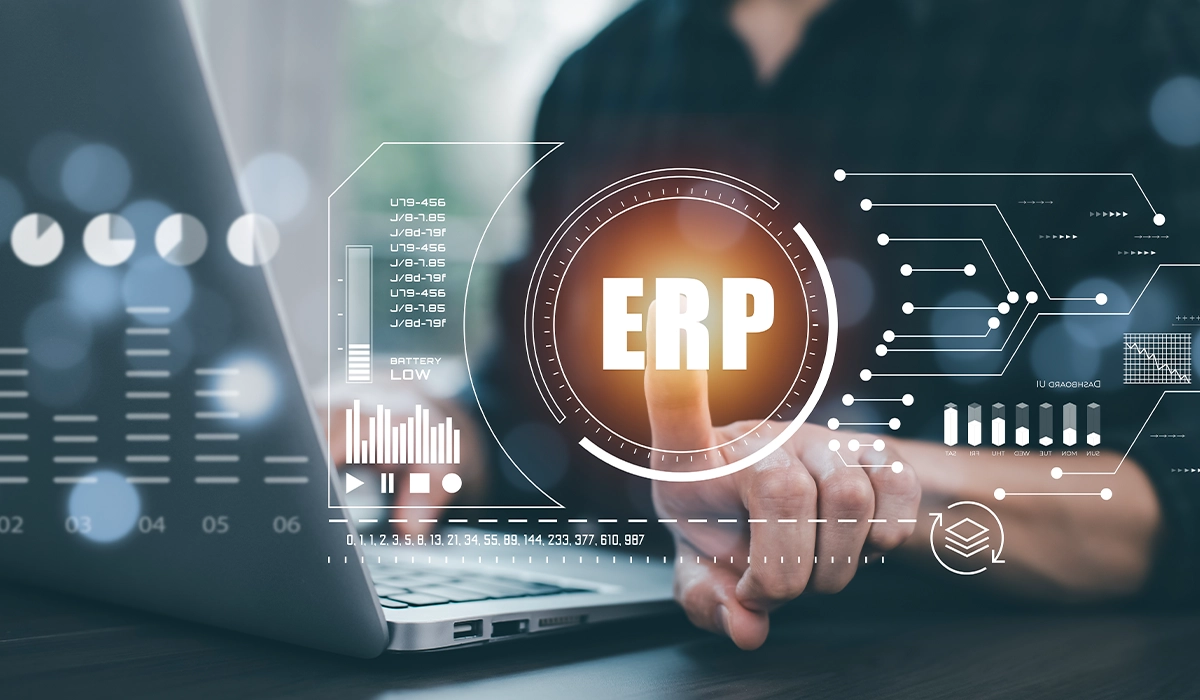
Artificial Intelligence (AI) is reshaping the modern enterprise. What started as experimental automation has evolved into intelligent systems that learn, adapt, and improve over time.Across industries, AI is becoming the foundation of digital transformation that helping organizations make faster decisions, improve accuracy, and operate with agility. In the heart of this transformation lies ERP (Enterprise Resource Planning). Traditionally designed to manage operations and resources, ERP systems are now evolving into AI-powered engines that drive automation, insight, and efficiency.At Syngrid Technologies, we help businesses unlock this potential by integrating AI into ERP systems to turn raw data into real-time intelligence. The State of ERP with AI in 2025   In 2025, ERP is no longer just a data management platform it’s a strategic decision-making tool powered by AI.Modern ERP solutions integrate machine learning, predictive analytics, and intelligent automation to help organizations adapt instantly to market changes. AI-driven ERP systems can: Predict sales trends and optimize supply chains Automate reporting and approvals Identify risks before they escalate Personalize user experiences with smart dashboards These systems not only manage business processes they enhance them. Benefits of AI-Enabled ERP   The benefits of embedding AI into ERP are measurable and transformative: Smarter Decision-Making – AI transforms complex data into actionable insights for faster, more informed business choices. Predictive Planning – Machine learning models forecast demand, revenue, and costs with high precision. Enhanced Efficiency – Intelligent automation reduces manual workloads and human error. Improved Customer Experience – AI personalises interactions based on behaviour and preferences. Cost Optimization – By identifying inefficiencies, AI lowers operational costs and increases ROI. With Syngrid Technologies, enterprises can harness these benefits through tailor-made AI-driven ERP solutions. Features of AI ERP  AI introduces next-generation capabilities that redefine ERP performance: Machine Learning: Learns from data to predict business outcomes. Natural Language Processing (NLP): Enables voice and text-based interaction with ERP systems. Robotic Process Automation (RPA): Handles repetitive tasks automatically. Intelligent Chatbots: Manage customer queries and support operations 24/7. Predictive Analytics: Forecasts risks, opportunities, and performance trends. Cognitive Insights: Provides deeper visibility into patterns and anomalies within large datasets. Together, these features turn ERP into a dynamic and intelligent ecosystem. Top ERP AI Tools to Supercharge Your System Several AI platforms are empowering ERP systems across industries: SAP S/4HANA AI: Delivers predictive analytics for finance and supply chain. Oracle Fusion Cloud AI: Enhances automation and real-time insights. Microsoft Dynamics 365 AI: Combines CRM and ERP data for smarter operations. NetSuite Intelligent Cloud: Streamlines workflows with built-in machine learning. UiPath & Automation Anywhere: Add powerful robotic automation to ERP processes. At Syngrid Technologies, we integrate and customize these tools to match each organization’s unique workflow and business goals. Future of AI in ERP   He next phase of ERP is defined by intelligence and adaptability.AI-driven ERP systems will soon learn continuously, anticipate business challenges, and make autonomous adjustments to optimize outcomes. Future ERP will: Self-correct and adapt based on performance metrics Provide prescriptive recommendations for strategic decisions Integrate with IoT and advanced analytics for real-time visibility Reduce downtime and improve productivity across all departments At Syngrid Technologies, we are shaping this future by developing ERP solutions that evolve with your business. How Does AI Revolutionize ERP?  AI revolutionises ERP by transforming it from a data management tool into a strategic decision-making engine.Instead of reacting to changes, AI-powered ERP anticipates them providing insights that drive innovation and resilience. For example: In finance, AI automates forecasting and detects anomalies. In supply chain, it predicts disruptions and suggests alternatives. In HR, it identifies hiring needs and optimises workforce planning. This transformation allows organizations to move from managing operations to mastering intelligence. Need Help with Integrating AI into Your ERP?  Integrating AI into ERP may seem challenging, but with the right partner, it becomes a powerful opportunity.Syngrid Technologies specialises in designing and implementing AI-ERP solutions that fit your business objectives and streamline complex workflows. Our experts ensure smooth integration, maximum efficiency, and measurable results  helping your enterprise stay competitive and future-ready. Conclusion   AI is reshaping ERP and redefining how businesses function.By combining intelligent automation with predictive analytics, organizations can make faster decisions, optimize resources, and drive growth. At Syngrid Technologies, we help enterprises transform their ERP systems into intelligent ecosystems that adapt, learn, and grow with them. The journey toward AI-powered ERP is not just a technological upgrade it’s a strategic move toward building smarter, more agile, and future-ready enterprises.Now is the time to embrace this transformation and lead your industry through intelligence, automation, and innovation with Syngrid Technologies

Other IT Services

The Future of CRM Development Services: Trends to Build in 2025

Introduction   The future of Customer Relationship Management (CRM) development services is being redefined by technology, automation, and customer-centric innovation. In 2025, businesses are focusing on building intelligent, data-driven CRM systems that enhance engagement,optimize operations, and deliver personalized experiences at scale. Let’s explore the key CRM trends that are shaping the future of digital business in 2025. 1. AI-Powered Predictive CRM Systems Artificial Intelligence (AI) is transforming how businesses use CRM platforms. Modern CRMs will not just store data — they’ll analyze, predict, and act on it. AI-driven features like predictive lead scoring, customer sentiment analysis, and intelligent chatbots help companies identify opportunities and make data-backed decisions. In 2025, AI-powered CRMs will automatically predict customer needs, optimize communication timing, and help teams close deals faster through real-time insights. 2. Hyper-Personalization with Real-Time Data Personalization is moving beyond simple segmentation. The next generation of CRMs will use real-time behavioral data and AI analytics to create hyper-personalized experiences across multiple touchpoints. From dynamic email campaigns to personalized dashboards, CRMs will customize  interactions to each user’s preferences, purchase history, and engagement pattern. This helps businesses increase conversions, satisfaction, and long-term loyalty. 3. Industry-Specific CRM Customization One of the most important CRM development trends for 2025 is industry-specific customization. Every business sector from healthcare and real estate to manufacturing and retail has unique workflows, compliance standards, and customer needs. Custom CRM development will increasingly focus on building customized modules and dashboards designed for specific industries. For example: Healthcare CRMs will integrate patient management and appointment systems. Real estate CRMs will automate lead tracking and property listings. Manufacturing CRMs will sync production schedules with client orders. This approach ensures greater efficiency, relevance, and ROI by aligning the CRM with the business’s operational ecosystem. 4. IoT Integration for Smarter Customer Insights The Internet of Things (IoT) is set to redefine how businesses interact with customers. By 2025, IoT-integrated CRMs will connect physical devices, sensors, and applications to collect valuable data in real time. This integration will help companies monitor customer behavior, track product usage, and predict maintenance or support needs before issues arise.        1. A smart device manufacturer can use IoT-enabled CRM data to schedule proactive service calls.        2. A logistics company can track shipment conditions and update clients automatically. With IoT integration, CRMs will enable proactive, data-driven decision-making and deeper customer understanding. 5. Integration with Emerging Technologies CRM development is expanding beyond traditional software boundaries. By integrating with advanced technologies like IoT, blockchain, and AR/VR, CRMs will become smarter and more secure. IoT integration enables real-time data from connected devices for proactive customer service. Blockchain ensures data transparency and security. AR/VR enhances product demos and customer experiences. These integrations will give businesses deeper insights and stronger customer engagement. 6. Stronger Data Privacy and Compliance As data protection laws tighten globally, privacy and compliance have become essential parts of CRM development. Future-ready CRMs will include built-in tools for consent management, data encryption, and access control to ensure user trust and legal compliance. By prioritizing transparency and security, businesses can protect customer data while maintaining credibility and reliability. 7. CRM and Marketing Automation Convergence The gap between CRM and marketing automation is closing fast. In 2025, these platforms will work together perfectlyto manage customer journeys from awareness to conversion. Automation tools integrated within CRMs will help marketing and sales teams collaborate efficiently — tracking campaigns, nurturing leads, and measuring ROI all within a unified ecosystem. 8. Mobile-First CRM Platforms As hybrid and remote work models grow, CRM platforms must adapt for mobility. Modern CRMs are being designed with mobile-first functionality, offering instant access to customer data, reports, and communication tools from anywhere. Mobile CRM apps will empower teams to manage pipelines, schedule meetings, and update customer information on the go, improving productivity and responsiveness. Conclusion The future of CRM development services is centered on intelligence, personalization, and connectivity. Businesses that adopt AI-powered, secure, and scalable CRM solutions will gain a significant competitive edge in 2025 and beyond. At Syngrid Technologies, we help organizations embrace these emerging CRM trends through custom-built solutions that combine innovation, automation, and customer-focused design. By integrating advanced technologies and data-driven strategies, we empower businesses to build smarter systems that truly understand and serve their customers

Other IT Services

Top 10 ERP Challenges Users Face and How Businesses Overcome Them

Introduction Enterprise Resource Planning (ERP) systems are the backbone of modern business operations, integrating finance, operations, human resources, and customer management into a single, unified platform. However, implementing ERP is rarely simple. Organizations often encounter challenges that can delay deployment, increase costs, and reduce expected benefits. Addressing these ERP integration challenges early is critical for ensuring operational efficiency, data accuracy, and seamless workflows across departments. In this blog, we explore the top 10 ERP challenges businesses face and provide practical strategies to overcome them, highlighting how Syngrid Technologies’ ERP integration expertise can enhance system performance. Top 10 ERP Integration Challenges and Solutions  1. High Implementation Costs   ERP deployment requires significant investment, including software licensing, consulting, training, and ongoing maintenance. Solution: Conduct a detailed cost-benefit analysis and prioritize ERP modules that offer the highest return on investment. Phased implementations help manage expenses effectively. Professional ERP integration from Syngrid Technologies ensures that systems are set up efficiently, reducing unnecessary costs and avoiding redundant workflows. 2. Resistance to Change   Employees may resist adopting new ERP systems due to complexity, fear of disruption, or unfamiliar workflows. Solution: Implement structured change management programs with hands-on training, clear communication, and ongoing support. ERP integration by Syngrid Technologies ensures that workflows are intuitive, simplifying user adoption and minimizing disruption. 3. Poor Data Quality   Inaccurate or inconsistent data can compromise ERP performance, leading to incorrect reporting and suboptimal decision-making. Solution: Establish data governance policies, cleanse data before migration, and implement validation protocols. ERP integration with Syngrid Technologies ensures that all data flows seamlessly across modules, maintaining consistency and reliability. 4. Customization Challenges   Businesses often require ERP customization to meet unique operational processes, but excessive customization can increase costs and complexity. Solution: Limit customizations to essential areas and leverage built-in ERP extensions. Syngrid Technologies’ ERP integration approach tailors configurations to business needs without overcomplicating the system, delivering a balance between flexibility and maintainability. 5. Inadequate Training and Support   Without proper guidance, employees may struggle to use ERP features effectively, leading to inefficiency and errors. Solution: Offer comprehensive training programs and ongoing support for different user roles. Integrated ERP solutions from Syngrid Technologies are designed with usability in mind, ensuring employees can quickly access the features they need. 6. Integration Difficulties   Many organizations struggle to connect ERP with other software such as payroll, supply chain, or legacy systems. Solution: Plan integration during the ERP strategy phase and leverage APIs or middleware for seamless connectivity. Syngrid Technologies’ ERP integration services ensure smooth communication between ERP modules and external systems, reducing silos and improving data flow. 7. Scope Creep   Expanding project requirements during implementation can lead to missed deadlines, increased costs, and system complexity. Solution: Define clear project goals and deliverables, using phased deployments for manageable implementation. Expert ERP integration from Syngrid Technologies aligns system functionality with business objectives, keeping projects on schedule and within scope. 8. Downtime and System Performance Issues   ERP downtime or slow performance can disrupt operations, frustrate users, and affect customer service. Solution: Choose reliable hosting, optimize workflows, and conduct regular system monitoring. Syngrid Technologies’ ERP integration ensures optimized processes, reducing bottlenecks and maintaining high system performance. 9. Regulatory Compliance and Security Risks   ERP systems handle sensitive financial and operational data, making compliance and security critical. Solution: Implement access controls, regular audits, and encryption protocols. Syngrid Technologies’ ERP integration ensures secure data management across modules, helping businesses meet compliance standards and protect sensitive information. 10. Unrealistic Expectations   Businesses may expect immediate benefits from ERP implementation, underestimating the time and effort required for full adoption. Solution: Set realistic goals, track KPIs, and communicate progress to stakeholders. With Syngrid Technologies’ ERP integration, businesses can achieve incremental wins that demonstrate value early while building toward full-scale system optimization. How Syngrid Technologies Enhances ERP Integration  Effective ERP integration is critical for overcoming implementation challenges. Syngrid Technologies’ ERP integration expertise helps businesses: Seamlessly connect ERP with existing systems for unified workflows Ensure accurate and consistent data across departments Optimize processes for better operational efficiency Reduce downtime, errors, and integration risks By customizing integration solutions to match unique business processes, Syngrid Technologies ensures ERP systems operate efficiently, driving measurable improvements in productivity and decision-making. Conclusion: Overcoming ERP Implementation Challenges   ERP implementation can be complex, but businesses that address integration challenges strategically can maximize system value. From managing costs and change management to ensuring data quality and seamless system connectivity, understanding these challenges is essential for success. Partnering with Syngrid Technologies for ERP integration ensures that businesses deploy systems effectively, streamline operations, and achieve long-term growth. Companies ready to enhance their enterprise processes can leverage Syngrid’s expertise to implement integrated ERP solutions that deliver operational excellence and measurable results.

Other IT Services

The Benefits of Outsourcing IT Services for Small Businesses

The Benefits of Outsourcing IT Services for Small Businesses In today’s digital-first world, outsourcing IT services for small businesses has become more than just a smart choice it’s a vital strategy for survival and growth. As technology touches nearly every business function from cybersecurity to cloud storage maintaining an in-house IT team is costly and often inefficient for small enterprises. That’s where IT outsourcing comes into play Outsourcing IT services offers  small businesses the flexibility to access professional-grade technology solutions without the burden of managing infrastructure, hiring technical staff, or constantly staying up to date with evolving tech trends. With the right partner outsourcing becomes more than just a cost-saving measure it’s a strategic advantage. With the Upgraded IT Technology solutions with Experts consultations Syngrid Technologies provides businesses with cutting-edge IT solutions, from cloud services to cybersecurity, enabling companies to focus on their core operations while leaving the technical complexities to experts. In this comprehensive guide, we will explore the top 10 benefits of outsourcing IT services and how doing so empowers small businesses to thrive in a highly competitive and digitally demanding environment. 1. Cost Savings: Optimize Your Budget Efficiently For most small businesses, managing costs effectively is paramount to survival and success. IT expenses can easily spiral out of control with the need for continuous equipment upgrades, license renewals, cybersecurity defenses, and full-time IT personnel. Outsourcing enables businesses to shift from a capital expenditure (CapEx) model to an operational expenditure (OpEx) model, where services are paid for as needed. Key Cost-Effective Advantages of Outsourcing IT No Full-Time Salary Burden: Instead of employing an entire IT team with benefits and bonuses, businesses pay only for the services rendered, whether hourly, monthly, or annually. Reduced Infrastructure Expenses: Hardware and software are typically provided by the outsourcing firm, eliminating the need for constant investment in tech upgrades. Scalable Pricing: Start with basic support and scale up as your needs grow. Lower Risk of Costly Mistakes: Experienced IT teams help prevent errors that could result in major financial losses. 2. Access to Expert Support & Advanced Technology Hiring and retaining experienced IT talent is expensive and often out of reach for small companies. By outsourcing, small businesses instantly gain access to a team of certified professionals with diverse specialties from cloud architecture and cybersecurity to data analytics and system integration. Benefits of IT Expertise and Advanced Technology: Up-to-date knowledge of current software and tools, including threat mitigation techniques. Around-the-clock support for critical incidents. Access to a broader skillset than a typical in-house team can offer. Strategic Consulting: Outsourcing firms can help align your IT with your long-term business vision. 3. Improved Efficiency and Productivity Outsourcing removes the day-to-day burden of managing IT issues from your staff, enabling them to focus on core business functions. Whether you’re processing sales, managing inventory, or serving clients, streamlined IT ensures smoother operations. How Outsourcing IT Enhances Productivity: Proactive Monitoring: Identify and resolve issues before they impact productivity. Automation Tools: Reduce manual work and error rates. 24/7 Support: Critical systems receive support outside of normal business hours, minimizing disruption. 4. Scalability and Business Growth Business needs evolve, and so should your IT infrastructure. Outsourcing allows for agile scaling expanding services during peak seasons or reducing them during slower periods without major capital investments. Scalability Features of Outsourced IT: On-demand resources: Easily add servers, licenses, or user support as needed. Flexible service tiers: Upgrade or downgrade services based on performance metrics or budget Consultative planning: Outsourced providers assist in forecasting IT needs and aligning them with growth strategies. 5. Enhanced Cybersecurity and Data Protection With cyberattacks increasing in frequency and sophistication, especially targeting small businesses perceived as “soft targets,” having top-tier cybersecurity measures is no longer optional. Outsourcing ensures continuous protection, often through advanced AI-driven tools, intrusion detection systems, and 24/7 security operations centers (SOCs). Cybersecurity Benefits: Firewall and antivirus management that evolve with emerging threats. Multi-layered protection including endpoint security and threat intelligence. Security Audits to identify vulnerabilities before hackers do. 6. Focus on Core Business Objectives As a small business owner, your primary focus should be on delivering value to your customers not troubleshooting printer errors or worrying about data backups. Outsourcing enables leaders and employees to concentrate on what truly matters. Core Focus Benefits: Greater managerial bandwidth for strategic initiatives. Increased employee satisfaction due to less disruption and stress. Efficient use of time by reducing administrative burdens. 7. Reliable Technical Support and Reduced Downtime Unexpected IT outages can be devastating. Every minute your systems are down, you risk losing sales, damaging your reputation, and frustrating your customers. Outsourced IT support includes both proactive monitoring and reactive troubleshooting, ensuring continuity. Support Advantages: Helpdesk support to solve user-level issues efficiently. Scheduled maintenance to reduce risk of downtime. Disaster response protocols in place for critical issues. 8. Better Compliance and Risk Management From financial regulations to data privacy laws, small businesses must adhere to a variety of compliance standards. Keeping up with these can be complex and time-consuming. Outsourced IT providers bring in-depth knowledge of industry compliance and take responsibility for ensuring your systems meet required standards. Compliance Advantages: Documentation readiness for audits. Risk assessments to evaluate vulnerabilities. Training modules for employee awareness and compliance behavior. 9. Access to Innovative Technologies Keeping pace with innovation requires capital, knowledge, and strategic vision. Outsourcing partners often operate at the cutting edge, integrating the latest technologies into your systems for better performance and future-readiness. Innovation Advantages: AI and machine learning applications for better analytics and automation. Cloud-based solutions for storage, collaboration, and scalability. Custom-built software tailored to your workflow. 10. Business Continuity and Disaster Recovery Business interruptions due to IT failures can be catastrophic especially for companies without a plan. Outsourced IT teams specialize in business continuity planning (BCP) and disaster recovery (DR) solutions, ensuring your business bounces back quickly after disruptions. Continuity Benefits: Cloud-based data backup systems with geo-redundancy. Disaster recovery drills to test preparedness. Minimal data loss and downtime during major incidents. Conclusion Outsourcing IT services is no

Other IT Services

How IT Services Can Help Your Business Stay Competitive in Singapore ?

How IT Services Can Help Your Business Stay Competitive in Singapore? In Singapore’s fast-paced business landscape, staying competitive requires a robust and efficient IT infrastructure. Businesses that leverage modern IT services in Singapore can enhance productivity, improve security, and gain a strategic edge over their competitors. This article explores how IT services in Singapore can help businesses maintain a competitive advantage and achieve long-term success. Enhancing Operational Efficiency IT services streamline business operations by automating routine tasks, optimizing workflows, and reducing downtime. Companies that invest in IT solutions can improve overall efficiency and ensure smooth operations. Key Benefits:   Automates repetitive tasks, reducing manual errors. Improves workflow efficiency with cloud-based solutions. Enhances collaboration with secure communication tools. Strengthening Cybersecurity Measures Cyber threats pose significant risks to businesses of all sizes. IT service providers help implement strong security protocols to protect sensitive data and prevent cyberattacks. Security Advantages:   Regular updates and threat monitoring. Data encryption and secure backup solutions. Compliance with cybersecurity regulations and industry standards. Supporting Business Scalability As businesses grow, their IT needs evolve. IT services offer scalable solutions that adapt to changing requirements, ensuring seamless expansion without major infrastructure investments. How IT Supports Growth:   Flexible cloud storage and computing options. Scalable IT support based on business demands. Integration with emerging technologies for future growth. Ensuring Reliable IT Support and Maintenance A reliable IT support system ensures minimal downtime and prompt resolution of technical issues, allowing businesses to focus on their core operations without disruptions. IT Support Benefits:   Proactive monitoring to prevent system failures. Faster resolution of technical issues. Regular system maintenance to ensure optimal performance. Summary Leveraging IT services is crucial for businesses in Singapore to remain competitive, secure, and efficient. From improving cybersecurity to enabling scalability, IT solutions help organizations navigate the evolving digital landscape with confidence. Syngrid Technologies provides tailored IT solutions to help businesses optimize their operations, enhance security, and drive growth. Contact us today to discover how our IT services can give your business a competitive edge in Singapore.

Scroll to Top